Notes from Okinawa's textile studios on preservation, adaptation, experimentation and what passes from one generation to another.
01 / ONE TRADITION, MANY FUTURES
I travelled through Okinawa expecting to learn about traditional textiles. What I encountered instead were very different ideas about what it means to keep a tradition alive.
In one studio, preservation meant following inherited processes with extraordinary precision. In another, tradition was something alive enough to absorb whatever material was available. Elsewhere, knowledge passed from master to student and became a quieter contemporary practice. A younger studio was taking traditional dyeing into classrooms, collaborations and new markets. And another generation was beginning to work collectively, outside the conventional structure of the workshop.
None of these encounters gave me a simple definition of preservation.
Instead, they left me asking: when a tradition survives, what exactly needs to remain unchanged?
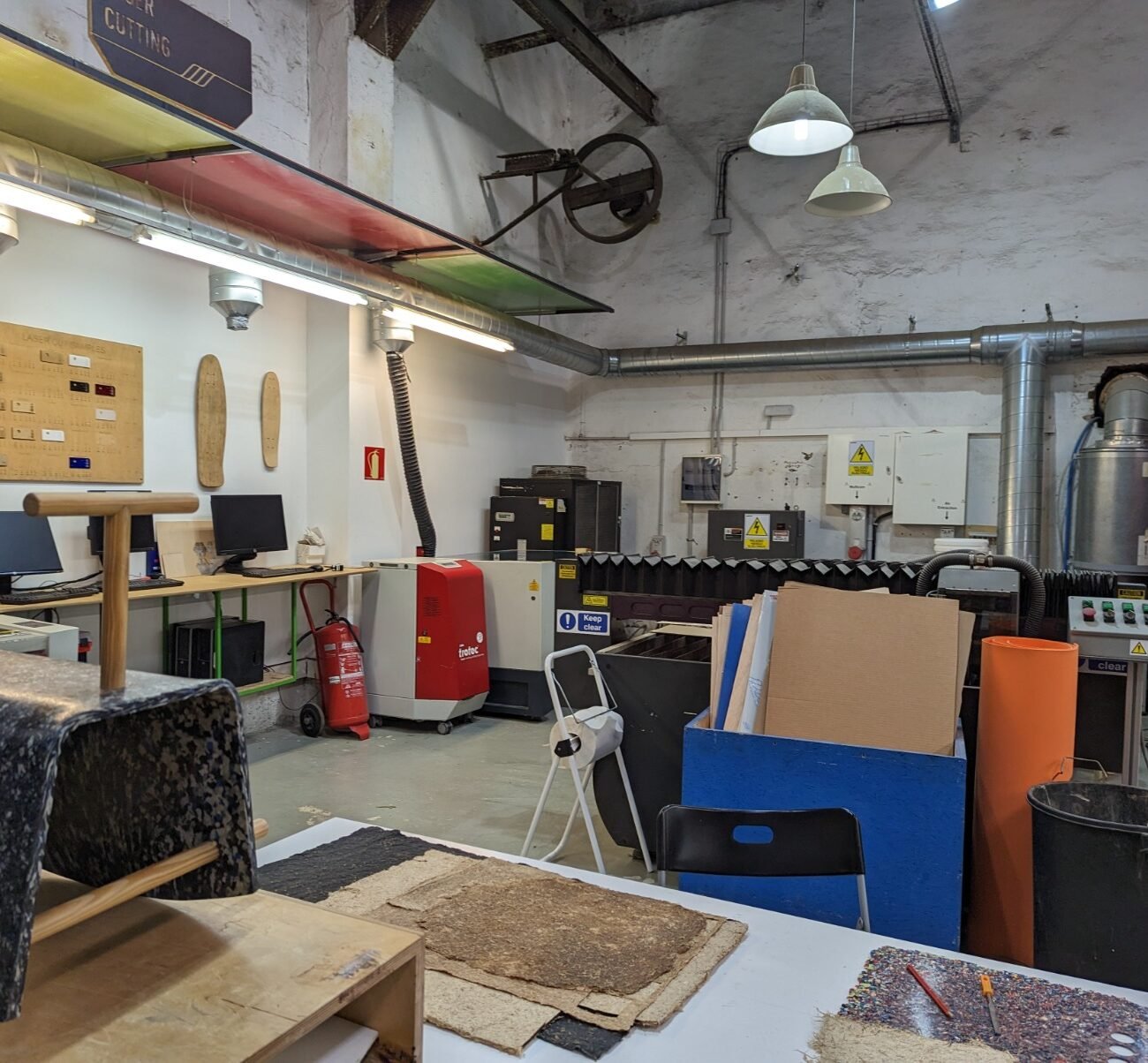
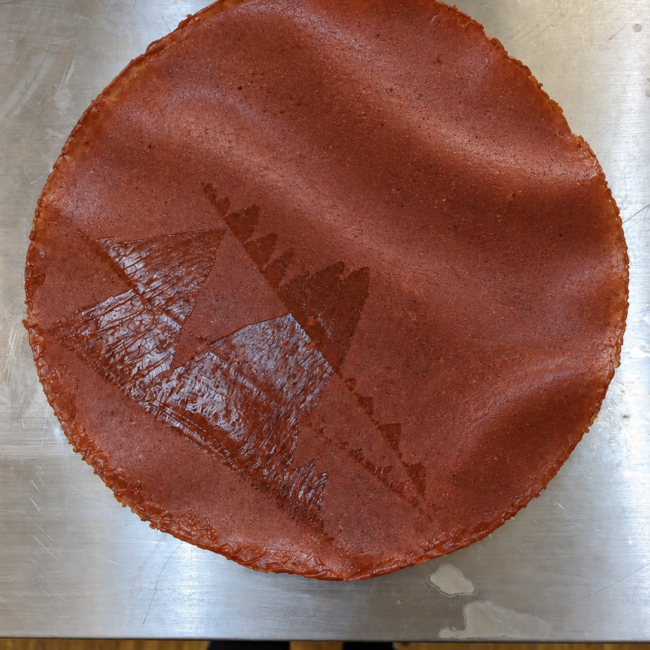
Laser cutting room. Biomaterial is drying on the table, precious plastic chair on the side
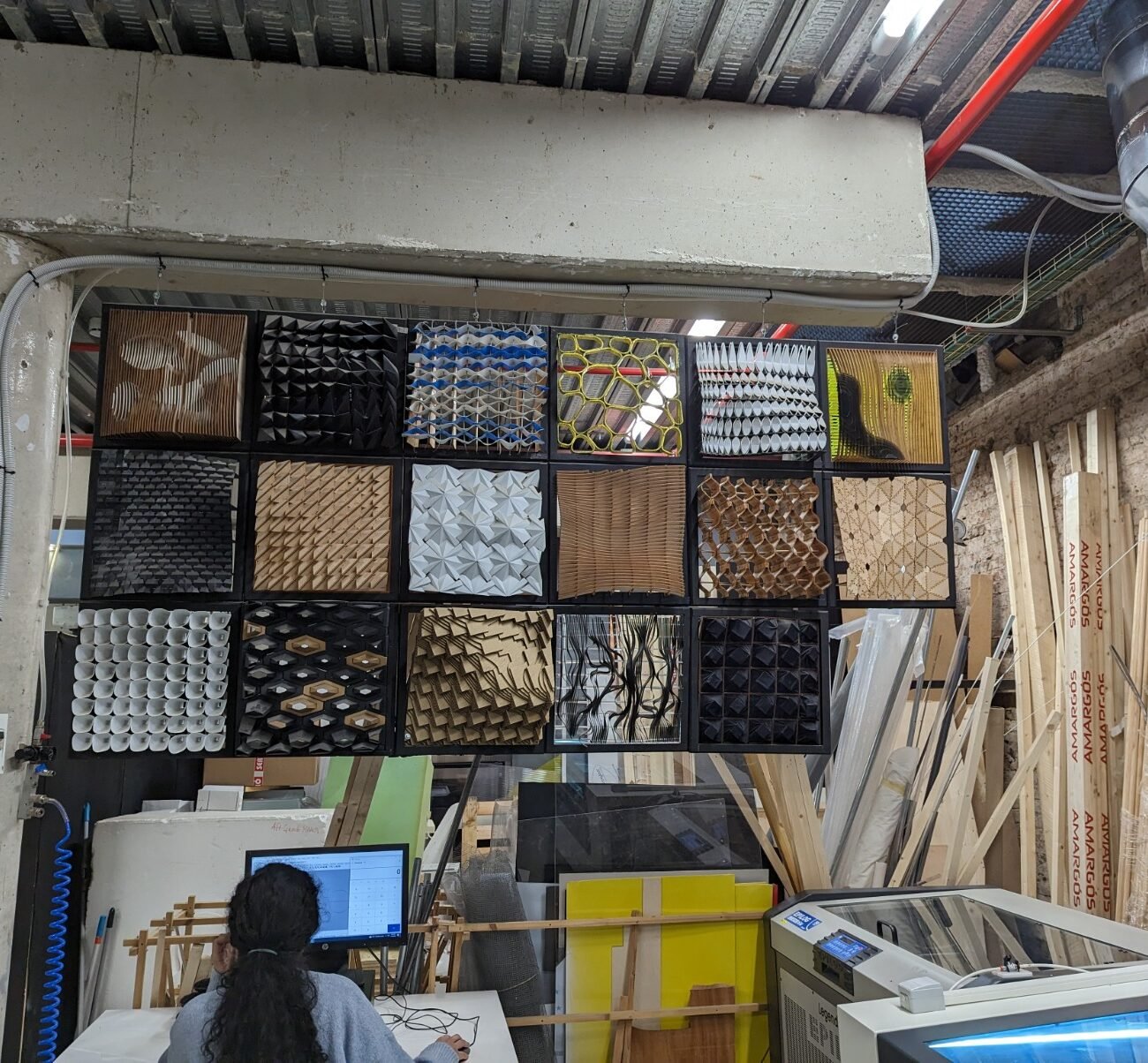
Various grasshopper experiments on different materials displayed in the workshop
02 / PRESERVATION AS PRECISION
Miyako Taira / Kijoka Bashofu
At Kijoka, tradition is protected through precision.
Bashofu begins long before the loom. Ito-basho is cultivated, harvested and stripped. Fibres are separated, boiled, scraped and joined into extraordinarily fine threads. The threads are prepared, dyed and finally woven.
I spent considerable time documenting this process with Miyako Taira—from the plants growing in Kijoka through the many stages required to turn banana fibre into cloth.
What struck me was the insistence that the process itself is part of the cultural inheritance. Preservation here isn’t simply about producing something that looks like bashofu. It is about retaining the knowledge embedded in how it is made.
Bioplastic experiment
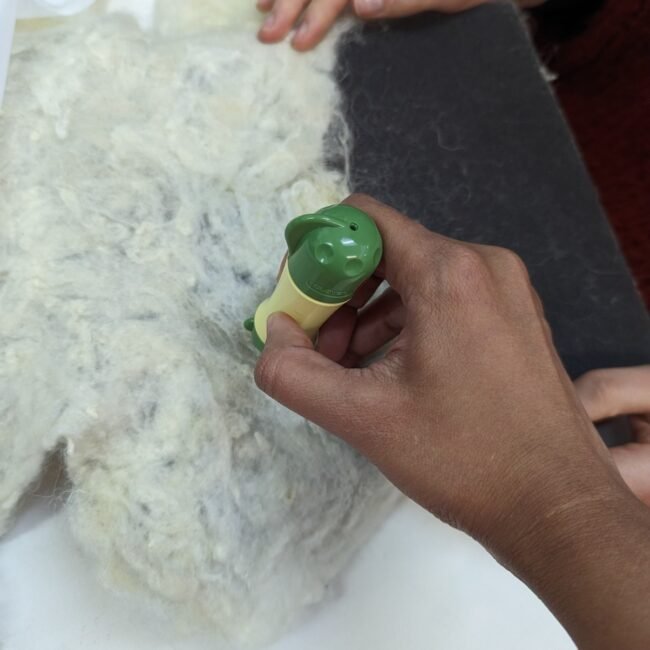
Felting to make woolen textile
THE 23 STEPS
Failures became unexpectedly useful
Experimenting formula
Mordanting cotton
The machine shapes the material. But what if I could shape the material first?
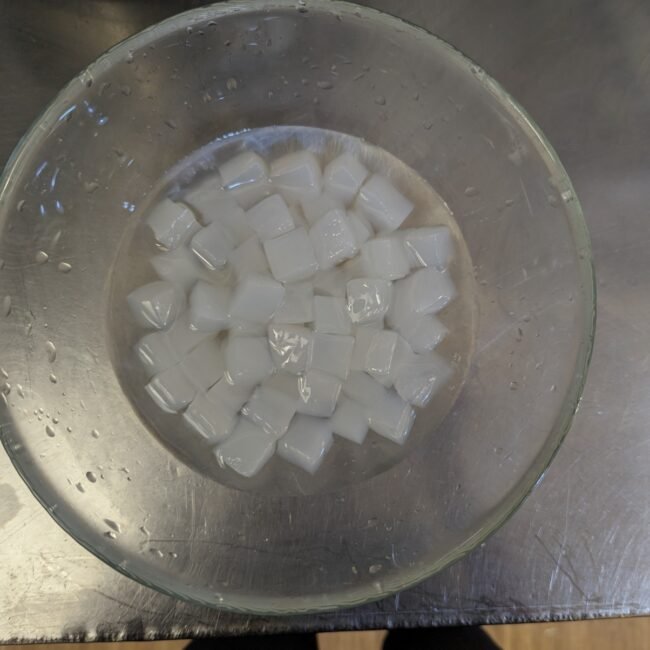
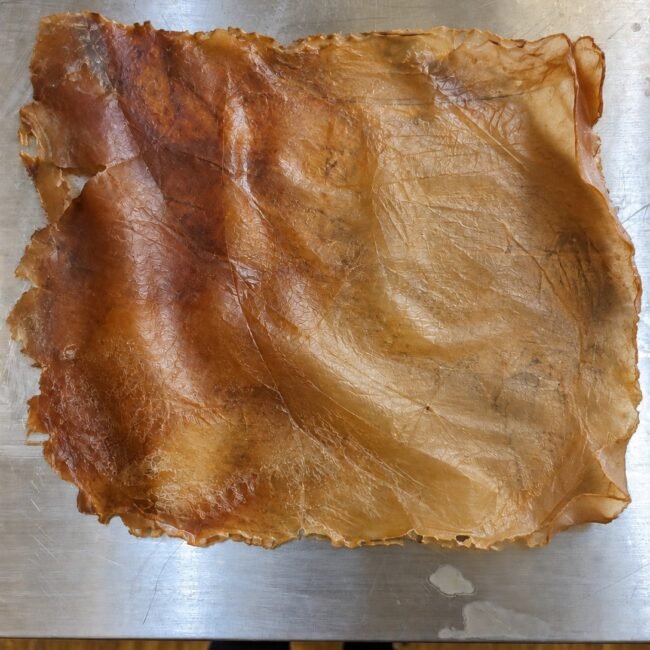
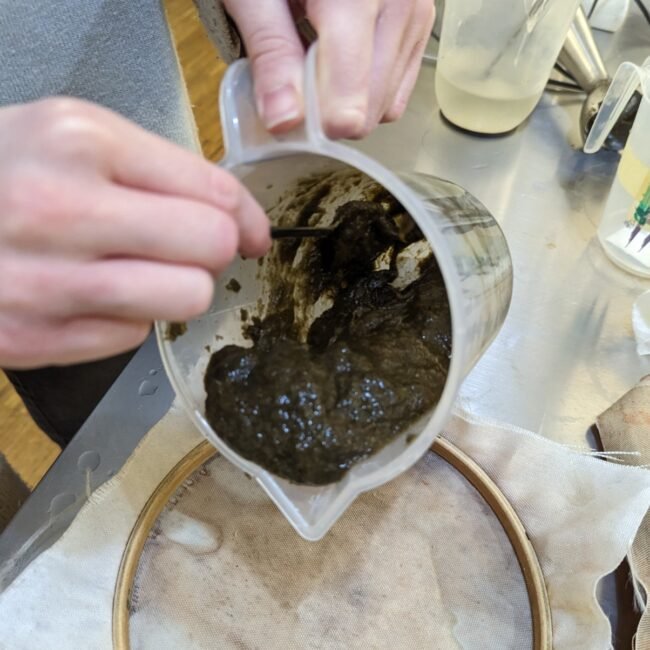
Nata de coco, that contains pure bacterial cellulose, as an ingredient for alternate leather.
Kombucha experiment
Continuing Toshiko Taira's legacy
The discipline I encountered at Kijoka sits within the legacy of Toshiko Taira, who devoted much of her life to reviving bashofu after the Second World War and rebuilding a community of production around it.
Here, continuity depends on repetition—but repetition with extraordinary skill.
What if changing the process means losing part of the knowledge?
03 / TRADITION AS A LIVING MATERIAL
Akiko Ishigaki / Kūru-Kōbō, Iriomote
Then I met Akiko Ishigaki.
If Kijoka made me think about preservation through precision, Akiko-san made me think about continuity through adaptation.
At Kūru-Kōbō, the island itself seems to enter the textile. Plants become fibres and dyes. Indigo is cultivated and processed. Cloth moves through mangrove water. Materials are used because they are there, because they carry a story, or simply because Akiko-san sees possibility in them.
Her willingness to experiment can be startling. Traditional fibres can sit alongside unexpected materials—even plastic. Yet the work never feels disconnected from place.
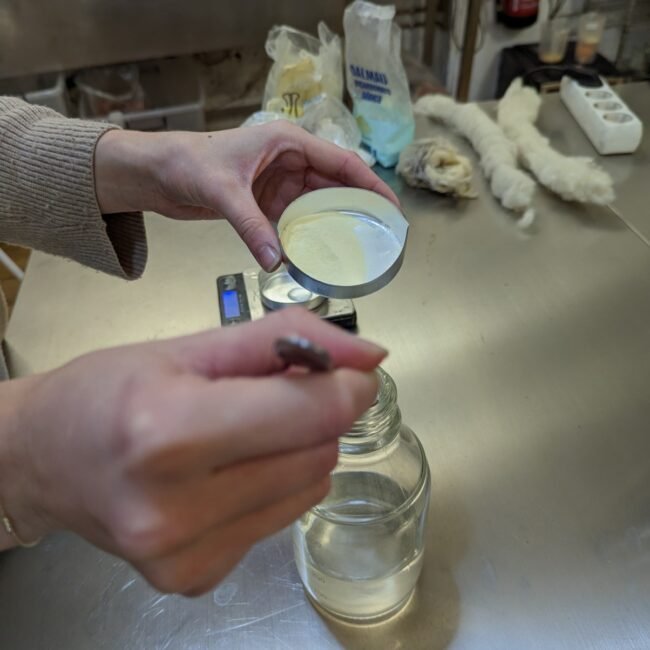
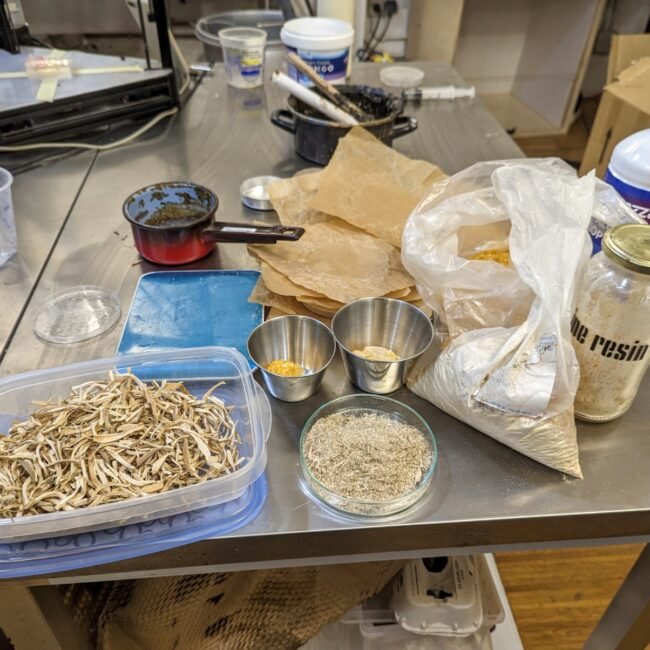
Ingrediants ready and weighed
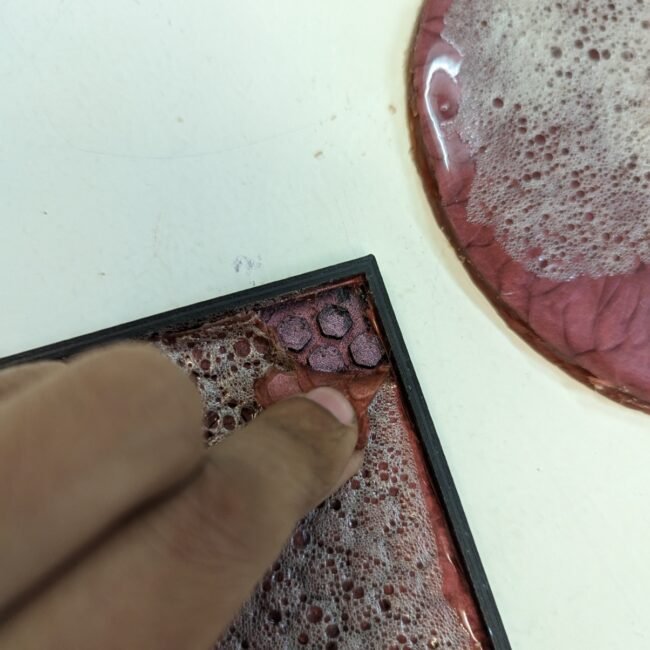
Casting biomaterial
Umi Sarashi
One of the processes that stayed with me most was umi-sarashi—taking dyed textiles into the shallow brackish waters around the mangroves.
Here, landscape is not the backdrop to making. Landscape participates in making.
Ingrediants ready and weighed
Casting biomaterial
What if tradition survives precisely because it is allowed to change?
04 / KNOWLEDGE PASSES FROM PERSON TO PERSON
Chika Miyara / Karansha
Chika Miyara’s practice made another form of continuity visible to me: the relationship between master and student.
Chika-san spent time learning at Akiko Ishigaki’s workshop and from other textile masters before developing her own practice at Karansha. Her work carries this accumulated knowledge forward while becoming distinctly her own.
Indigo became one of the threads I followed through her studio—plant, vat, colour, repetition and the patience required to build depth.
Wood textile
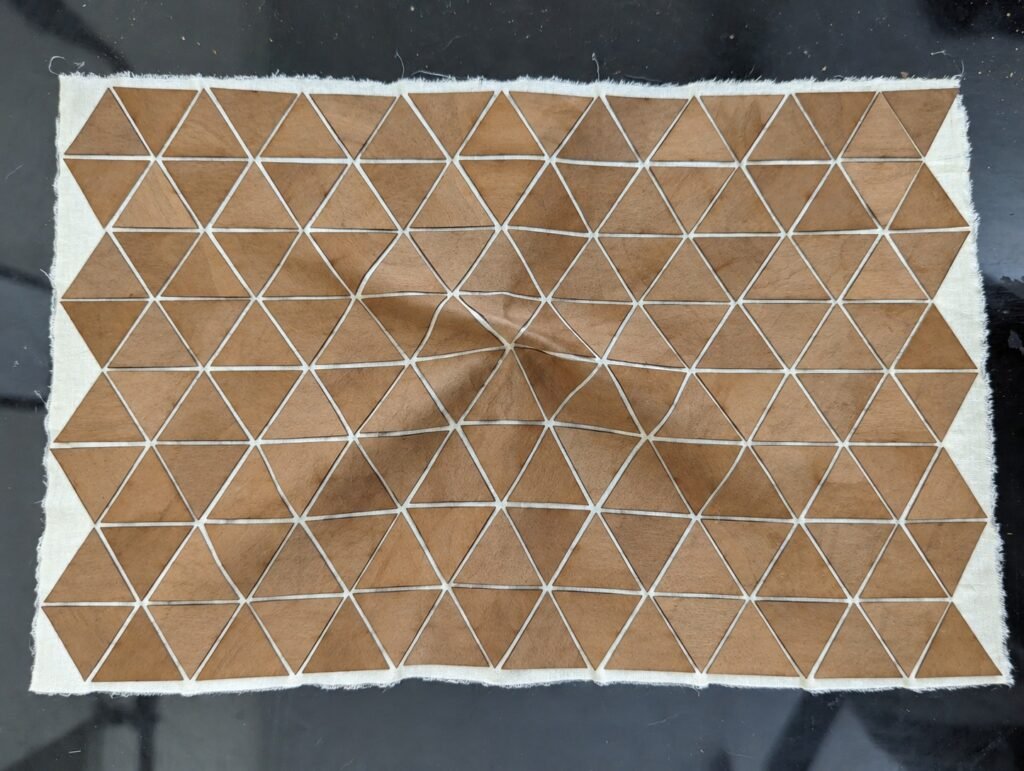
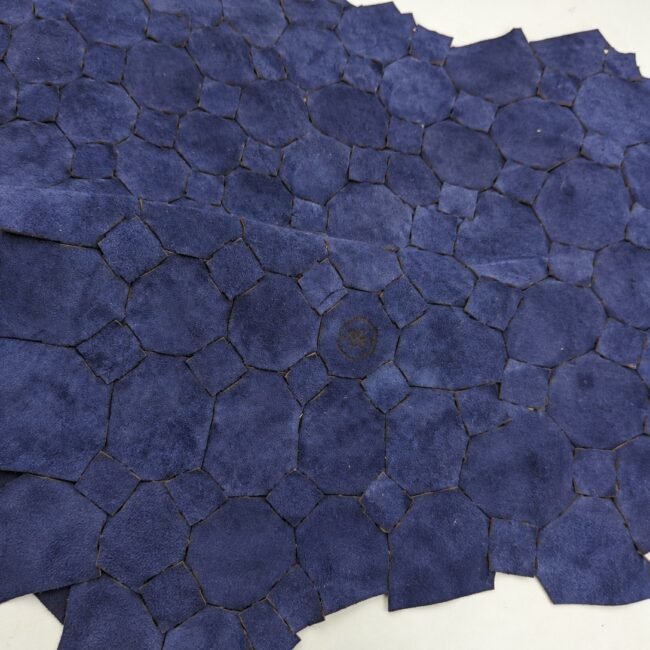
Laser cut leather pieces joined together
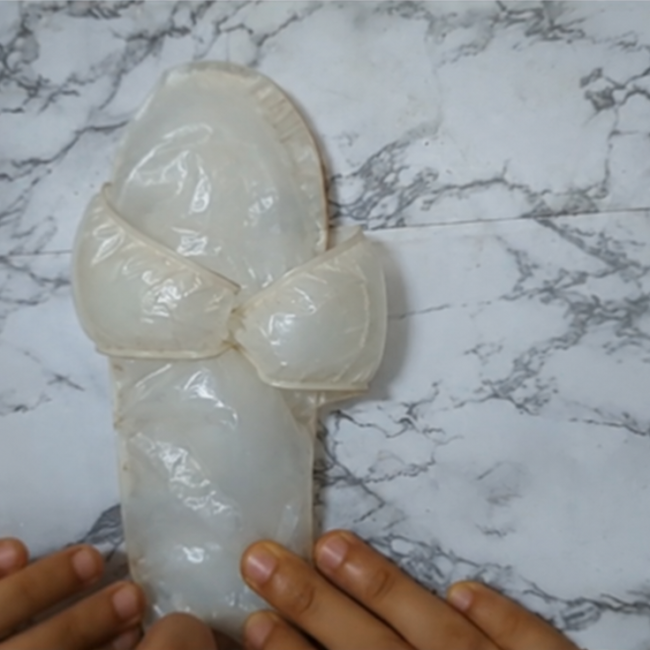
Soft robotics shoe-pneumatic flaps that close when air is pumped inside
Tradition also travels through people
05 / TAKING TRADITION OUT INTO THE WORLD
Gusuku Bingata
At Gusuku Bingata, I encountered another strategy: take the tradition outward.
Bingata is already a visually powerful language—stencils, rice-paste resist, pigments, repeated layers of colour. But here I became interested in how a younger generation was creating new entry points into the practice.
Workshops, educational kits, collaborations and projects outside Okinawa allow people to encounter the process without first having to become professional artisans.
FROM STENCIL TO COLOUR
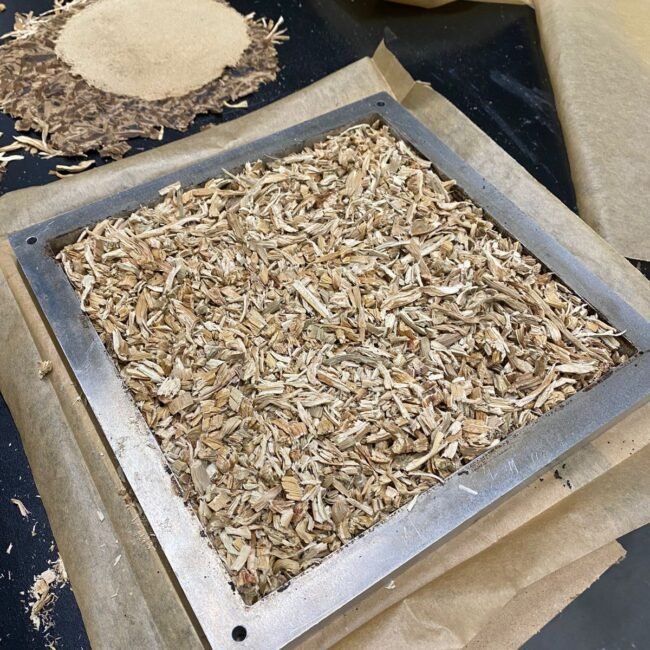
Water hyacinth fibre →
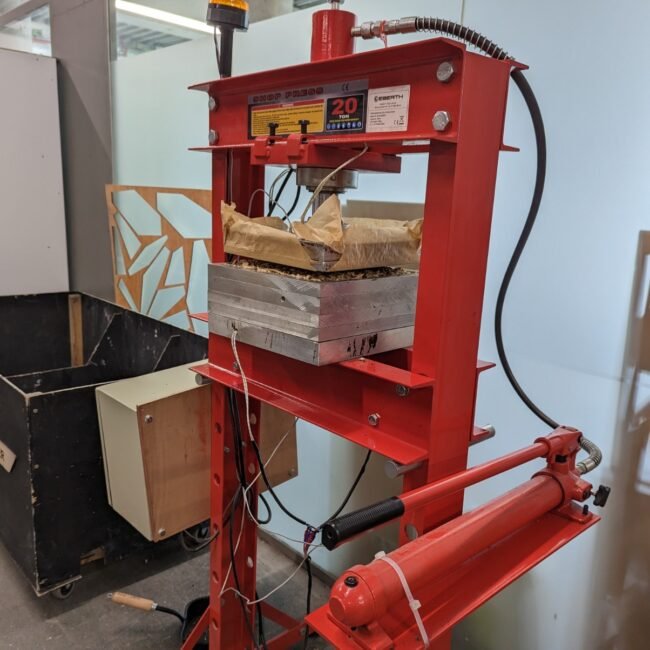
Press →
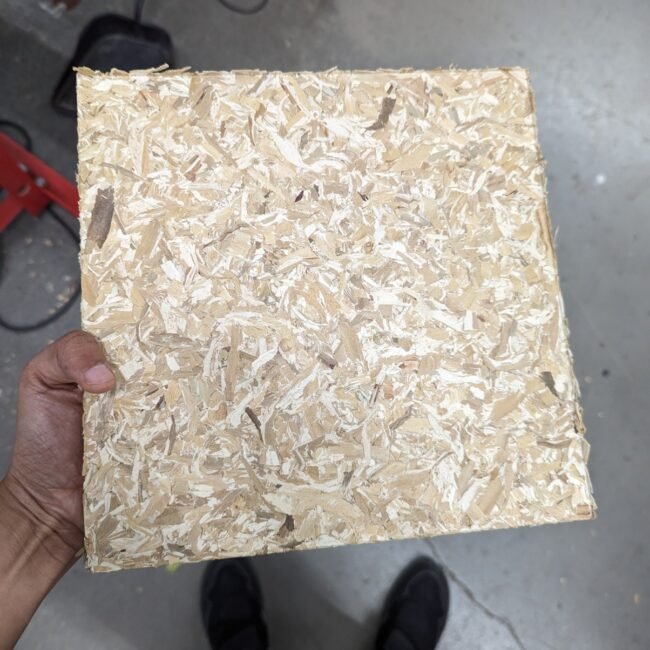
Board
Water hyacinth fibre →
Press →
Board
Water hyacinth fibre →
Press →
Board
The WWII shell detail
A small object carried a much larger history. An empty shell left from the Second World War had been repurposed as the tip of a tool used to pipe rice paste.
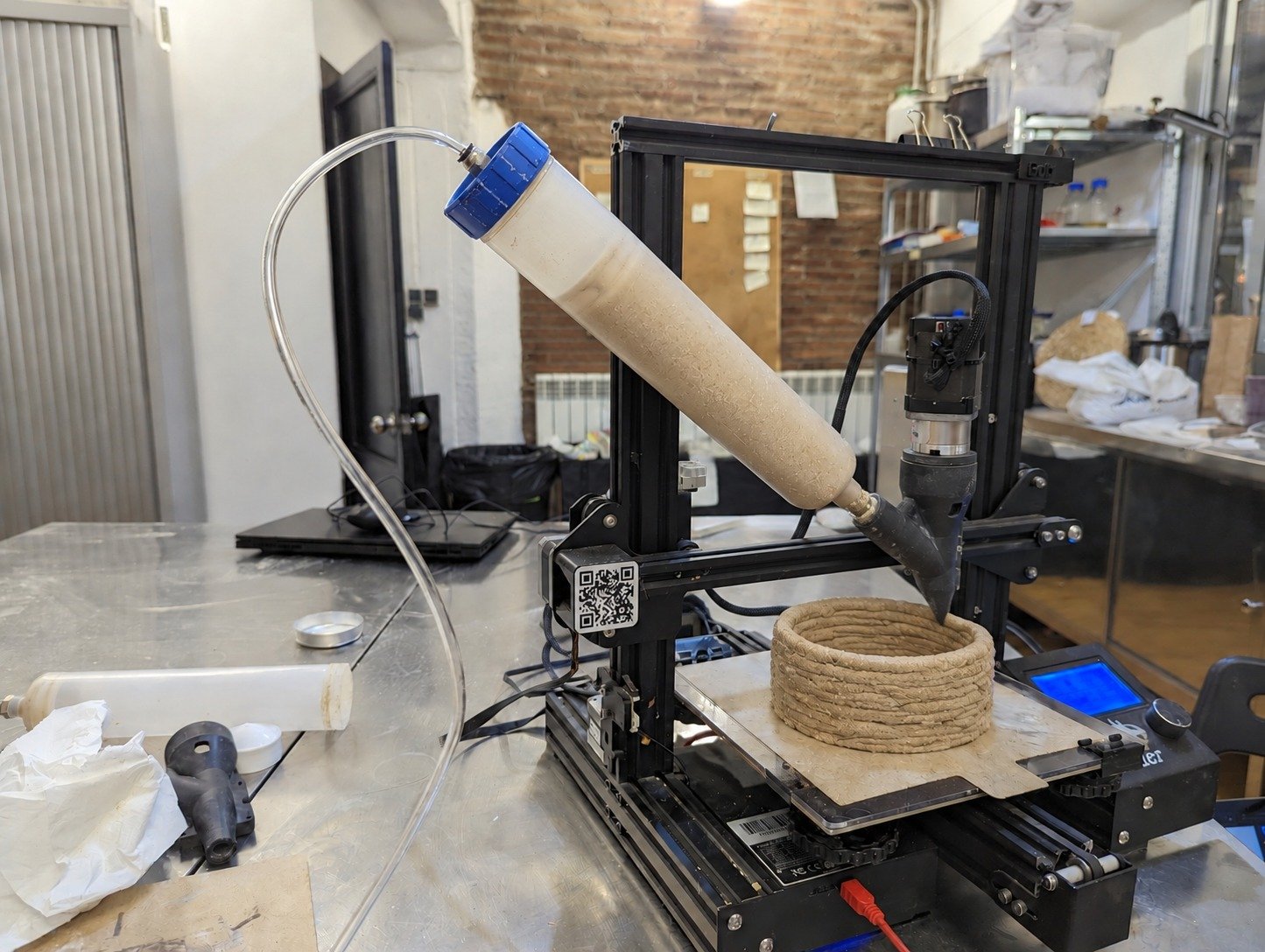
3D printing water hyacinth biomaterial
JTA collaboration
Lorem ipsum dolor sit amet, consectetur adipiscing elit. Ut elit tellus, luctus nec ullamcorper mattis, pulvinar dapibus leo.
Learner's Kit
A small object carried a much larger history. An empty shell left from the Second World War had been repurposed as the tip of a tool used to pipe rice paste.
3D printing water hyacinth biomaterial
Can accessibility become a form of preservation?
06 / A TRADITION WITHOUT A WORKSHOP
Pachipachi / Bashofu Collaborative
Pachipachi showed me something I hadn’t encountered in quite the same way elsewhere.
There was no single master at the centre of a permanent workshop. No inherited studio containing generations of tools. Instead, younger makers were finding ways to work collaboratively around bashofu.
Compared with Kijoka, the relationship to tradition felt looser. That looseness also exposed one of the most difficult questions I encountered during my research.
Who gets to decide when adaptation is still tradition—and when it has become something else?
Some established practitioners I spoke with were deeply critical of approaches that departed from prescribed traditional processes.
3D printing water hyacinth biomaterial
07 / FIVE STUDIOS, FIVE ANSWERS
KIJOKA Preserve the process.
KŪRU-KŌBŌ Let tradition adapt to place and material.
KARANSHA Carry knowledge from master to maker.
GUSUKU BINGATA Create new ways into the tradition.
PACHIPACHI Build new structures for practising together.
I began the research wanting to understand Okinawan textile traditions.
I left more interested in the disagreements.
Preservation was not one philosophy shared by everyone. For some, changing a process risked breaking the chain of knowledge that gave the textile meaning. For others, experimentation was exactly what kept a practice alive. Others were concerned with teaching, accessibility, collaboration or finding ways for another generation to enter.
Perhaps the tension itself is evidence that these traditions are still alive.
08 / WHAT I CARRIED BACK
01 When does protecting a process protect knowledge—and when does it prevent experimentation?
02 If the material changes but the knowledge remains, is it still the same tradition?
03 What actually passes from master to student: technique, philosophy, rules or ways of seeing?
04 Can making a tradition easier to access strengthen it without simplifying it?
05 Who has the authority to decide what is authentic?
06 Does a tradition survive by remaining intact—or by remaining useful?
FIELD NOTES → ONGOING PRACTICE
I went to Okinawa looking for techniques. I came back thinking about continuity.
The studios were working with different materials, processes and philosophies, but they kept returning me to the same question.
What are we actually trying to preserve?
The object? The material? The process? The skill? The livelihood? The relationship with place? Or the ability of another generation to make the tradition their own?
I don’t think Okinawa gave me one answer. That may be what made the research valuable.