Notes from IAAC on biomaterials, textiles, digital fabrication and learning to design the material as well as the object
01 / THE MACHINE WAS ALREADY FAMILIAR
By the time I arrived in Barcelona, digital fabrication was not new to me. I had already spent considerable time in Fab Labs, including Super FabLab Kochi, working around CNC machines, laser cutters, 3D printers and electronics.
IAAC wasn’t bigger. It didn’t have to be.
What felt different was what sat alongside the machines.
Materials were being cooked, grown, shredded, cast, pressed and tested. Textile processes crossed into computation. Biology entered fabrication. A machine was no longer necessarily the starting point of making.
I began to see the material itself as something that could be designed.
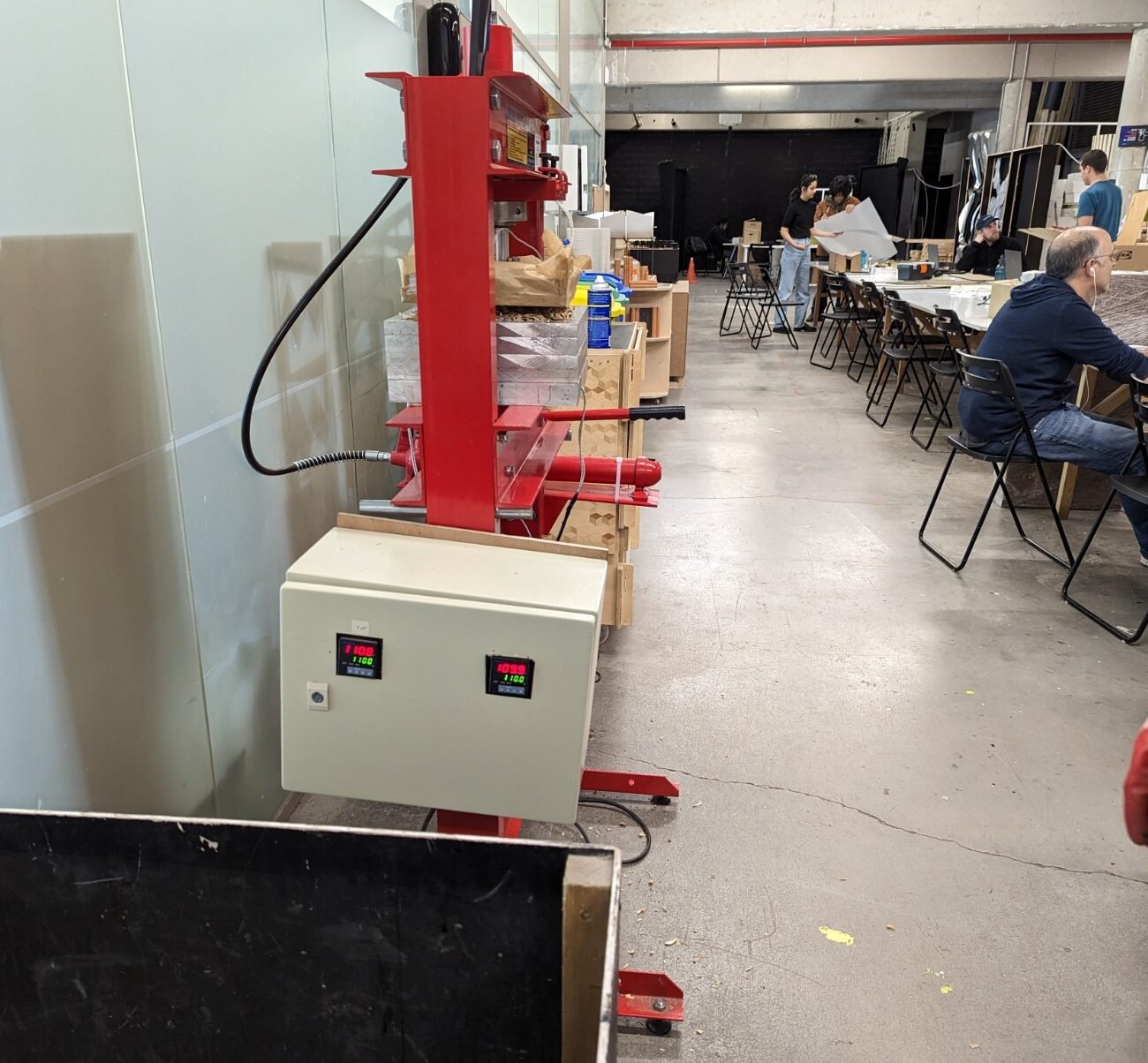
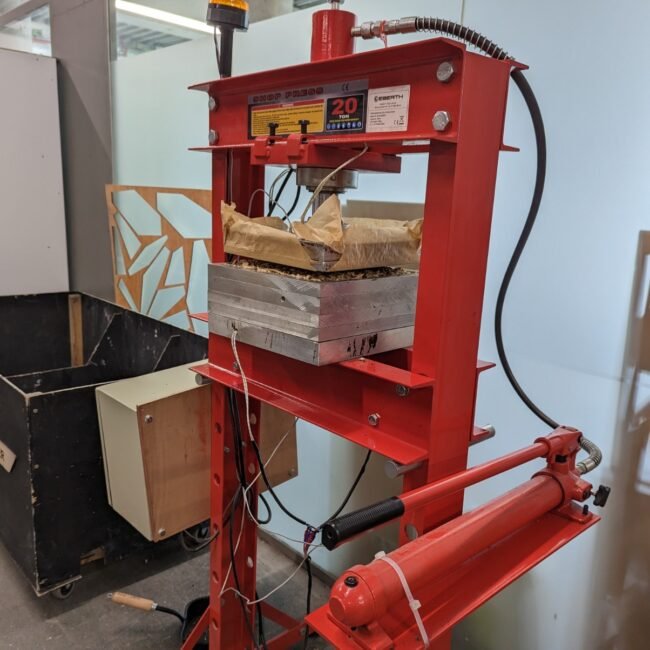
The biomass press in the studio room
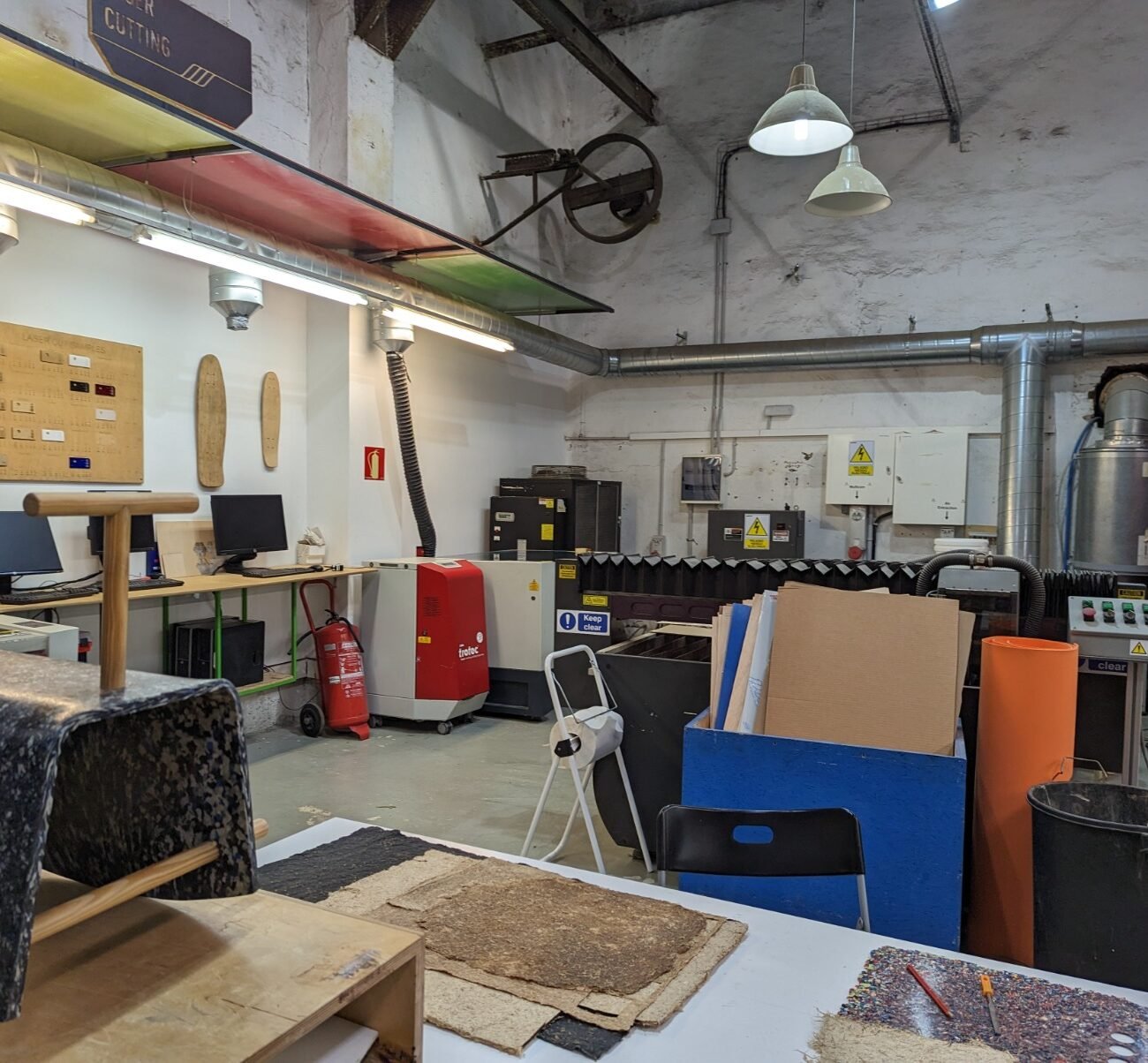
Laser cutting room. Biomaterial is drying on the table, precious plastic chair on the side
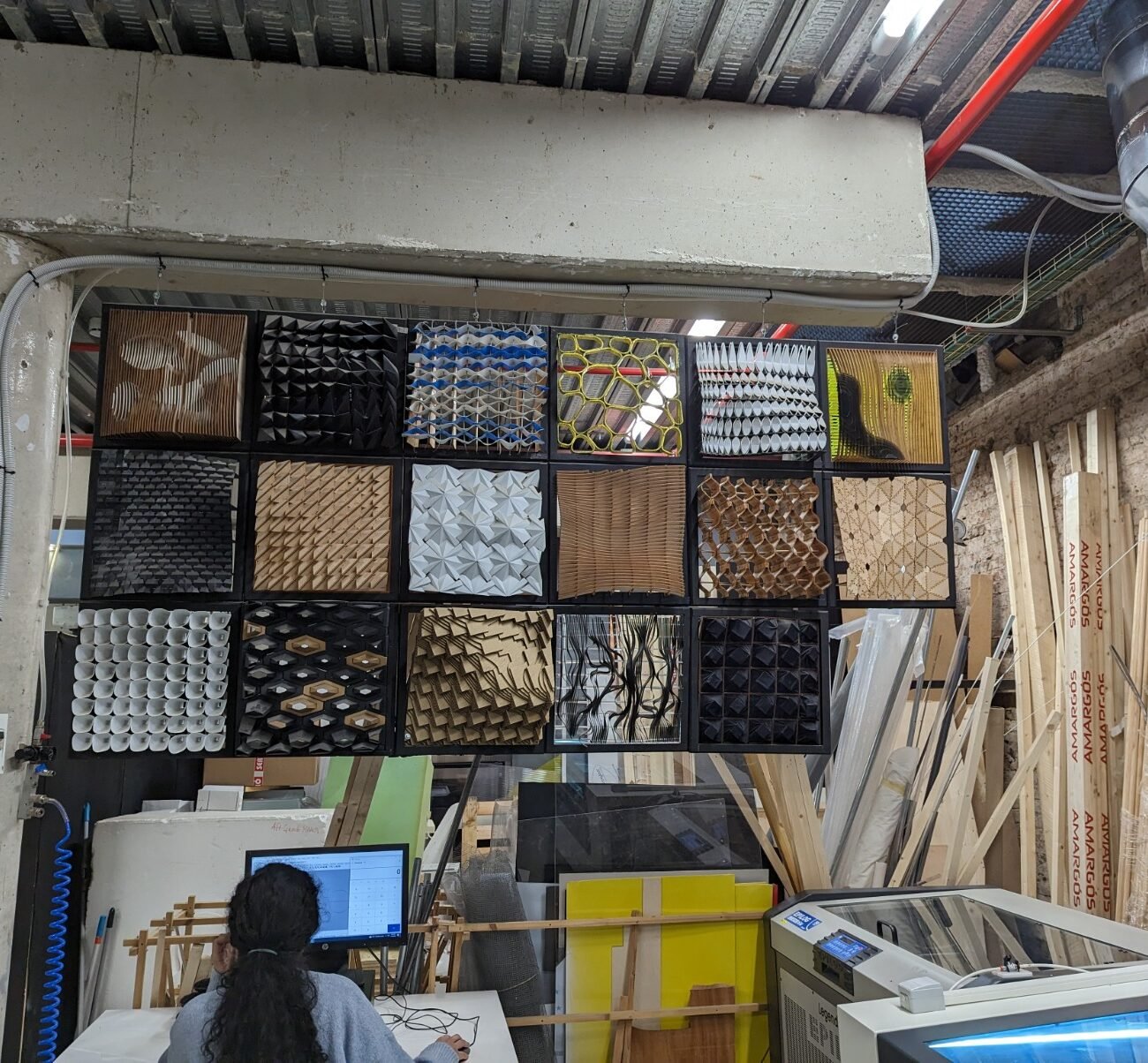
Various grasshopper experiments on different materials displayed in the workshop
02 / THE MATERIAL BEFORE THE OBJECT
My earlier design process often began with a material I already understood: wood, textile, acrylic, metal. The questions came afterwards. What could I cut? Mill? Print? Assemble?
At IAAC, I started one step earlier.
What if I could change the material itself?
Its flexibility. Its strength. Its texture. Its porosity. Its thickness. How it responded to heat or water. How it could be formed.
Suddenly the material was no longer a fixed input into the design process. It became another design variable.
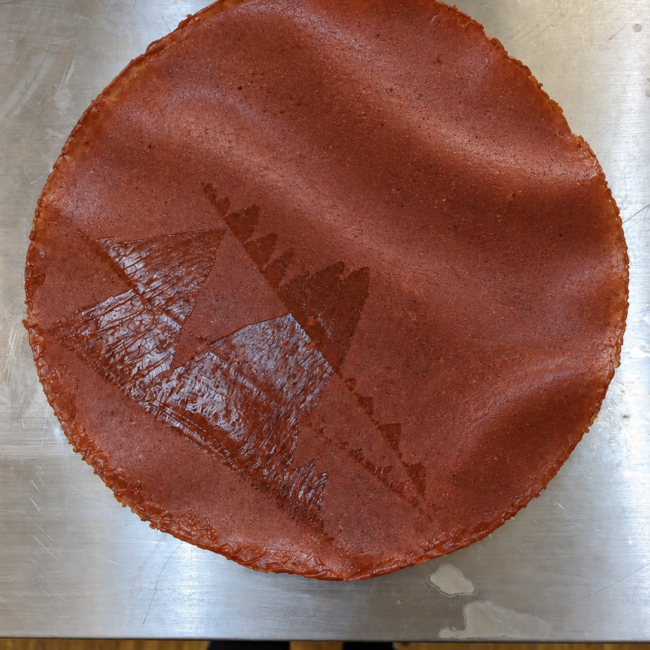
Bioplastic experiment
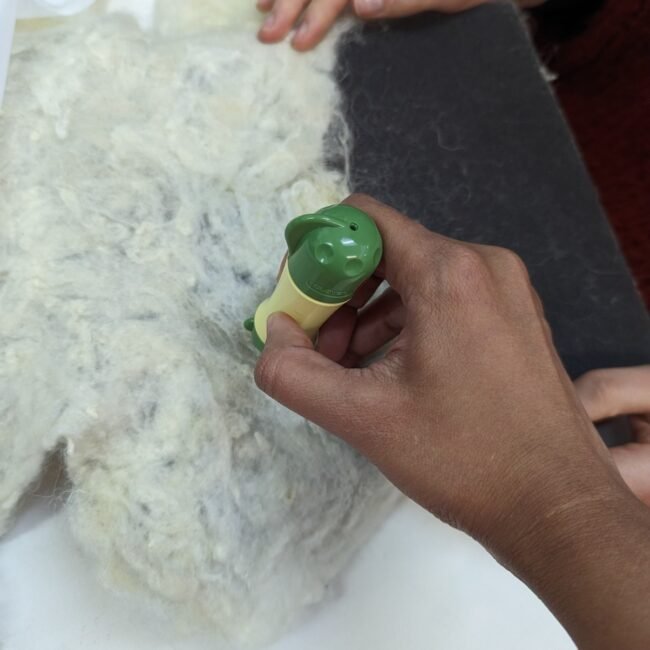
Felting to make woolen textile
The machine shapes the material. But what if I could shape the material first?
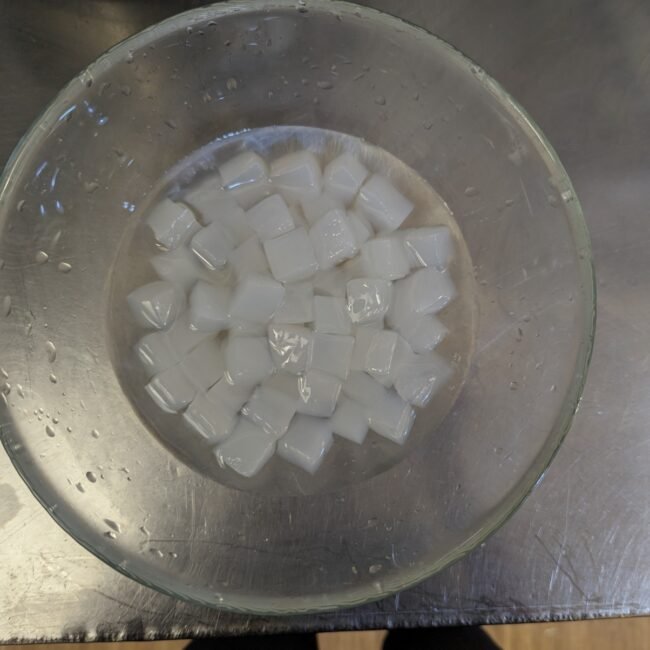
Nata de coco, that contains pure bacterial cellulose, as an ingredient for alternate leather.
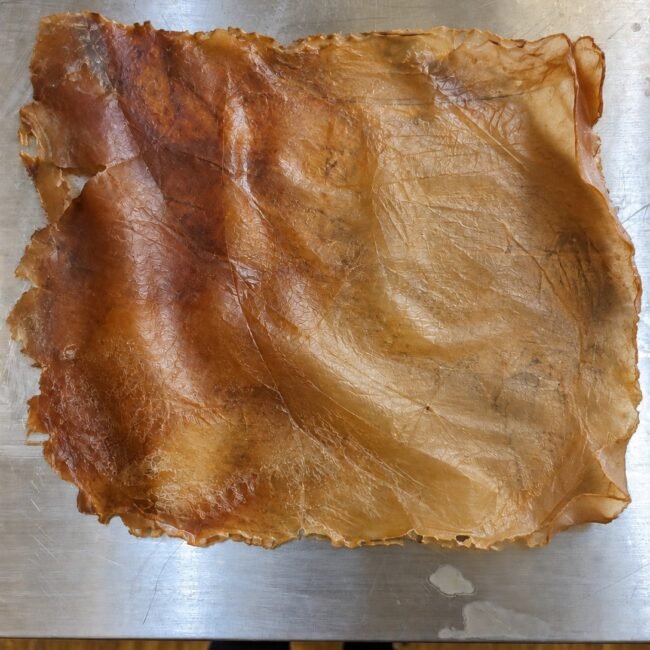
Kombucha experiment
03 / A MATERIAL CAN HAVE A RECIPE
Biomaterials made this shift tangible.
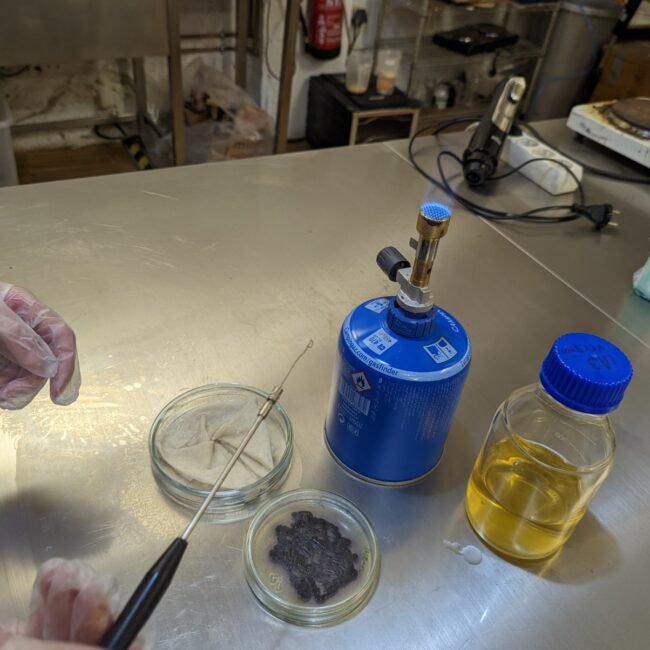
Recipes replaced material catalogues. A few grams more glycerine could change flexibility. Fibre length could change structure. Drying could completely alter a sample. Heat, moisture, pressure and time became design parameters.
Failures became unexpectedly useful. A sample that cracked, curled, shrank or grew mould was telling me something about how the material behaved.
I wasn’t simply making things anymore. I was beginning to formulate materials.
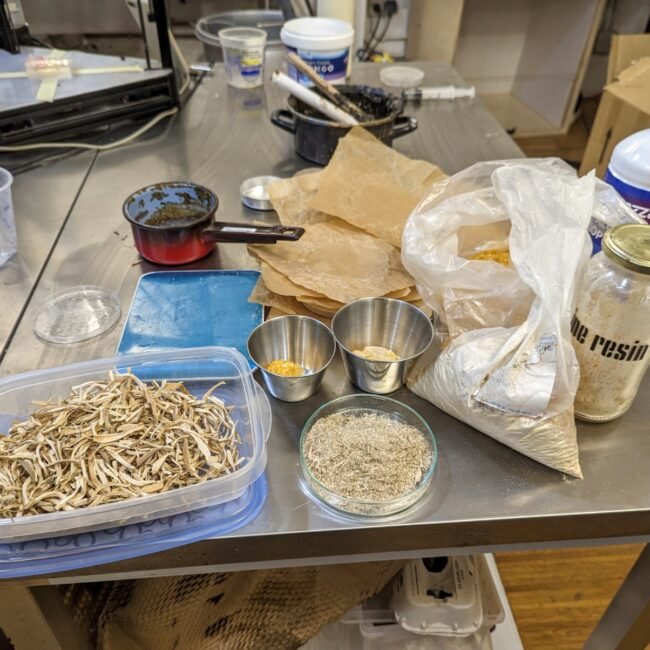
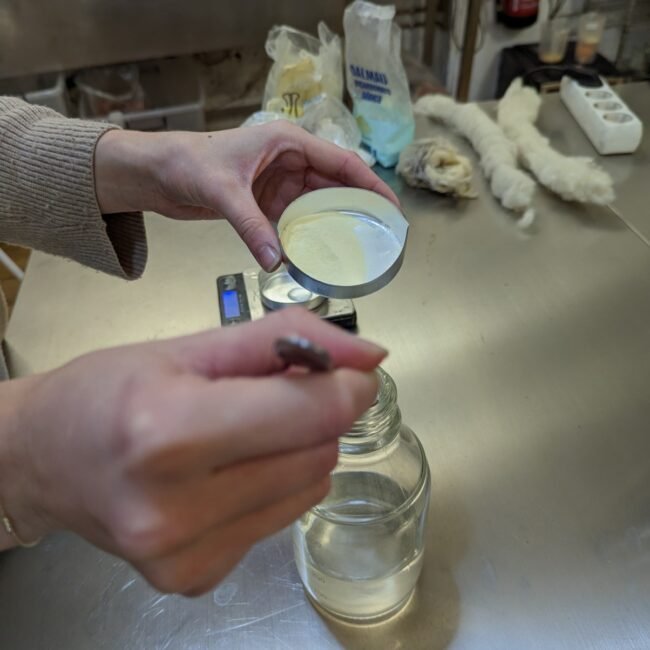
Ingrediants ready and weighed
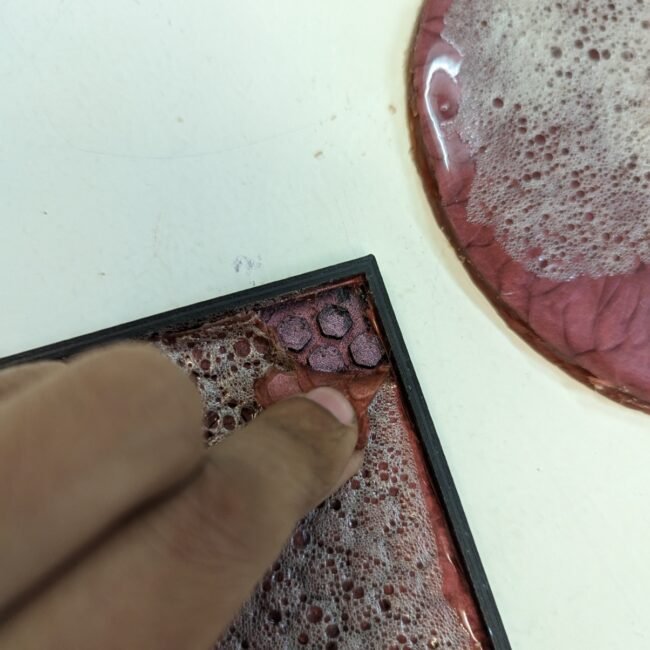
Casting biomaterial
Failures became unexpectedly useful
Experimenting formula
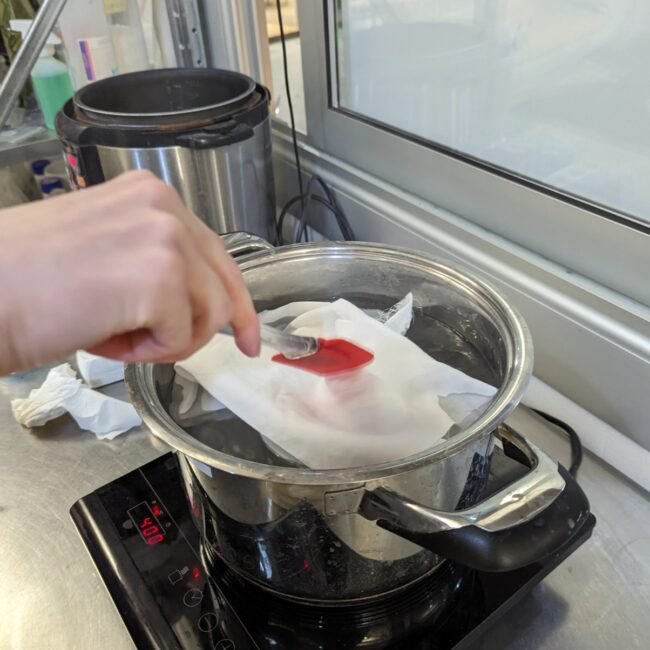
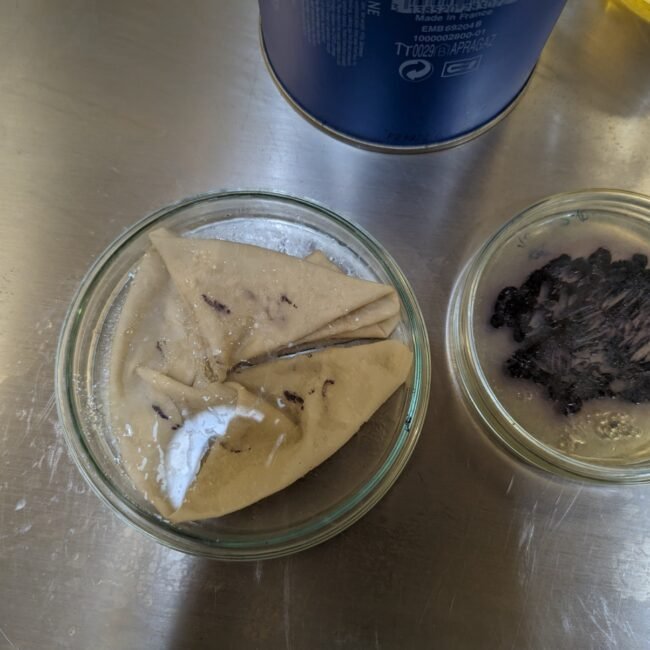
Mordanting cotton
04 / TEXTILE BEYOND CLOTH
Barcelona also destabilised another material category I thought I understood well: textile.
I had worked with textiles and weaving for years. But Fabricademy encouraged me to think about textile as a structural principle rather than a material category.
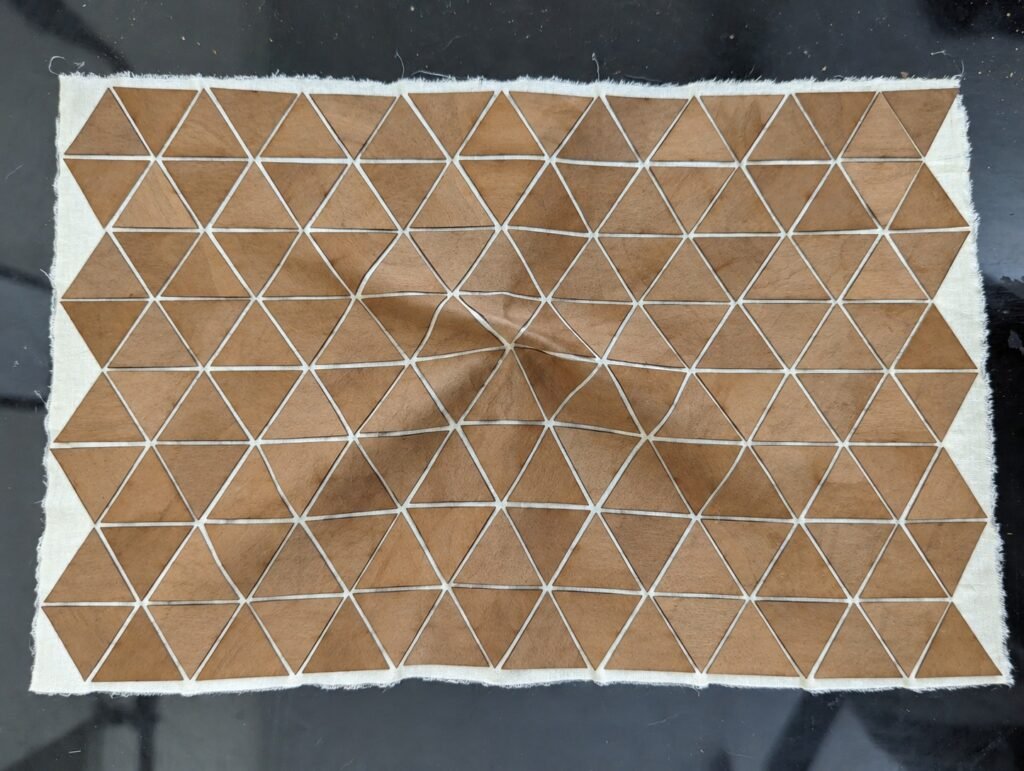
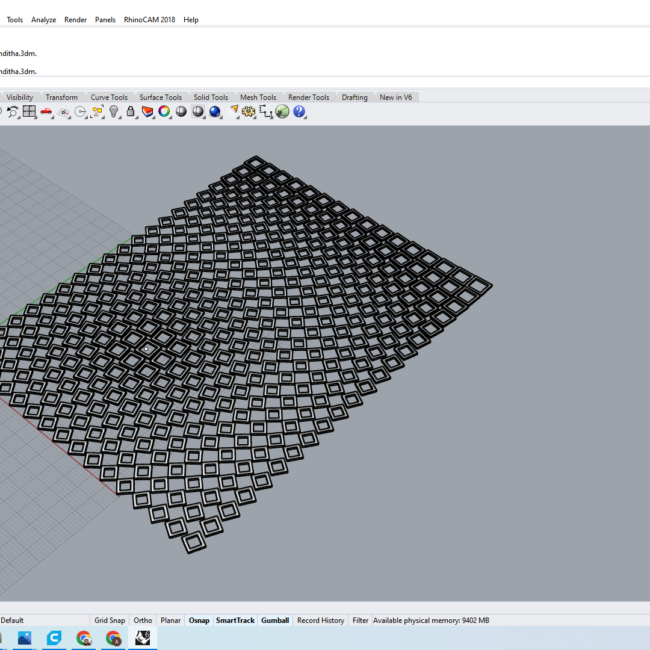
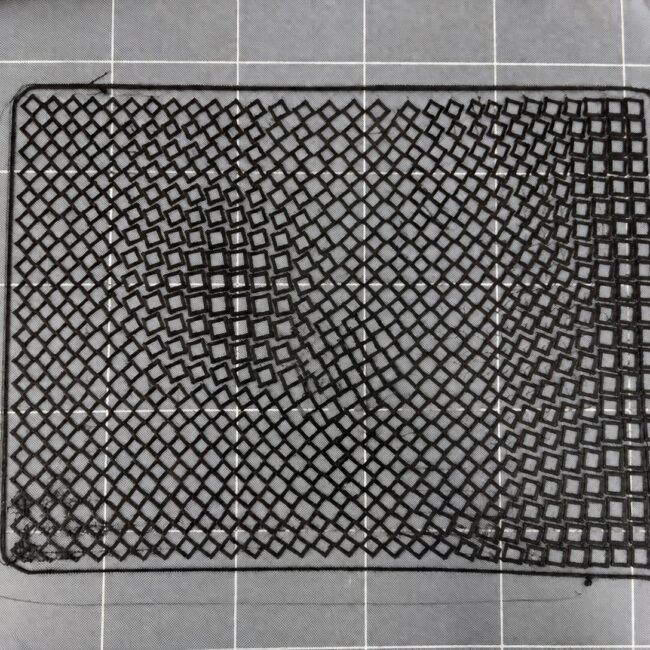
Flexible structures could emerge from rigid components. Wood could behave like cloth. A 3D-printed surface could bend because of its geometry. Parametric design could determine how thousands of small units connected.
The question changed from “What fabric should I use?” to “What makes something behave like a textile?”
Wood textile
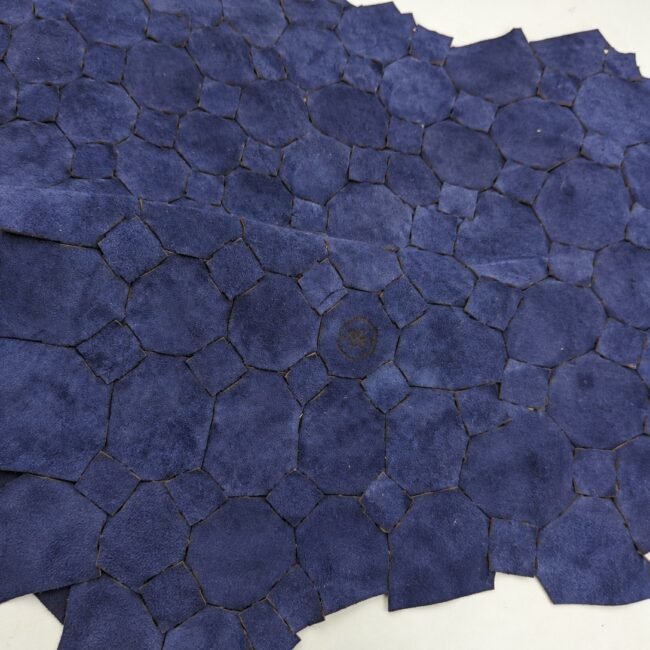
Laser cut leather pieces joined together
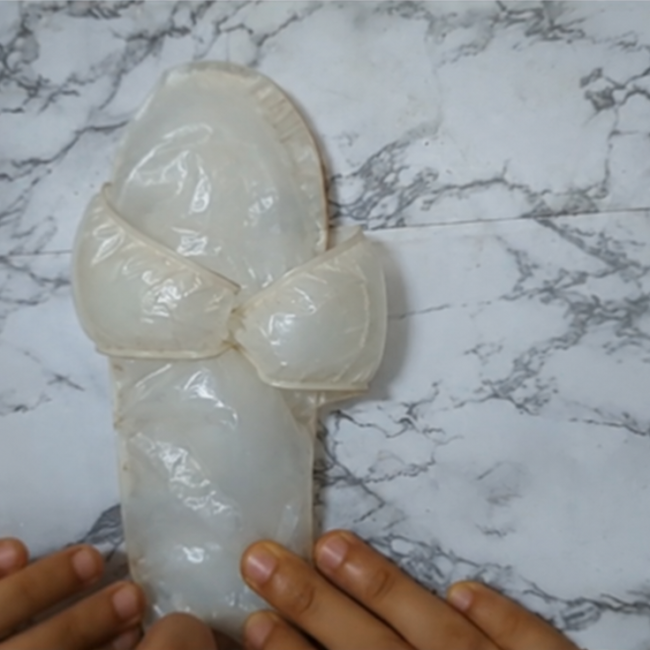
Soft robotics shoe-pneumatic flaps that close when air is pumped inside
05 / MATERIAL + MACHINE
Once I started thinking about material differently, familiar machines began to look different too.
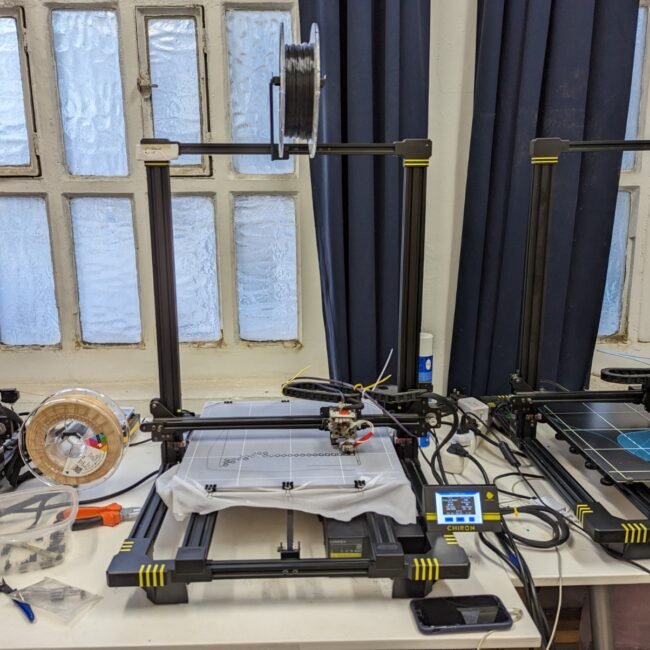
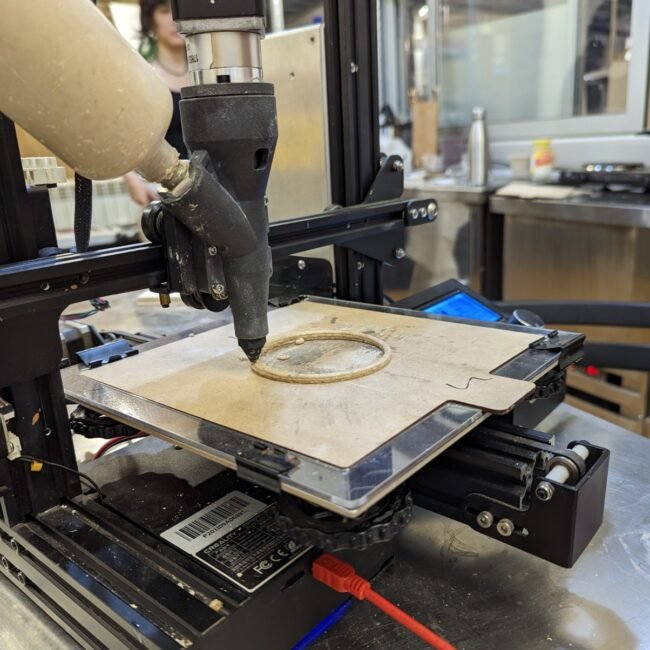
A laser cutter was not simply a machine for cutting sheet material. A CNC mill could create the tooling that shaped another material. A 3D printer was an extrusion system whose feedstock might itself be redesigned. A heat press could become part of a material-development process.
The interesting question was no longer simply “What can this machine make?”
It became:
“What relationship can I create between this process and this material?”
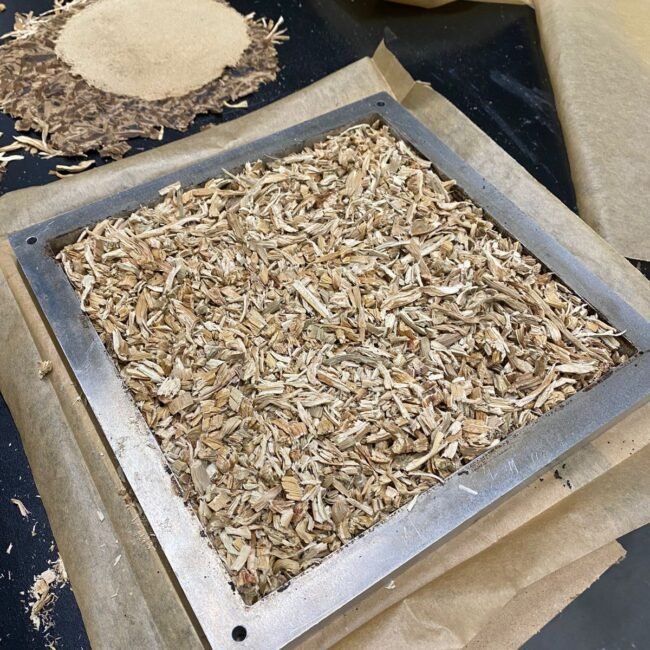
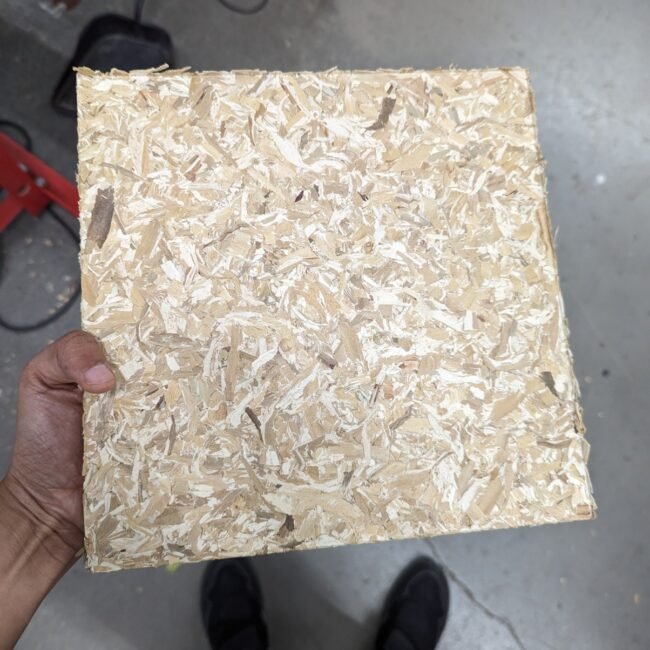
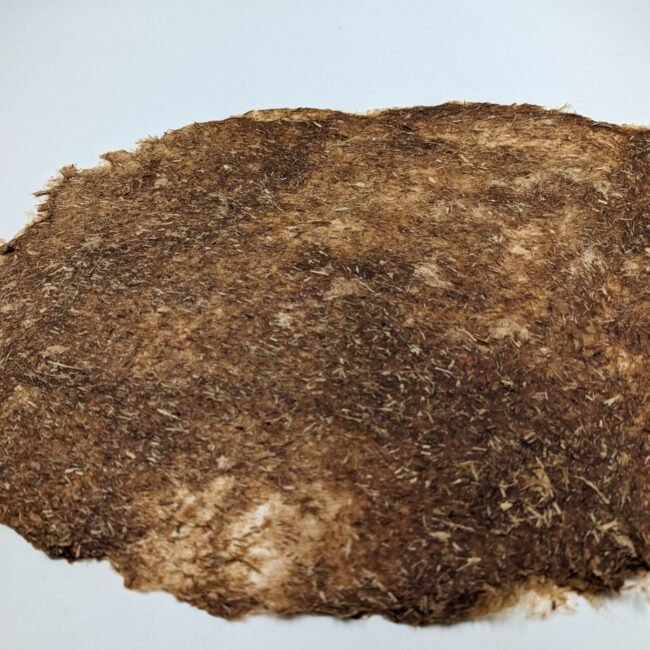
Water hyacinth fibre →
Press →
Board
Digital geometry →
3D printer →
Flexible structure
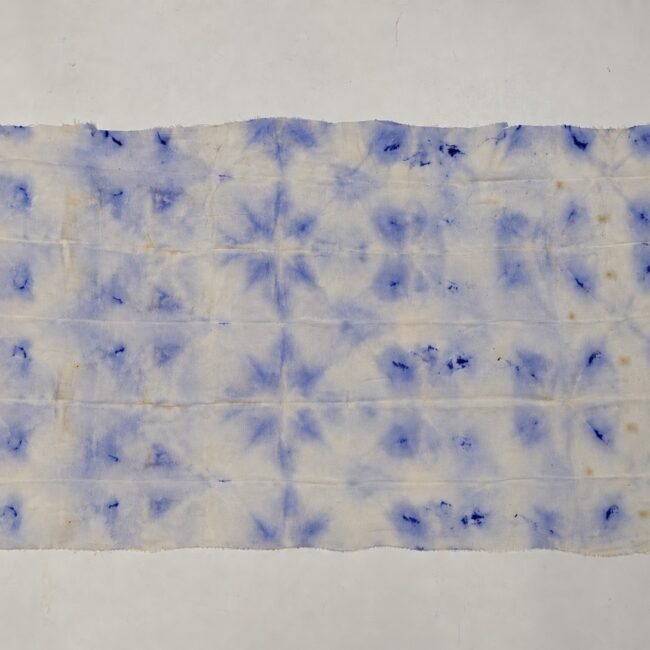
Textile →
Inoculated with bacteria →
Dyed textile
06 / WATER HYACINTH BECOMES POLA
Water hyacinth came into this new way of thinking at exactly the right moment.
I had known the plant as an environmental problem. I had already been interested in finding productive uses for it. But I increasingly stopped asking:
“What product can I make from water hyacinth?”
and started asking:
“What kind of material can water hyacinth become?”
Each form suggested different properties, processes and applications.
That shift eventually became central to Pola: not one water-hyacinth product, but a platform for exploring what one abundant biological resource might become.
3D printing water hyacinth biomaterial
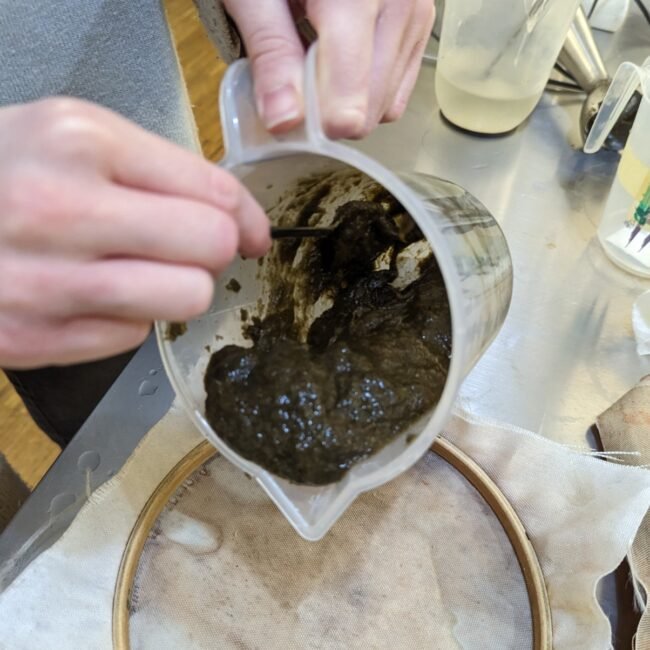
Water hyacinth biomaterial formulation
Casted experiments with water hyacinth
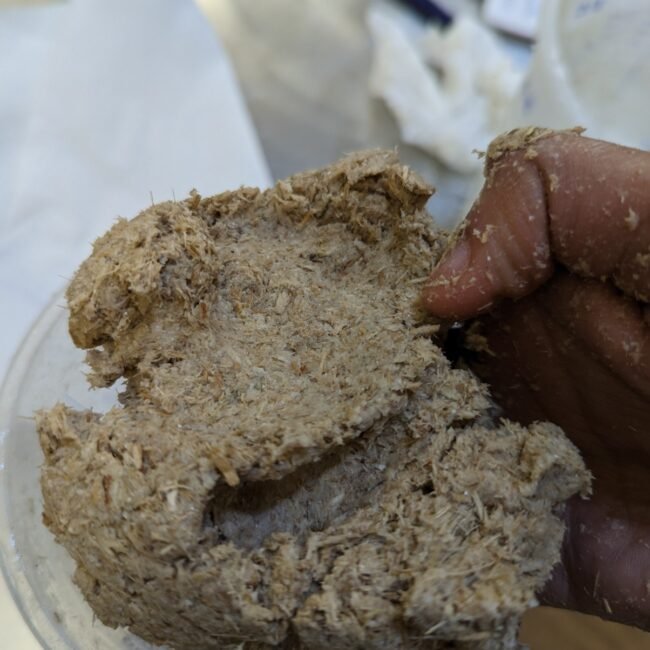
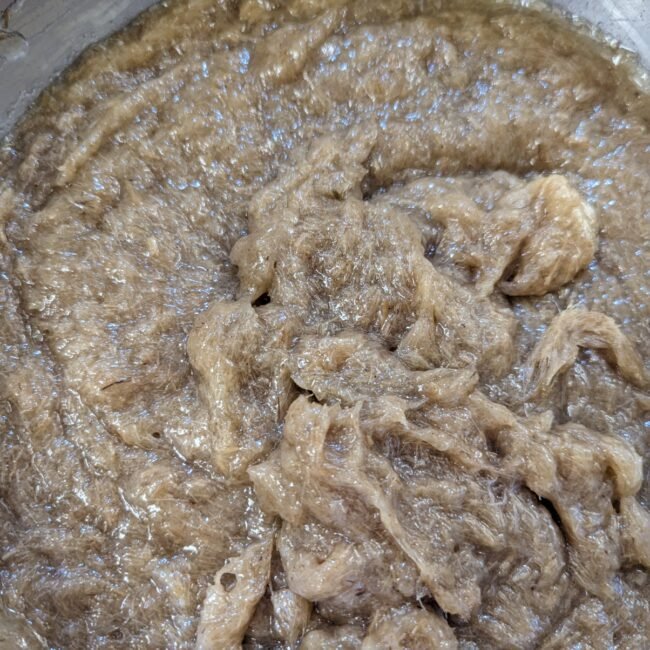
Water hyacinth pulp
07 / LOOKING BEYOND THE OBJECT
Once material and fabrication became part of the same question, I began noticing projects around IAAC differently.
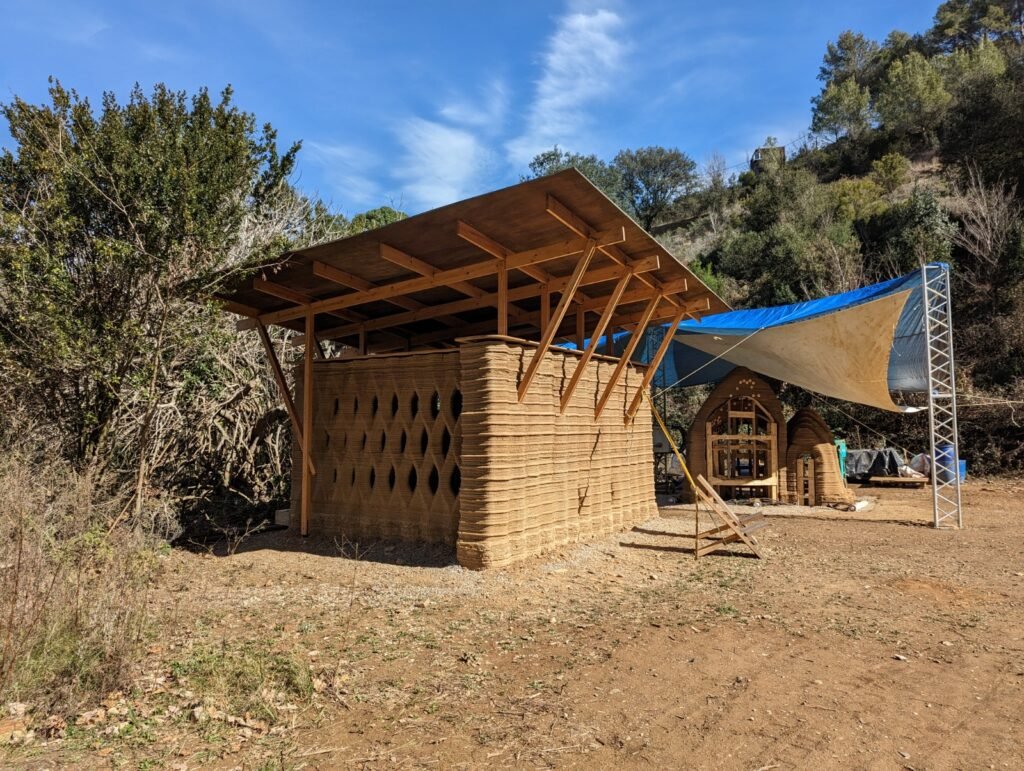
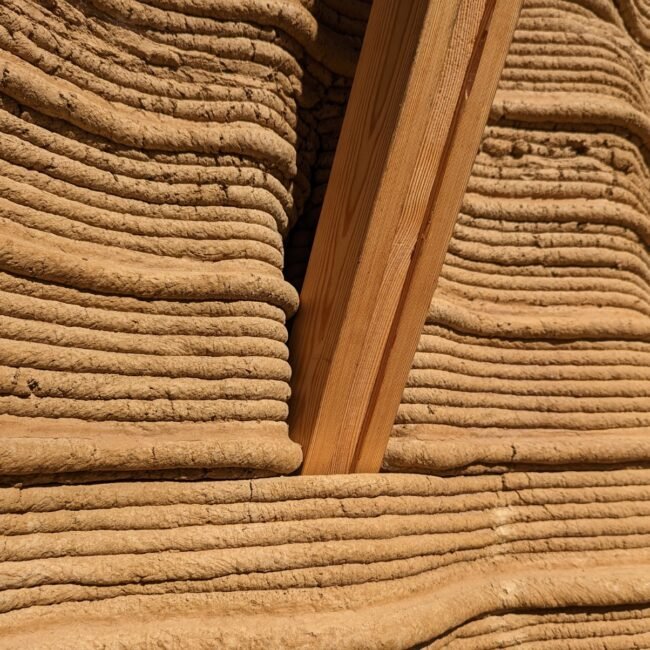
TOVA was one of them.
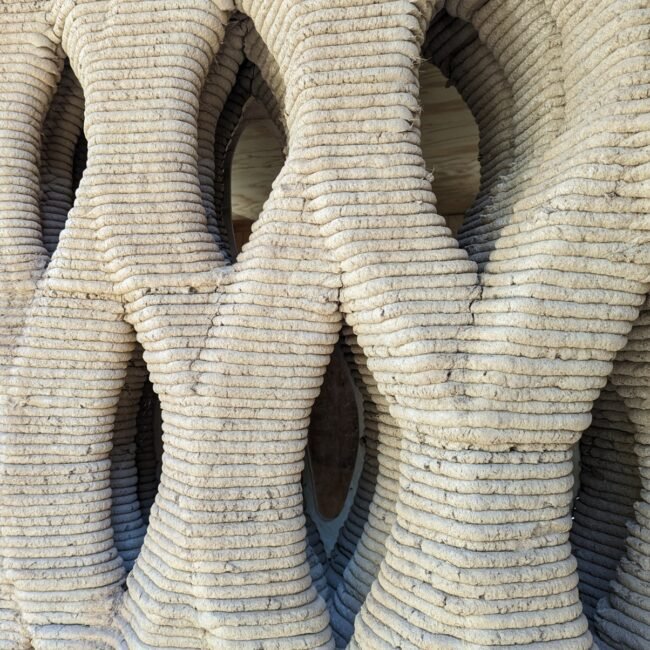
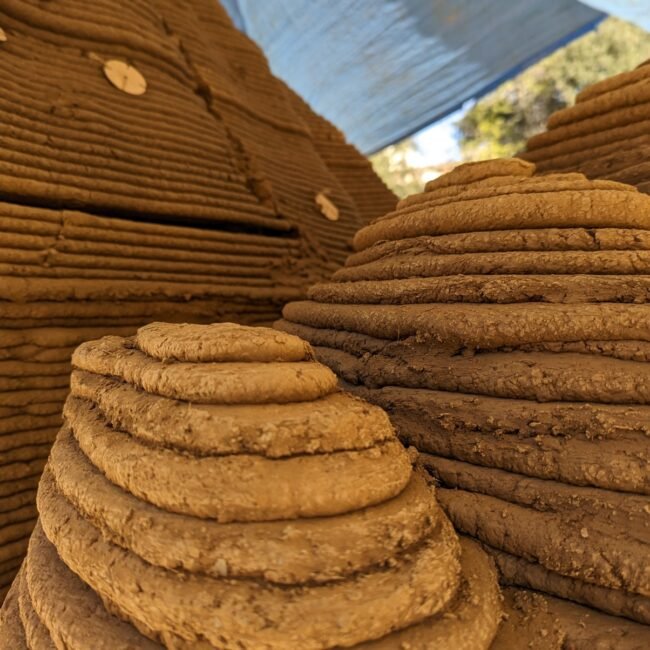
I wasn’t involved in making it, but I explored the project closely. What interested me wasn’t simply the spectacle of a 3D-printed building. It was the combination: an advanced fabrication system working with earth.
One of humanity’s oldest building materials was being reconsidered through computational design and robotic fabrication.
The sophistication wasn’t necessarily in inventing a futuristic new material. It was in creating a new relationship between local material + digital process + geometry + machine.
TOVA / IAAC 3D Printing Architecture — explored during my time at IAAC; not my project.
08 / THE LAB WAS IN THE TABLES
Some of the most interesting things at IAAC weren’t inside machines.
They were sitting on tables.
Strange samples. Failed recipes. Fibres. Powders. moulds. Pieces drying overnight. Someone else’s experiment that made me ask a completely different question about my own.
Working alongside people experimenting with cellulose, food waste, bioplastics, textiles, computational design and fabrication made the boundaries between disciplines increasingly porous.
The value of the lab wasn’t its size. It was the density of experimentation happening inside it.
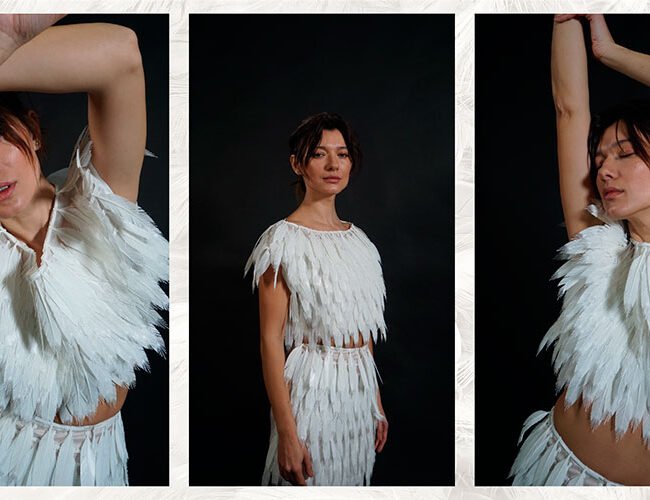
Florence's artificial feather
WORK AROUND ME AT IAAC
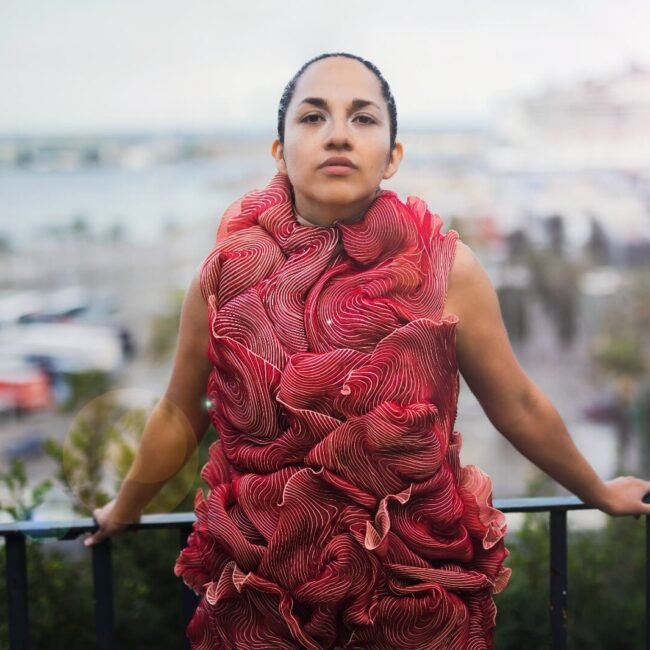
Dinesh's 3D printed fashion
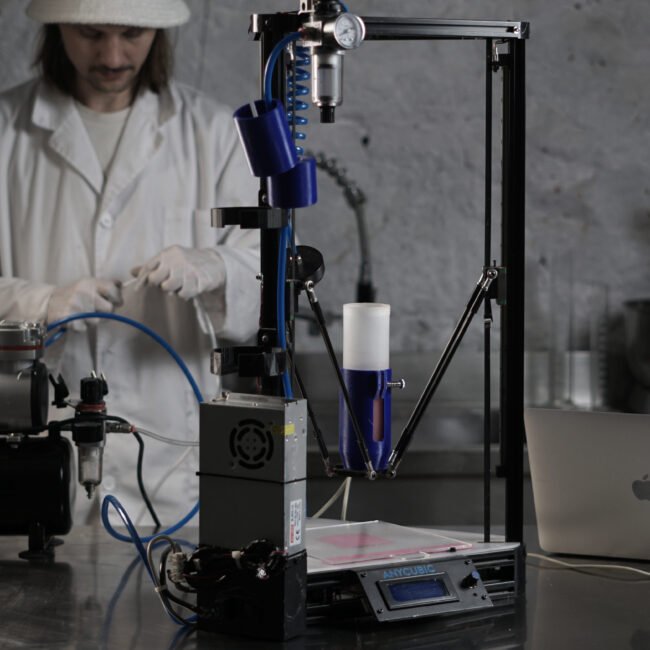
Alve's 3D printed biomaterial textile
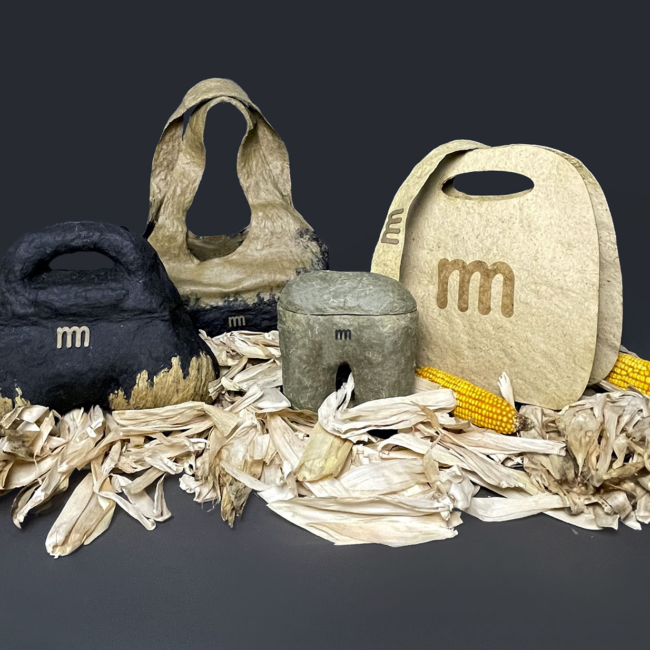
Emma's bags from agricultural waste
09 / WHAT I CARRIED BACK
01 What if material development begins before product design?
02 Can I design a material and the machine that processes it together?
03 How many material behaviours can exist inside one biological resource?
04 What happens when textile, biology and digital fabrication stop being separate disciplines?
05 Can sophisticated fabrication begin with ordinary, locally available materials?
06 What if the material is not an input to the design—but part of the design itself?
FIELD NOTES → ONGOING PRACTICE
Digital fabrication remained important, but the starting point had shifted.
I increasingly began to think in relationships:
resource → material → property → process → machine → application
That way of thinking continues through Pola and through my work with biomass presses, water-hyacinth composites, digital fabrication and tools.
Sometimes the challenge is to design a better object. Sometimes it is to design a better machine.
And sometimes the real design question begins with the material itself.