Notes from Bhutan’s looms, patterns, people and experiments
01 / FOLLOWING THE THREAD
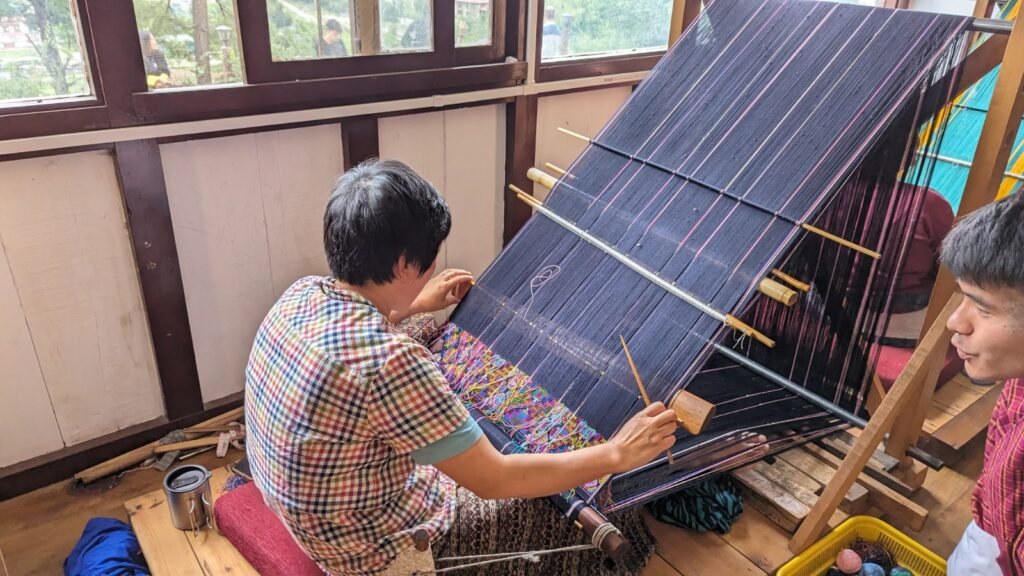
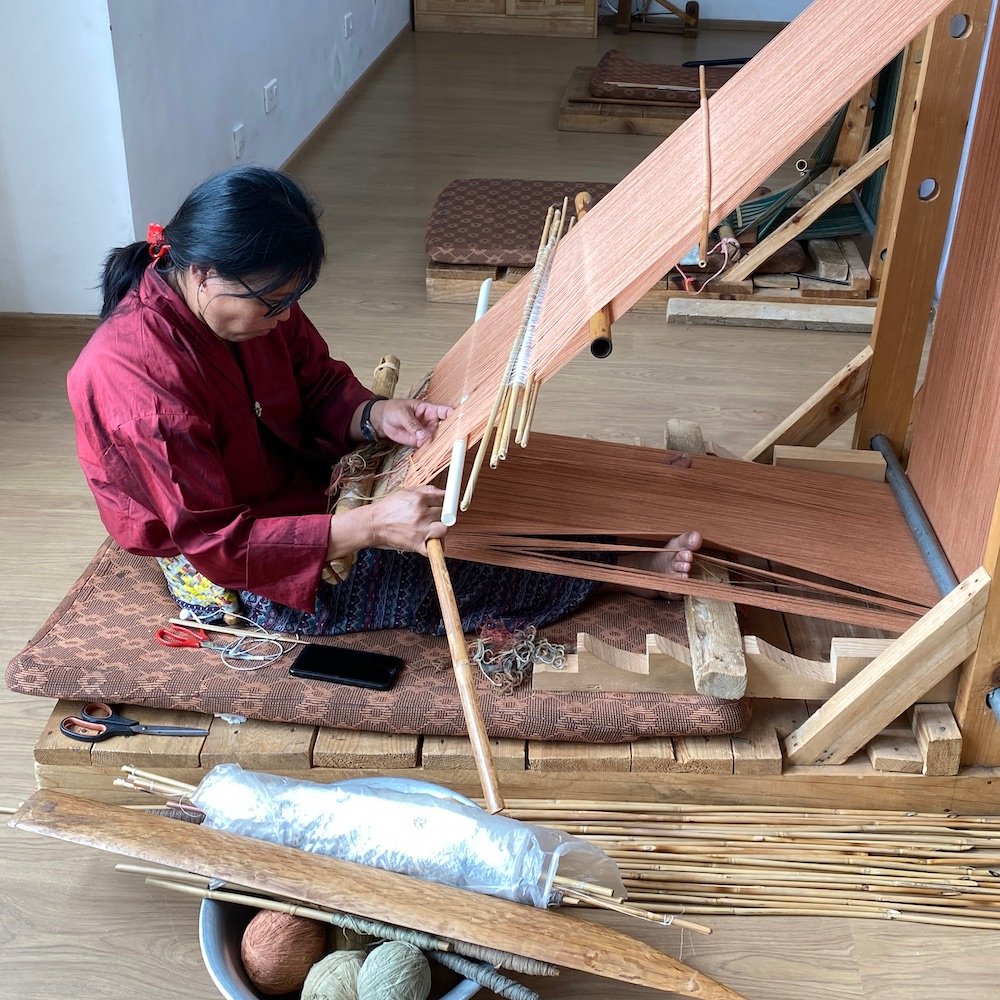
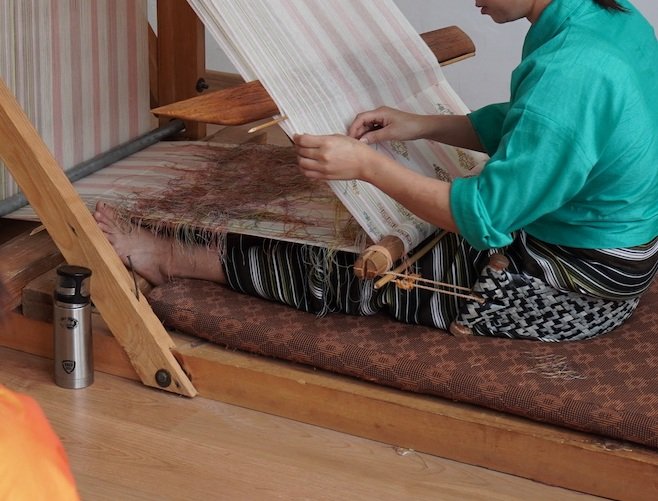
A weaver using Backstrap Loom, Thimphu — 2023
A journey through Bhutanese weaving traditions, where backstrap looms, intricate patterns and inherited knowledge met digital fabrication, biomaterials and a group of makers asking what technological change could look like without erasing tradition.
I came to Bhutan as part of Future Fabrics for the Fab23 Challenge, carrying a question I had already been thinking about for years: how can technology enter traditional craft without taking control away from the maker?
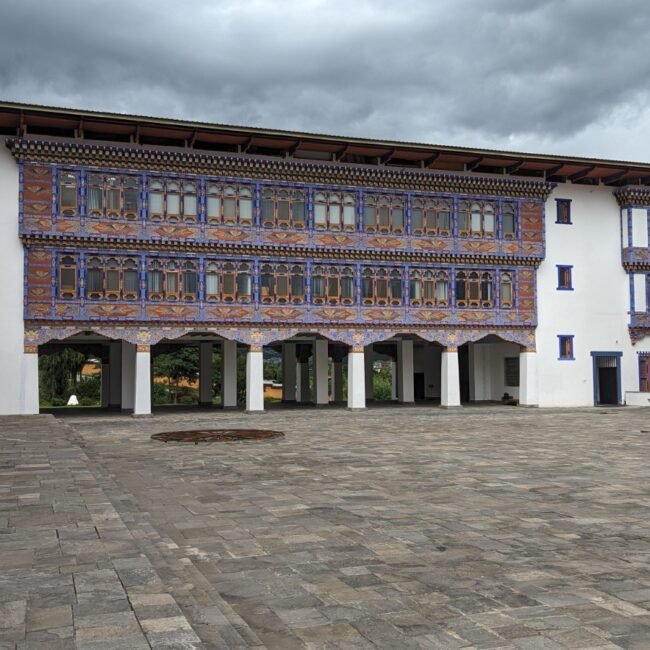
Royal Textile Academy, Thimphu
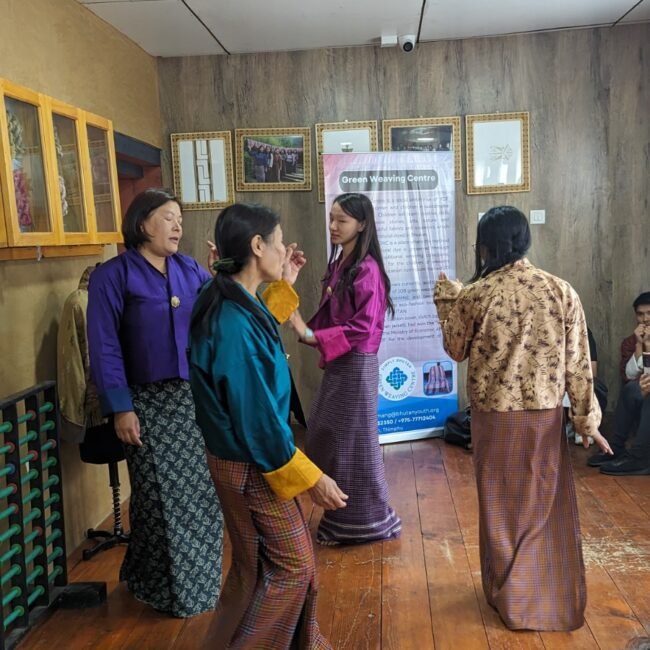
Dance and songs of weaving
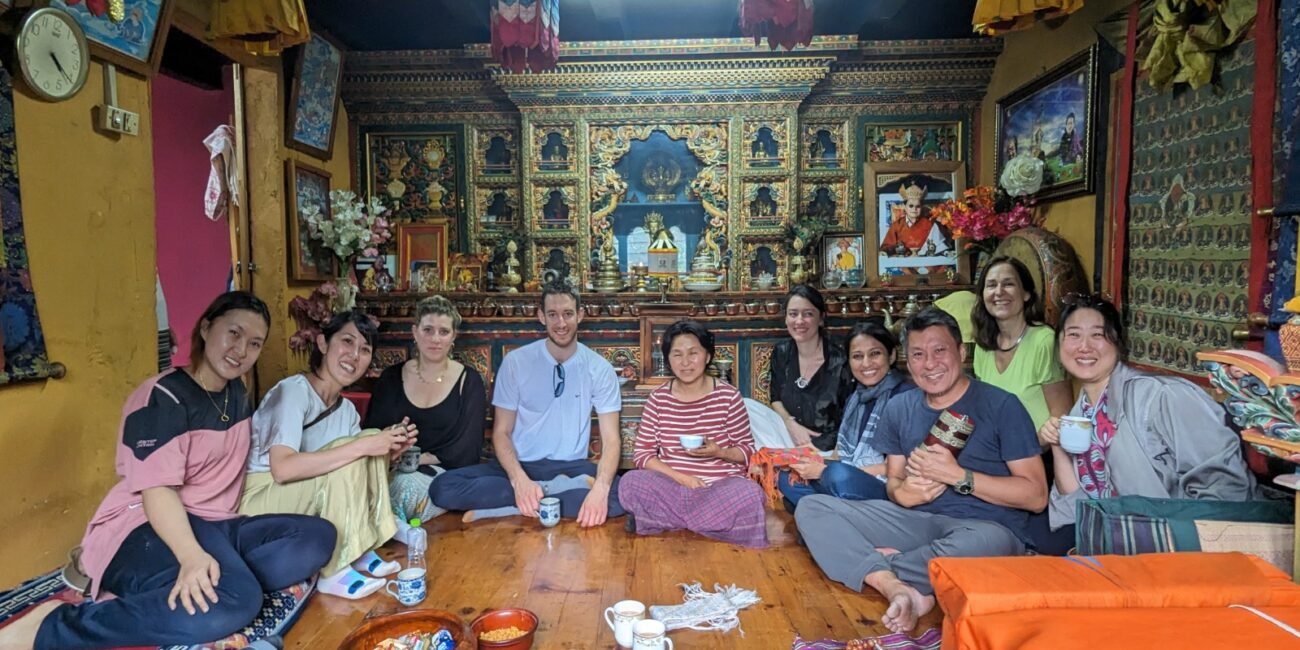
In Thimphu, that question became tangible. We visited weaving spaces, watched backstrap looms being used, spoke with weavers and encountered a textile culture in which weaving is connected not only to livelihood, but to clothing, identity, pattern, memory and the transmission of knowledge.
What interested me most was not simply what was being woven, but how knowledge travelled—from body to loom, from one generation to another, and from tradition into new tools.
02 / THE BACKSTRAP LOOM
The Bhutanese backstrap loom immediately changed the way I thought about the relationship between a loom and the body.
Unlike a freestanding loom, the weaver becomes part of the mechanism. The body maintains tension. Movement changes the relationship between warp and loom. It is remarkably simple, portable and intimate—but long periods of weaving can also place considerable physical demand on the body.
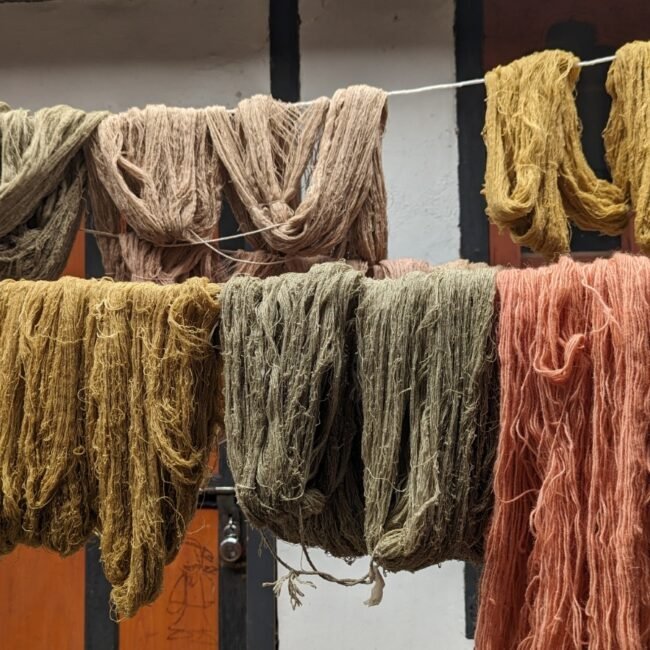
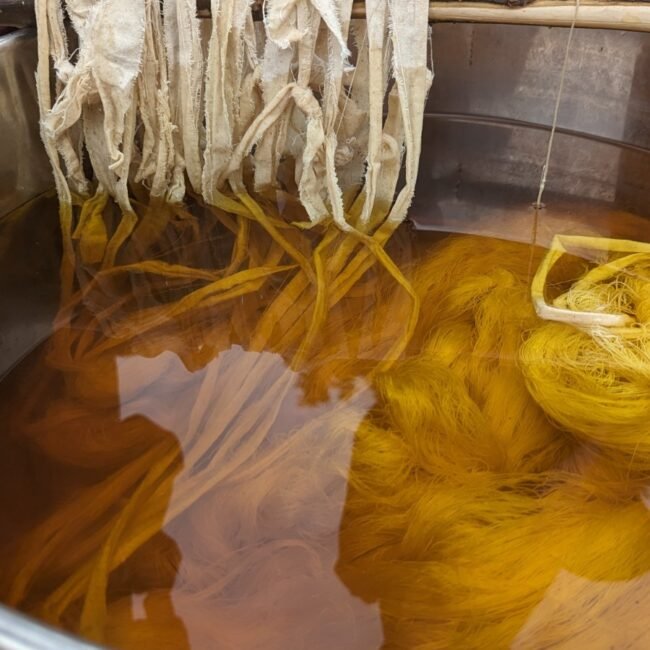
Traditionally, weaving was not an isolated activity. Growing or gathering fibres, collecting materials for natural dyes, weaving, songs and rituals formed parts of a larger cultural practice. Today, many of these processes have become separated: fibres and yarn may come from elsewhere, while the weaver increasingly performs only the final act of weaving.
Our conversations with weavers brought up recurring concerns: back strain, fatigue, eye strain while working intricate patterns, fragile components and the difficulty of maintaining consistent loom designs.
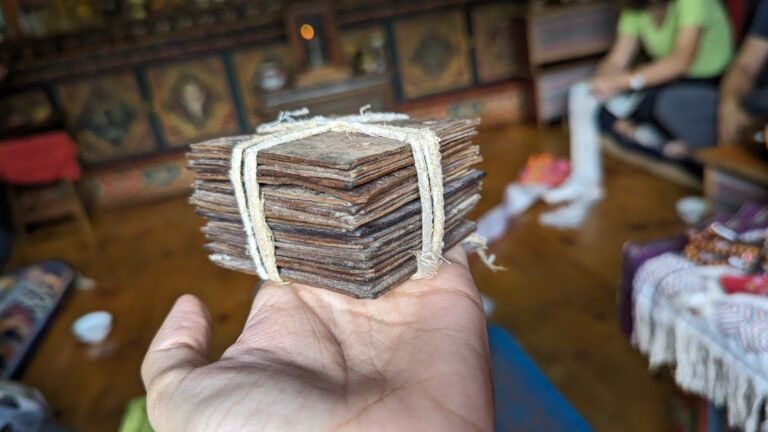
In one weaver’s home, I noticed discarded X-ray films being reused as cards for the loom. When I asked where they had come from, the answer brought the physical cost of weaving sharply into focus: the films were from X-rays taken for back pain after years of long hours at the backstrap loom.
Here, the body wasn’t operating the loom. The body was part of the loom.
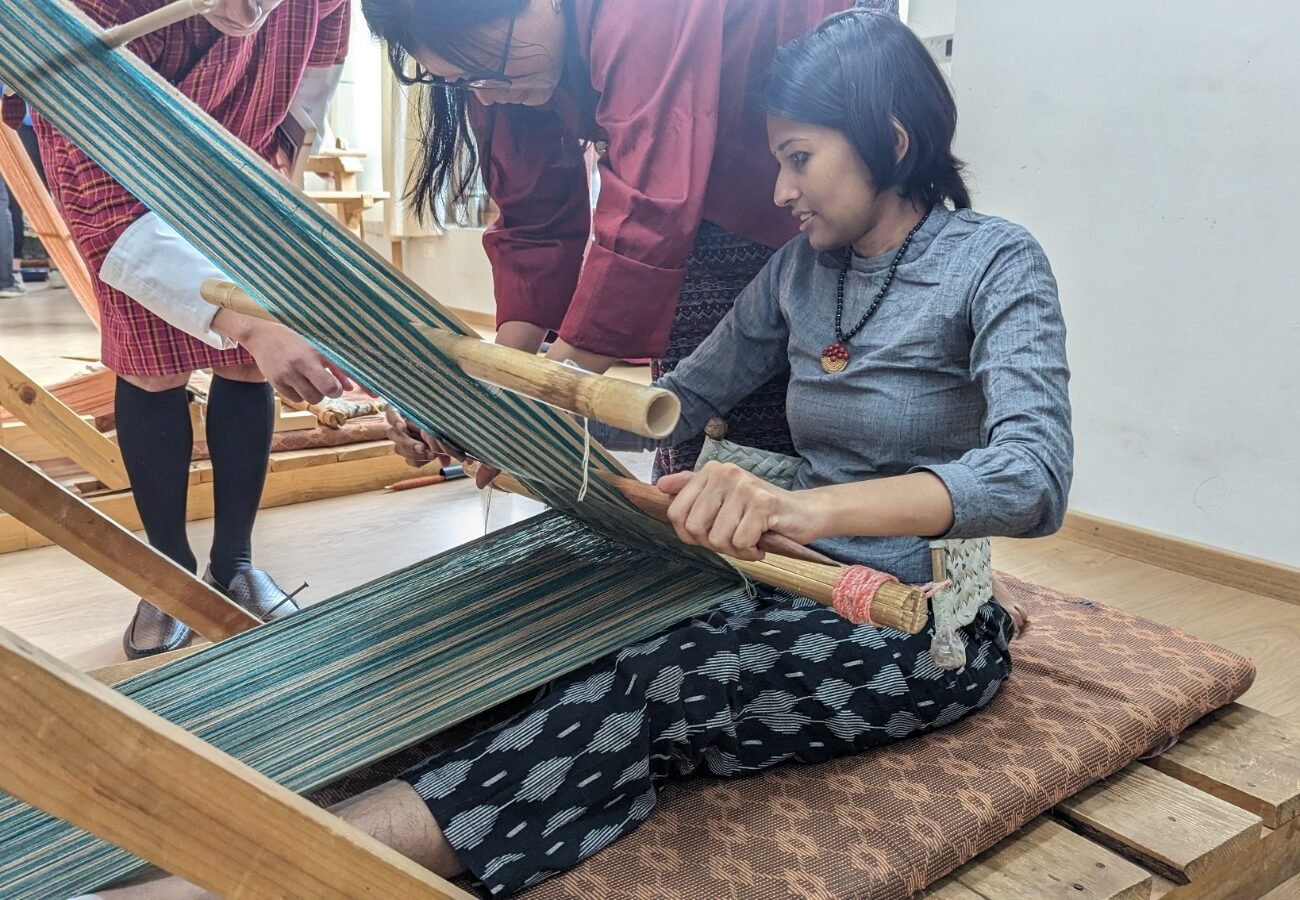
Trying the backstrap loom helped me understand how directly the body controls tension—and where that tension is felt.
03 / MAKING WITH, NOT FOR
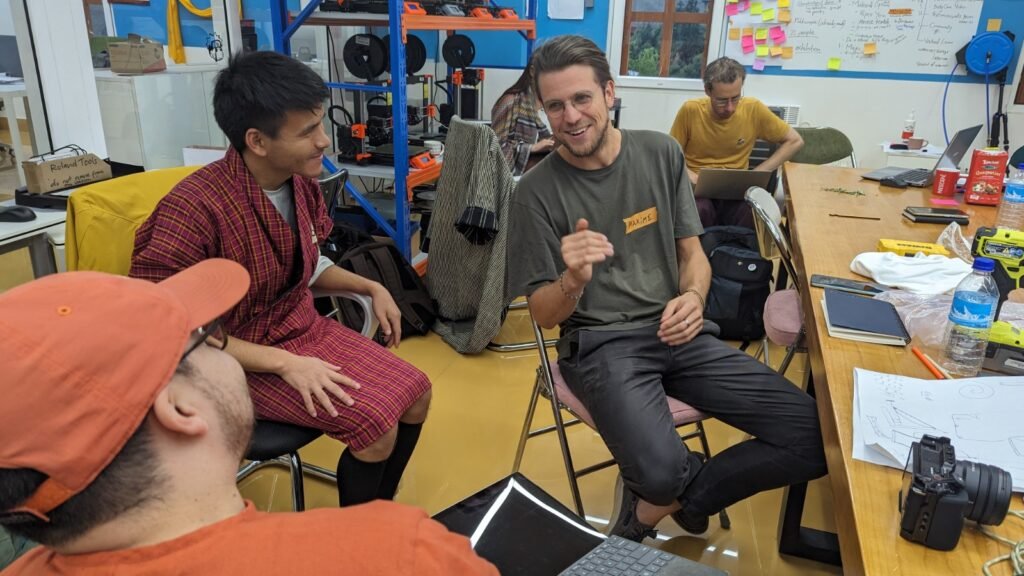
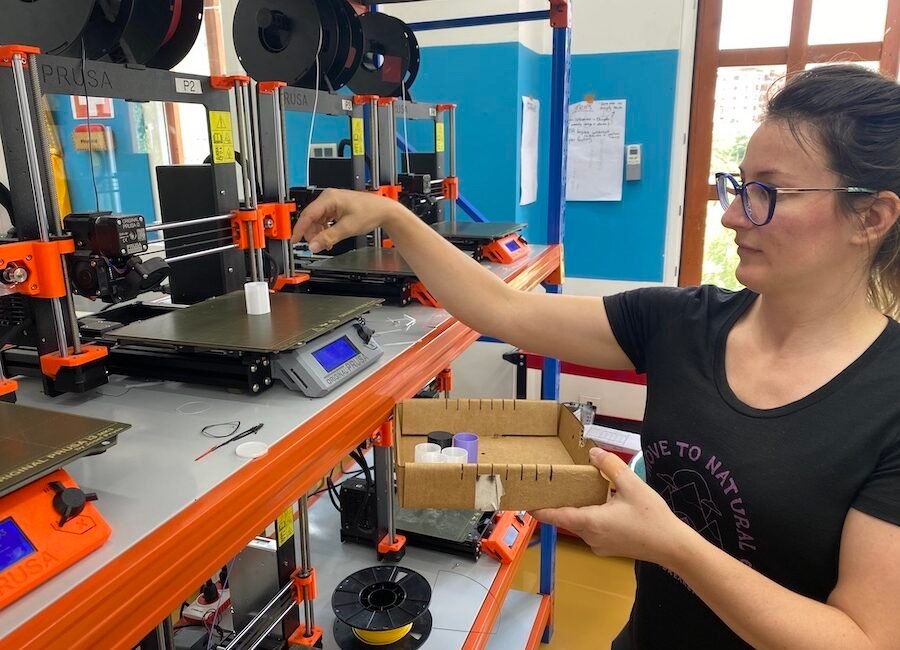
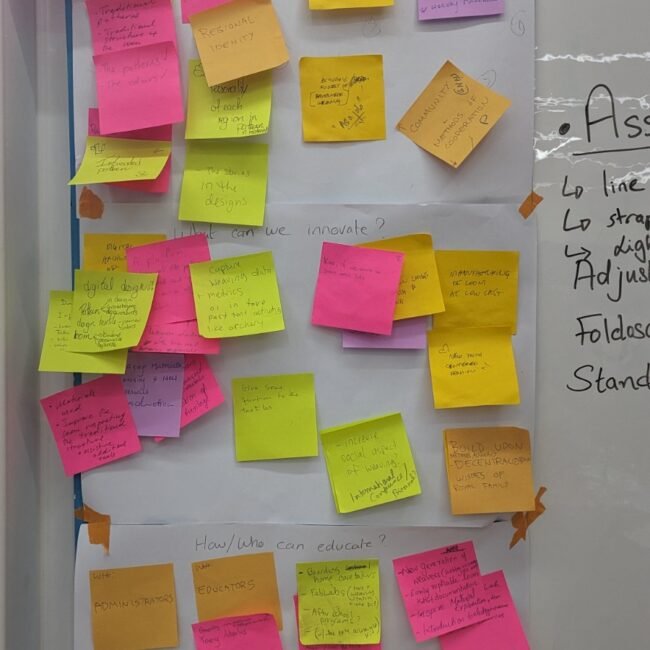
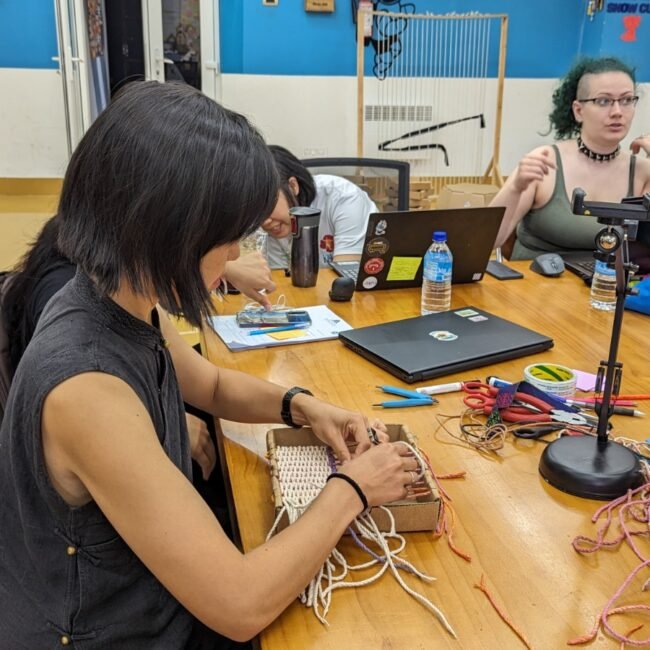
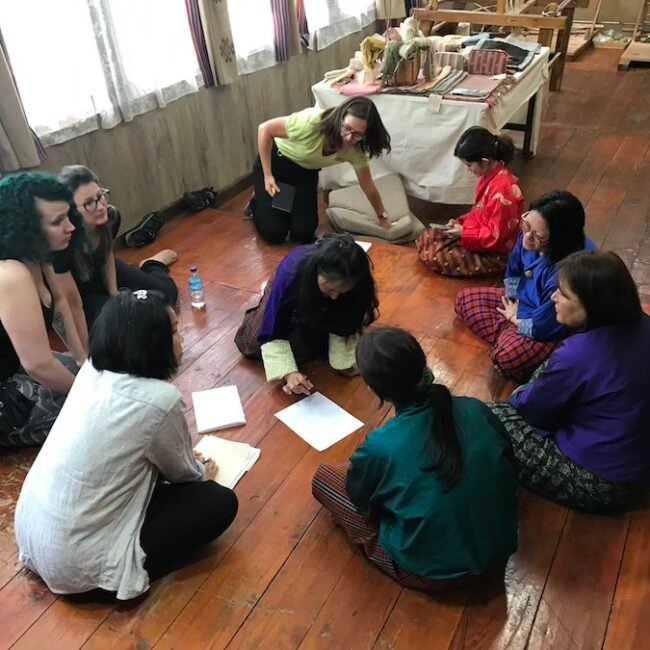
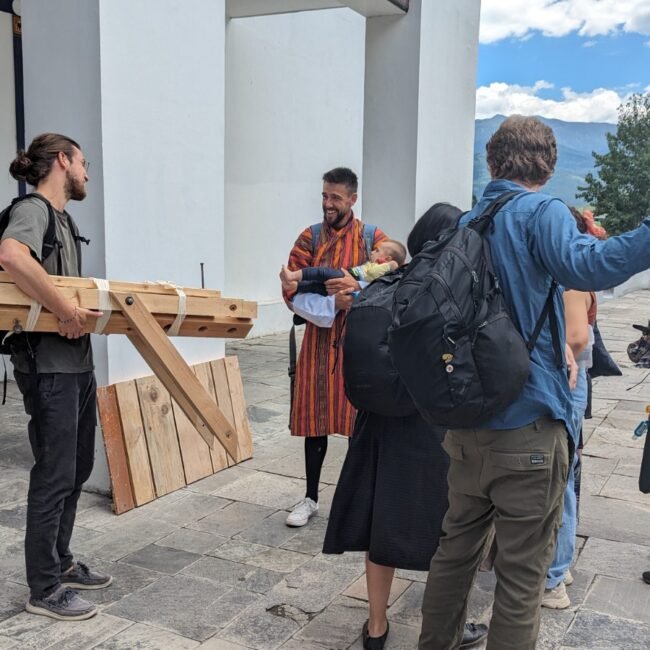
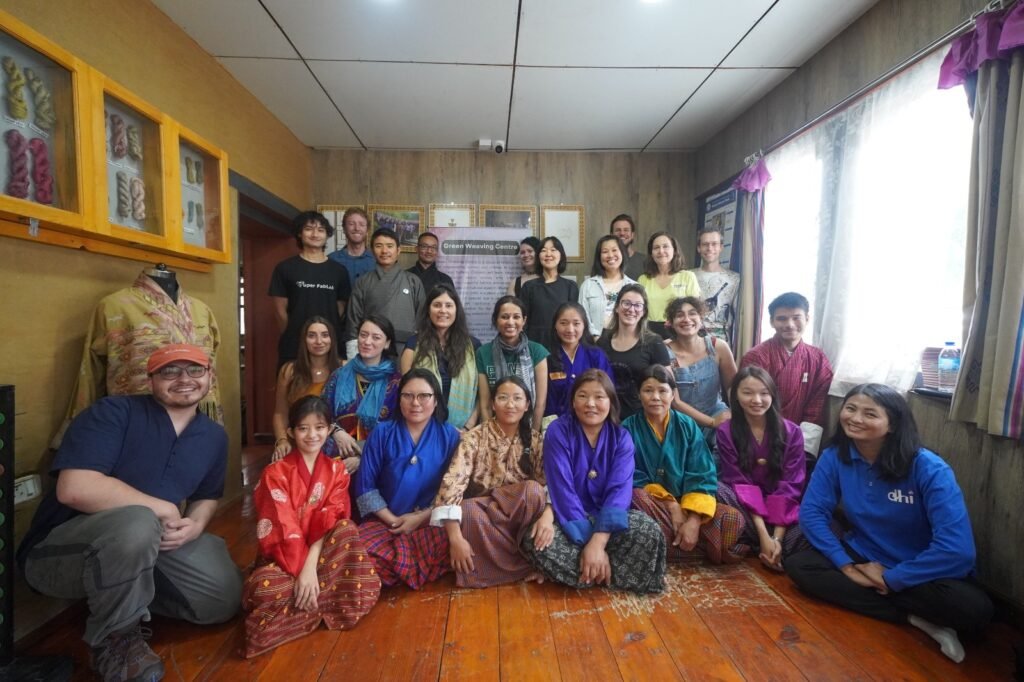
The Future Fabrics group brought together an unusually mixed group of designers, makers, technologists and Bhutanese collaborators. Instead of beginning with a predetermined product, we moved between field observation and rapid prototyping.
Ideas emerged directly from what we had observed: a redesigned strap system to reduce strain, adjustable loom components, lighting and magnification for intricate weaving, and tools to help follow complex patterns.
What stayed with me was the value of small interventions. Innovation did not have to mean replacing the loom. Sometimes it meant changing one point of contact between body and tool.
04 / HOW DOES A TRADITION REACH A CHILD?
Another question emerged during the challenge: what happens when knowledge traditionally passed through the home no longer reaches children in the same way?
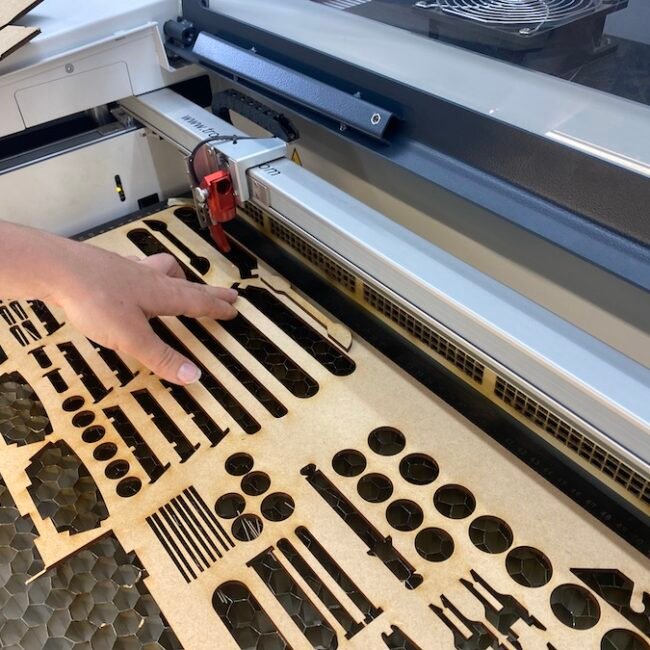
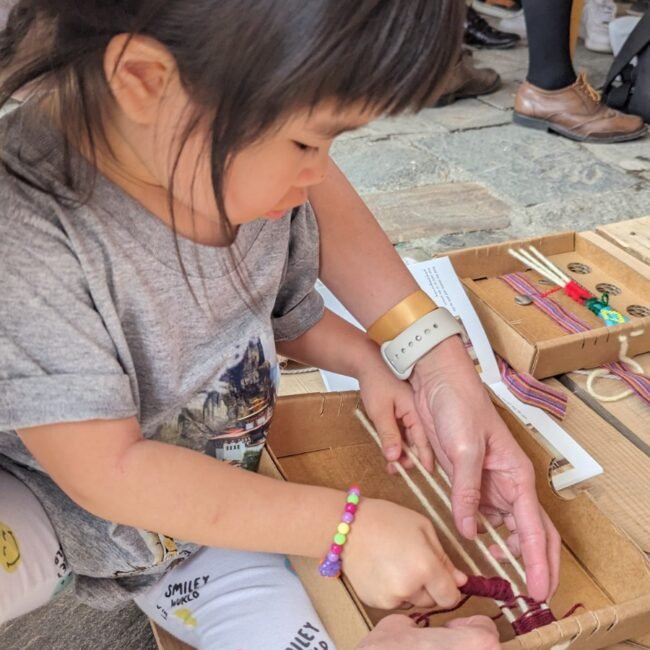
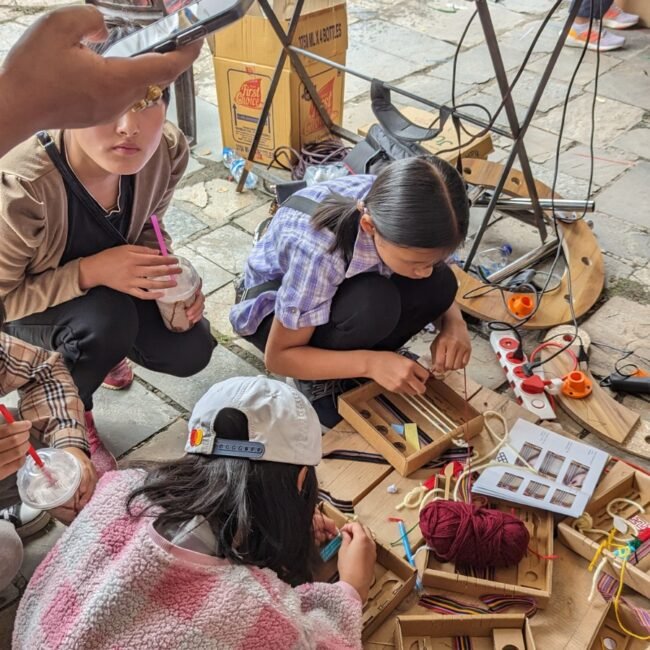
Our team developed the GAWA Weaver Kit, a portable beginner’s loom designed to introduce children to weaving through making and play. The kit was conceived to be inexpensive, locally manufacturable, reusable and open source, while leaving room for experimentation with materials, patterns and eventually conductive textiles.
I found this particularly interesting because preservation here was not about putting an old object behind glass. It was about creating a new point of entry into an old body of knowledge.
05 / PATTERNS AS KNOWLEDGE
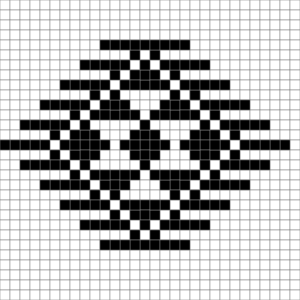
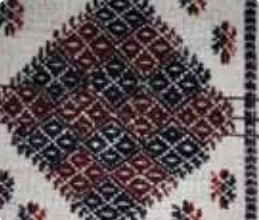
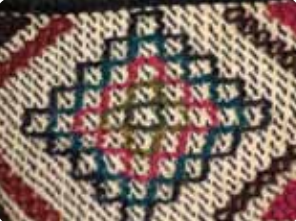
Bhutanese textiles made me look differently at pattern. Motifs were not merely decoration. They carried references to nature, belief and cultural memory, while contemporary weavers continued to reinterpret them.
There are many variations of the internal patterns. Antique textiles as well as the new ones have these featured on them.
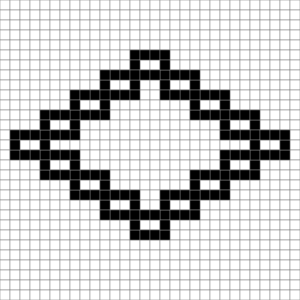
CHA SE A border motif sometimes described as “monkey's nails.”
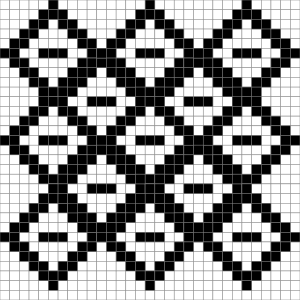
As part of the project, traditional motifs were documented as a digital pattern library, including vector files that could move into digital fabrication and other contemporary processes.
JAGI MIKTO / JAMIG Also known as Phutu Mik or “pigeon's eyes.”
Digitising a pattern does not preserve the culture by itself. But it can give knowledge another way to travel.
THAKPA The “coiled rope” motif, found across older and contemporary textiles.
06 / FUTURE FABRICS: GAWA
By the end of Future Fabrics, these different explorations had come together under GAWA: Weaving Technology into Tradition—looking at traditional textile processes through digital and biofabrication rather than treating technology and heritage as opposing forces. GAWA means happiness in Dzongkha.
The project was selected as the experts’ choice* for the Fab Bhutan Challenge.An independent prospective benefit-cost analysis by economist Milan Thomas** estimated that the five Fab Bhutan Challenge projects collectively could generate economic benefits several times greater than their implementation costs over a ten-year period. We were solving the backpain of the weavers, which was the biggest health problem the weavers had, the weavers that constituted more than 50% of the total population.
The number was encouraging. But what I carried away from Bhutan was harder to quantify: a stronger conviction that the future of craft does not have to be a choice between preservation and technological change.
FAB23 BHUTAN CHALLENGE · EXPERTS' CHOICE · 2023
07 / WHAT I CARRIED BACK
01 How can technology reduce physical effort without removing the intelligence of the hand?
02 Can digital fabrication help traditional tools evolve locally rather than replacing them?
03 How do we preserve a pattern without separating it from the knowledge that gives it meaning?
04 Can introducing children to making keep a tradition alive more effectively than simply teaching them about it?
05 What does it mean to design technology with a tradition rather than for it?
FIELD NOTES → ONGOING PRACTICE
Tradition is not the opposite of innovation
The questions I encountered in Bhutan continue through my work with looms, textiles, digital fabrication and craft communities—particularly in the continuing development of Indira Loom and my research into how traditional tools can evolve without disconnecting makers from their knowledge.