Water hyacinth is beautiful, prolific and deeply disruptive. This research follows the plant from the waterways where it grows, through its ecology and removal, to experiments that investigate whether harvested invasive biomass can become a useful local material resource.
Rather than beginning with a product, I begin with the plant and its landscape: Why does it spread? What damage does it cause? What happens after it is removed? And can material-making become part of a better system for managing it?
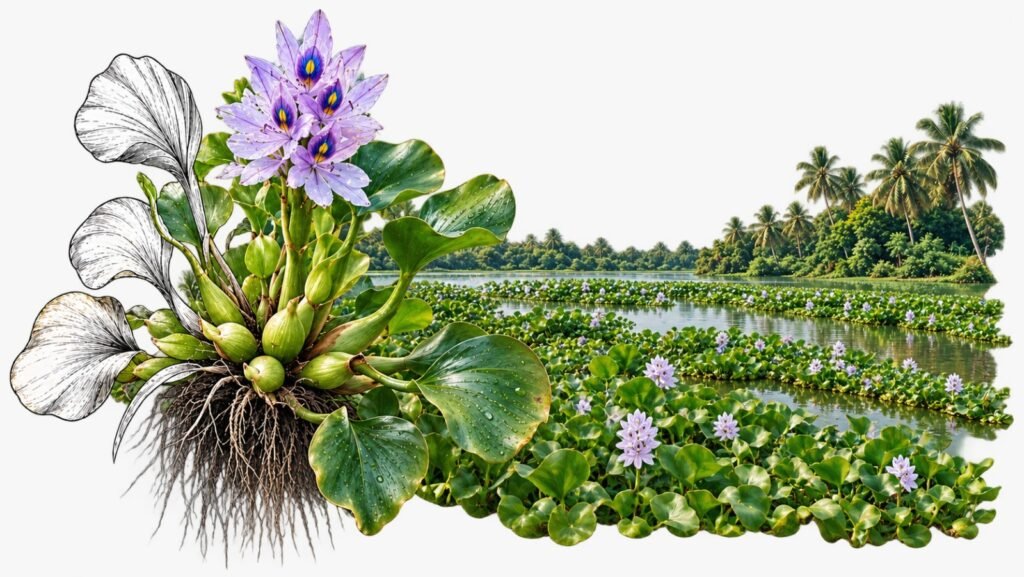
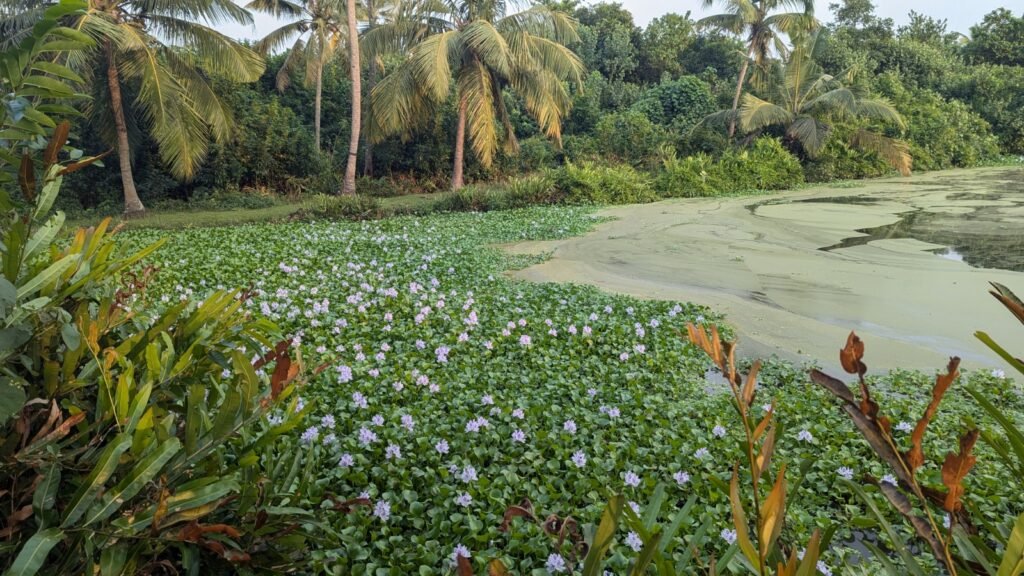
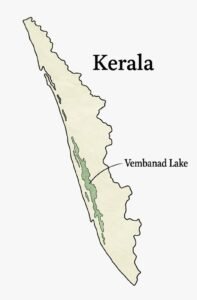
A collage of water hyacinth growing in the Vembanad lake surrounding Kakkathuruthu island, Alappuzha
01. The Plant
Know the organism before designing with it.
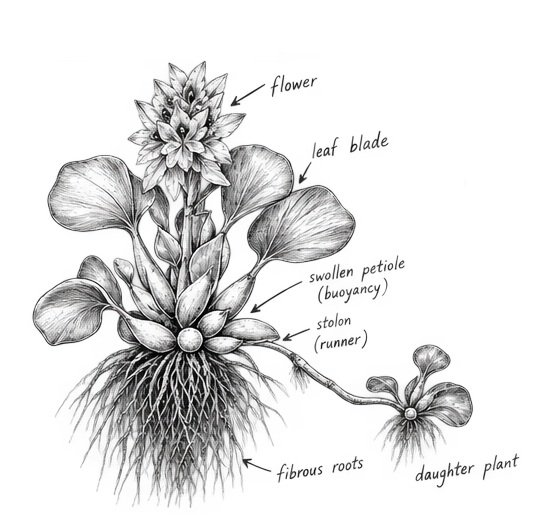
Water hyacinth (Pontederia crassipes, widely documented under its former name Eichhornia crassipes) is a free-floating aquatic plant native to tropical South America. Its glossy leaves, inflated petioles, extensive fibrous roots and violet flowers make it visually distinctive.
The swollen, air-filled petioles help young plants float. Below the surface hangs an extensive root system capable of taking up nutrients and contaminants from the surrounding water.
Water hyacinth biomass contains cellulose, hemicellulose and lignin, which are among the reasons it is interesting as a material feedstock. But its composition is not fixed: plant part, location, water chemistry and growing conditions matter.
02. Growth + Spread
Why does it take over so quickly?
Water hyacinth reproduces both vegetatively, through stolons that produce daughter plants, and sexually through seeds. Under favourable warm, nutrient-rich and slow- or still-water conditions, biomass can double in roughly 5–15 days. Seeds can also remain dormant for many years.
Vegetative reproduction (stolons)
Seed reproduction
What increases growth rate
Warm temperatures
Nutrient-rich water (eutrophication): nitrogen and phosphorus
Still or slow-moving water
Polluted water can introduce sediment, nutrients and contaminants
What can limit growth
Higher salinity
Low temperatures
Fast-moving water
03 Ecology + Human Impact
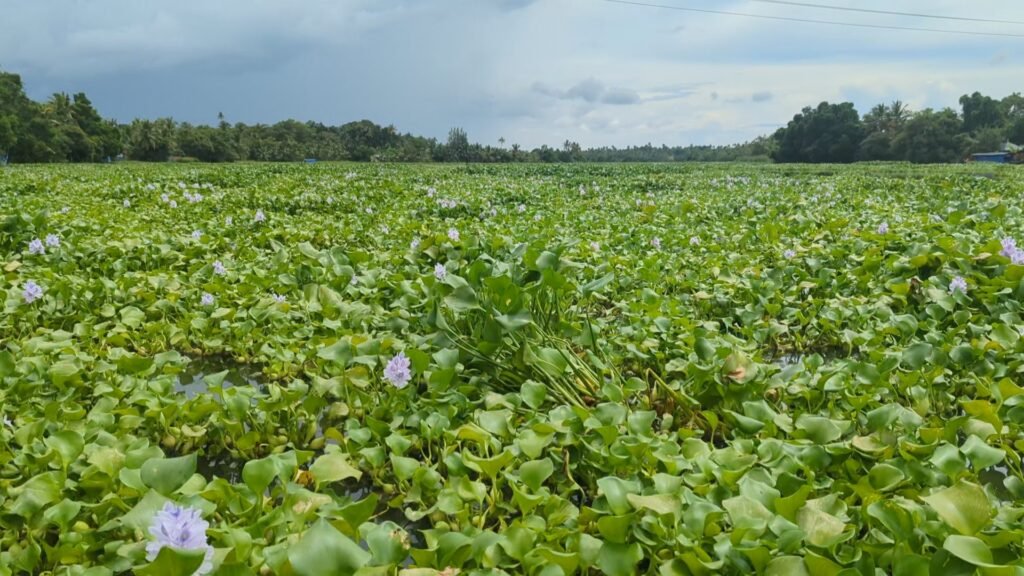
What happens below the mat?
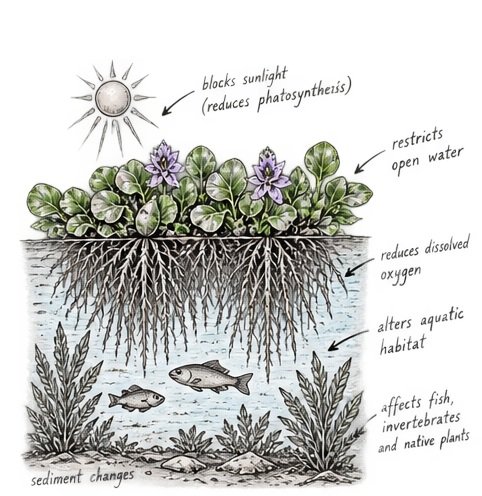
Key ecological impacts
Reduces light penetration
Depletes dissolved oxygen
Disrupts aquatic ecosystems
Blocks waterways and affects fishing and transport
Alters water quality and sedimentation
Associated concerns
Stagnant water can increase mosquito breeding (supports, but does not directly cause, disease)
Hinders irrigation, drinking-water access and livelihoods
Traps other waste and increases flood risk
Decaying biomass on banks causes foul odour
Impacts local economies and biodiversity
04 Removal + The Missing Step
Collecting it is not the end.
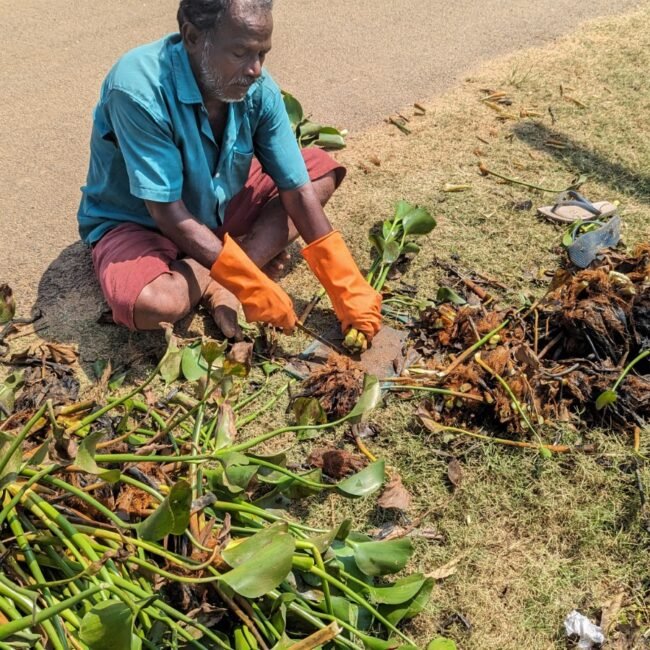
Mechanical and manual removal are widely used management tools. Current government tenders in India, for example, specify mechanical harvesting, containment and shore-side collection. But removal itself does not solve nutrient pollution or guarantee that the harvested biomass becomes useful.
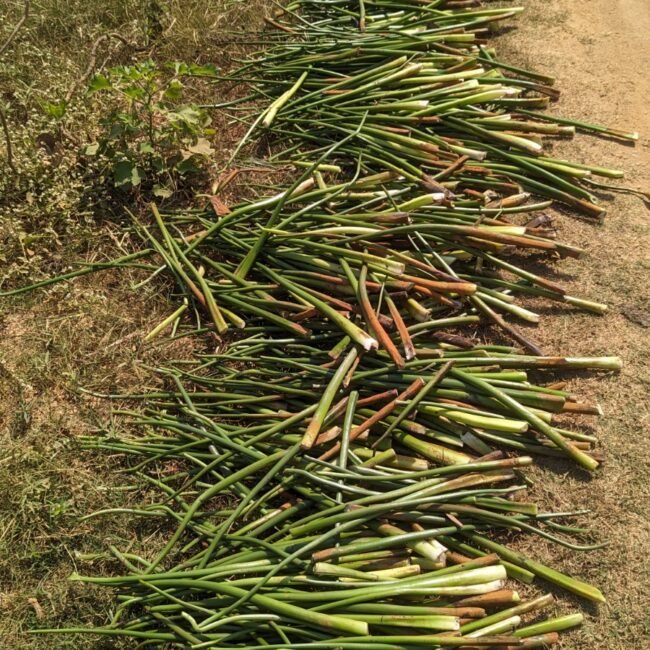
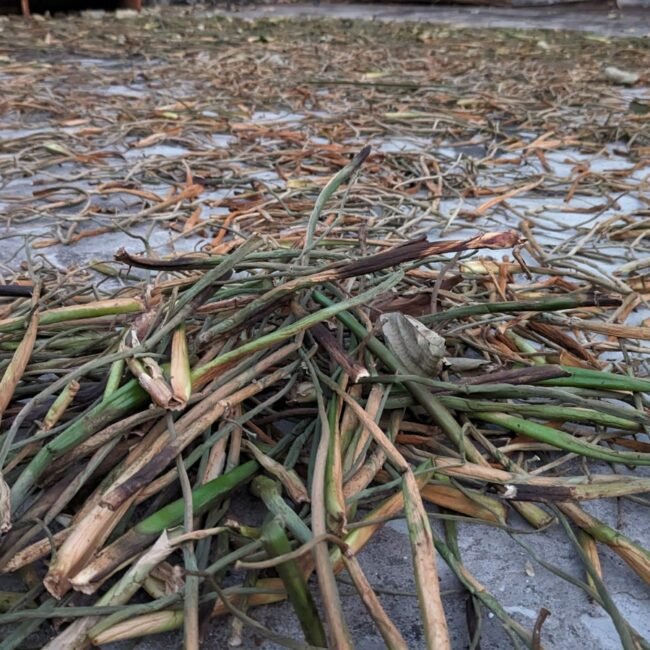
In many places, water hyacinth is collected from water bodies by local authorities, communities or machines. Often the biomass is left on the banks to dry, where it decays, creates foul smell, releases nutrients back into the environment and can re-enter the water.
05 Where It Spreads
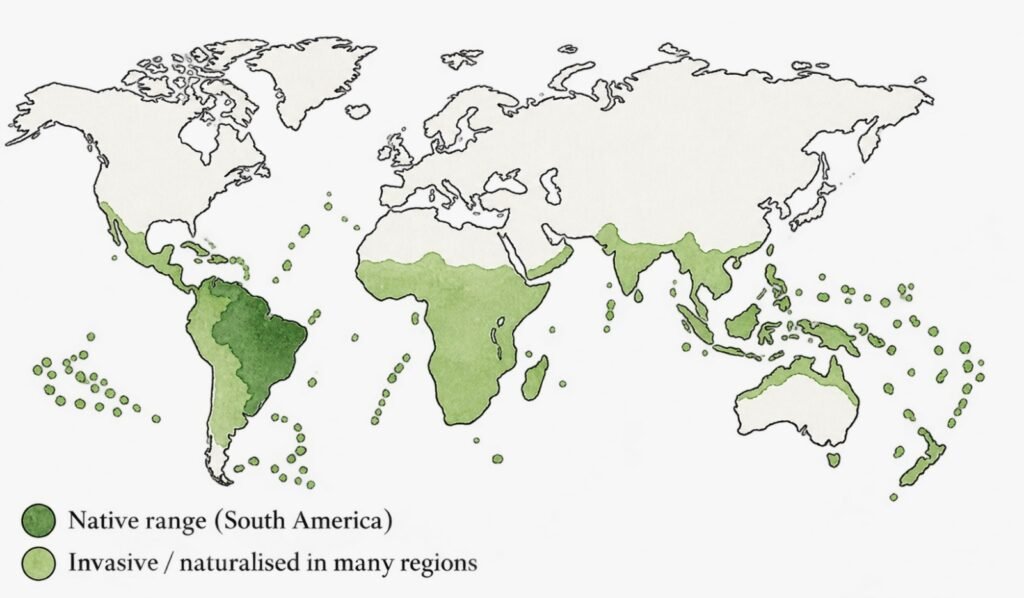
A local problem with a global footprint.
Found in (representative regions)
Asia: India, Sri Lanka, Bangladesh, Southeast Asia, China
Africa: Many countries across Sub-Saharan Africa
Americas: Widespread in Central and South America, parts of North America
Others: Australia, Pacific Islands, parts of Southern Europe
06 From Plant to Material
Follow the biomass.
Once removed from the water, the plant can exist in many different material states.
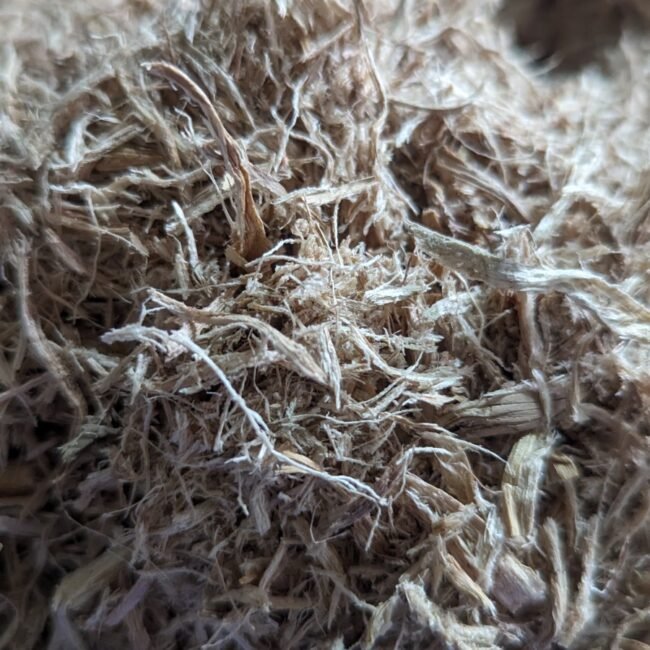
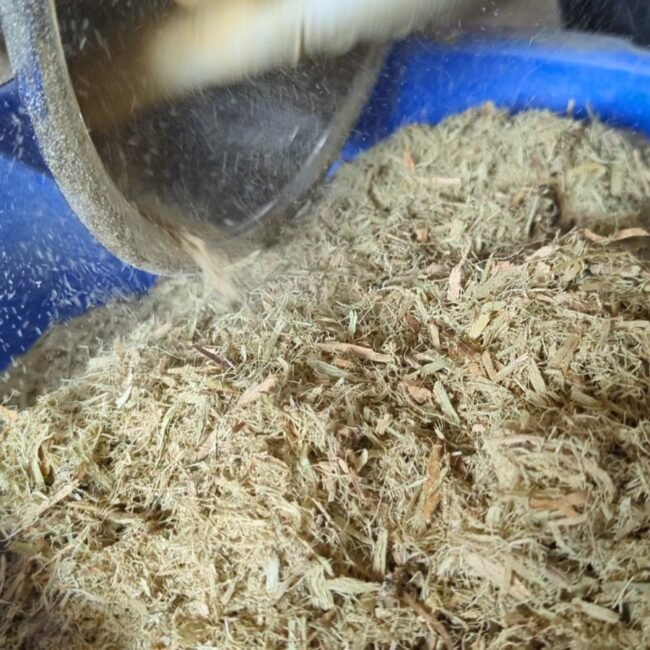
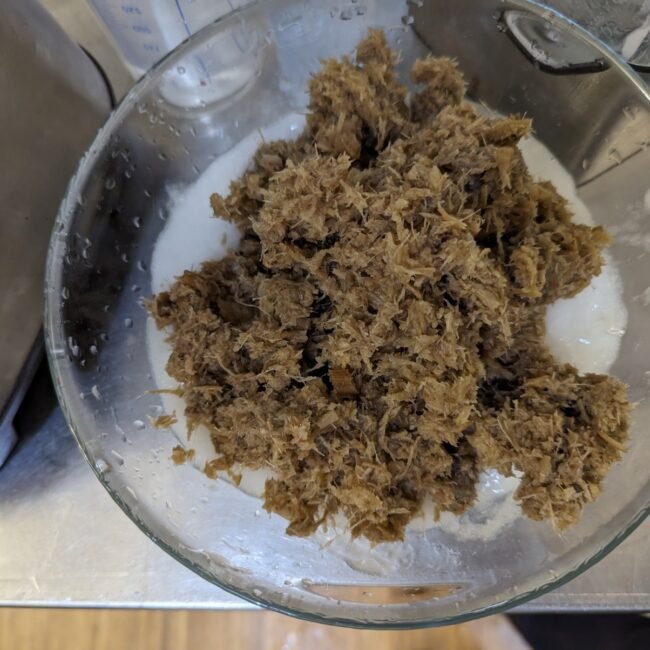
My experiments began by changing the physical form of the biomass—whole plant, dried stalk, fibre, shredded material, powder and pulp—and observing how those transformations changed what could be made from it.
My earlier experiments focused particularly on three material behaviours:
Flexibility · Strength · Porosity
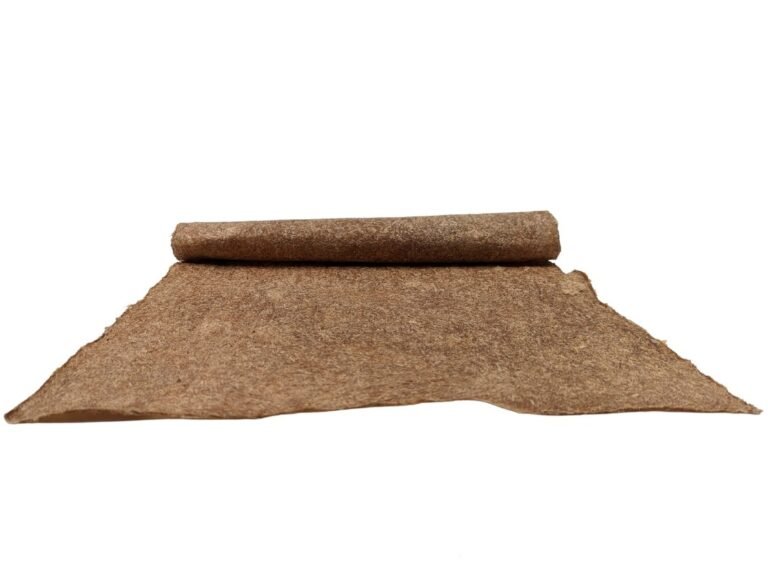
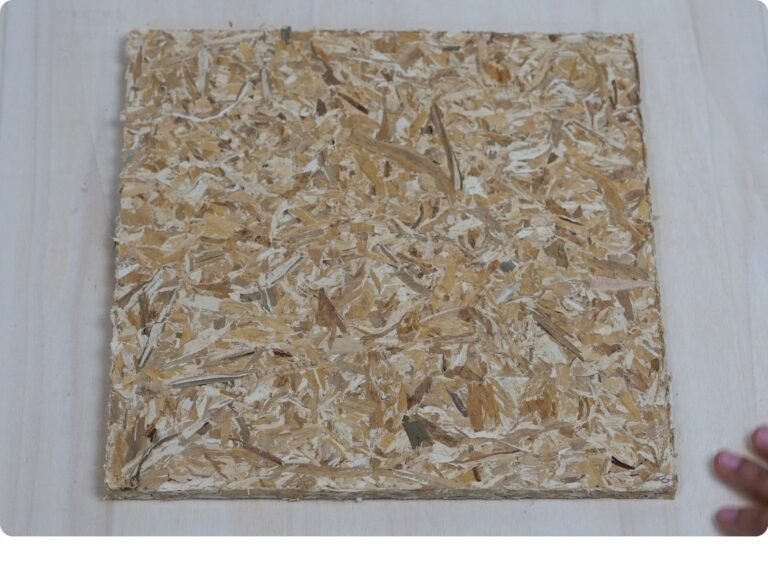
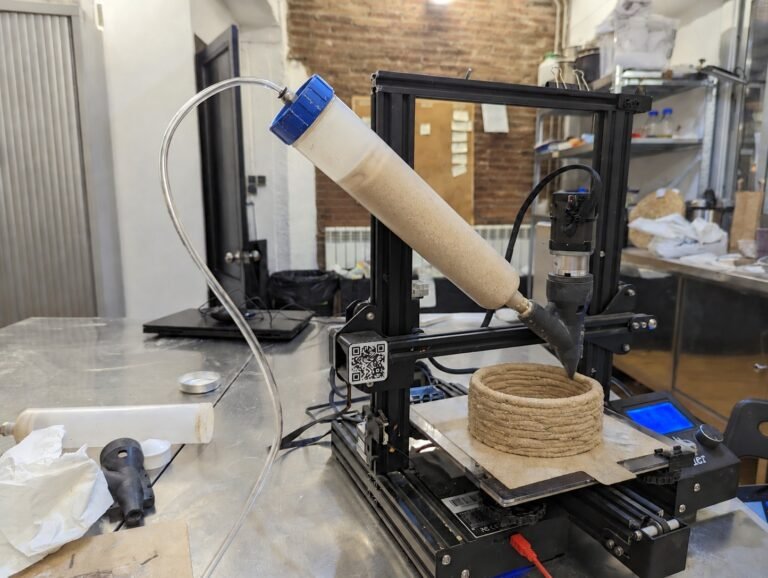
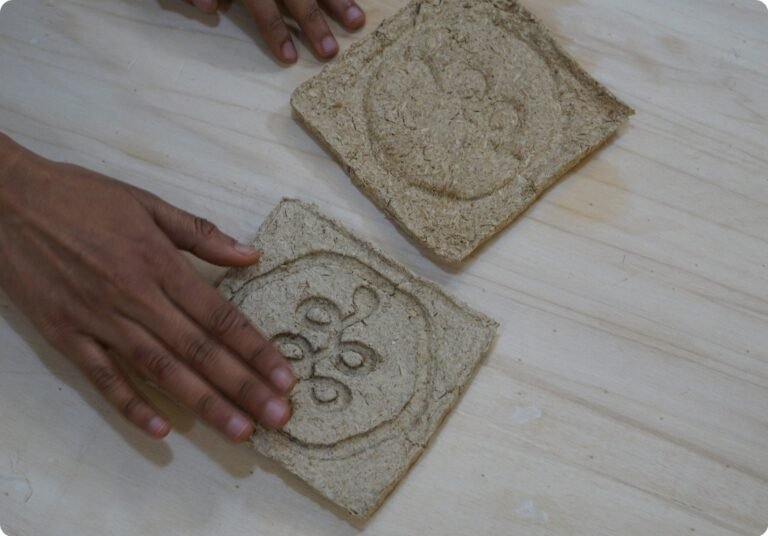
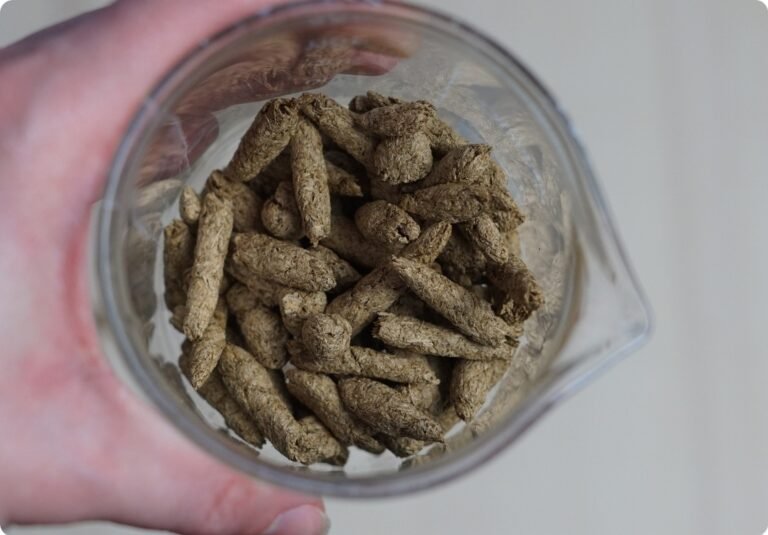
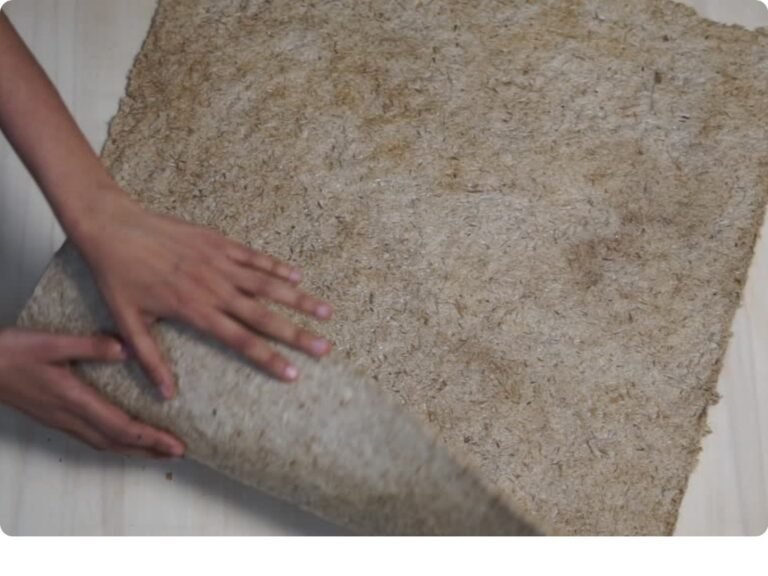
These investigations eventually produced flexible sheets, rigid boards, paper, packaging materials, pellets and other experimental composites.
Freshly harvested plant
Cleaned stalk
Drying stalk
Shredded fibre
Powdered fibre
Pulped fibre
07 — Material Families
One Plant. Many Material Behaviours
Flexible sheet
Rigid board
Printable material
Packaging
Pellets
Foam-like material
08 — From Material to System
A Better System
The material is only one part of the problem.
If harvested biomass has to travel long distances to become useful, or if processing requires expensive infrastructure inaccessible to the communities dealing with the invasion, the material solution becomes disconnected from the ecological problem.
This leads to the larger research question behind my work:
Can invasive biomass be processed close to where it grows?
A circular approach from problem to possibility
What I have learned so far
01 — Removal and restoration are not the same thing. Utilisation should support ecological management, not create incentives to cultivate an invasive species.
02 — Context matters. The plant’s condition and composition depend on where and how it grows.
03 — Wet biomass is a logistics problem. Collection, dewatering, drying, storage and transport are fundamental parts of material design.
04 — Machines are part of material research. Affordable harvesting, shredding, pulping, pressing and forming systems may matter as much as the material itself.
05 — Valorisation is promising, but not automatically a solution. Recent reviews identify substantial potential while also stressing the need for scalable systems, life-cycle assessment and stronger evidence of ecological outcomes.
09 — References
Yang et al. (2025) — The dual nature of water hyacinth (Pontederia crassipes): Environmental threats and sustainable solutions.
Jha & Li (2025) — Quantifying the effects of water hyacinth (Pontederia crassipes) on freshwater ecosystems: a meta-analysis.
Global impact of water hyacinth on rural communities and mitigation strategies: a systematic review (2024).
Thinh (2025) — Management Strategies for Pontederia crassipes.
Nandiyanto et al. (2024) — Progress in the utilization of water hyacinth as effective biomass material.
Siddiqui et al. (2026) — Water hyacinth-derived cellulose biocomposites: Extraction methods, physicomechanical properties, and sustainable applications — A review.
From nuisance to resource: a global review of water hyacinth valorisation for sustainable development (2026).