Soul Sanchi Bags

PRODUCT DESIGN / TRADITIONAL CRAFT / MATERIAL EXPLORATION

Soul Sanchi Bags

Contemporary bags developed through Kerala's screwpine weaving traditions, handloom textiles and experiments with material, colour and form.

Project: Soul Sanchi Bags
Location: Kerala, India
Primary material: Screwpine (Kaitha / Thazha)
Other materials: Handloom cotton, khadi, khadi silk, hand-braided yarn, teak wood and veneer

Project period:
Collaborators: Artisans at Jawaharlal Memorial Social Welfare & Public Cooperation Centre, Thalayolaparambu

01 / The Collection

A traditional material in contemporary forms.

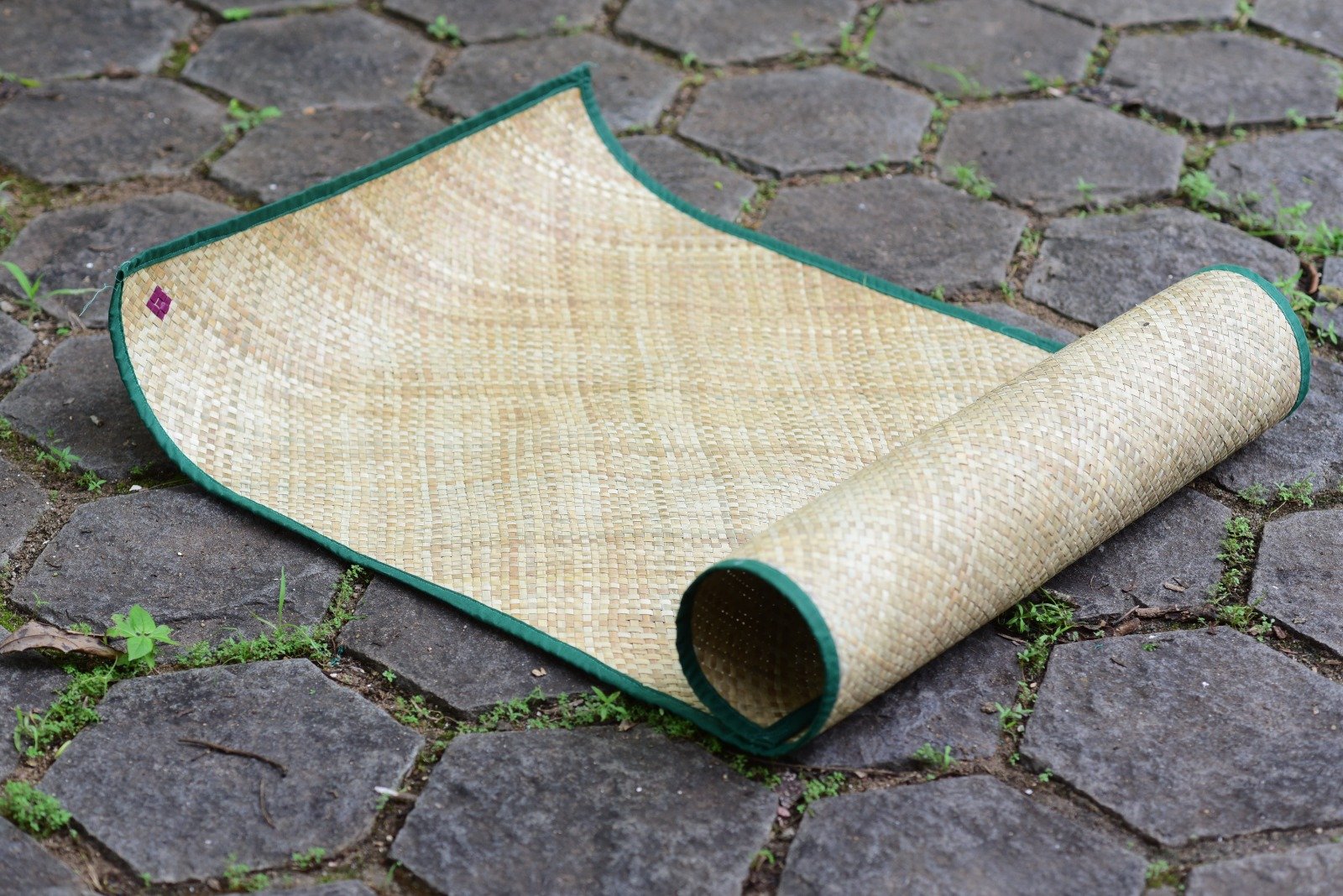
Soul Sanchi Bags grew from an exploration of screwpine weaving and its possibilities beyond familiar mats, baskets and household objects.

Working with artisans in Kerala, I began investigating how a traditional woven material could be combined with textiles and other components to create bags for contemporary use.

The intention was not to make screwpine imitate leather or fabric, but to understand where its particular qualities—texture, structure, rigidity and flexibility—could contribute to a product.

The resulting explorations brought together traditional weaving, material selection, pattern development and product construction.

02 / The Material

Not all screwpine behaves the same.

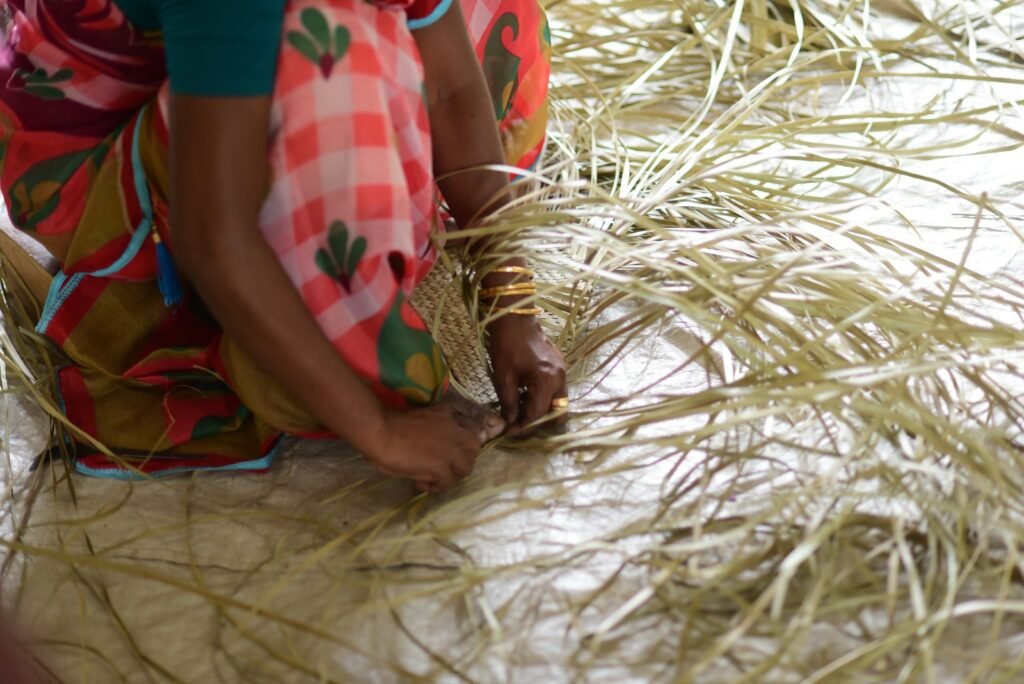
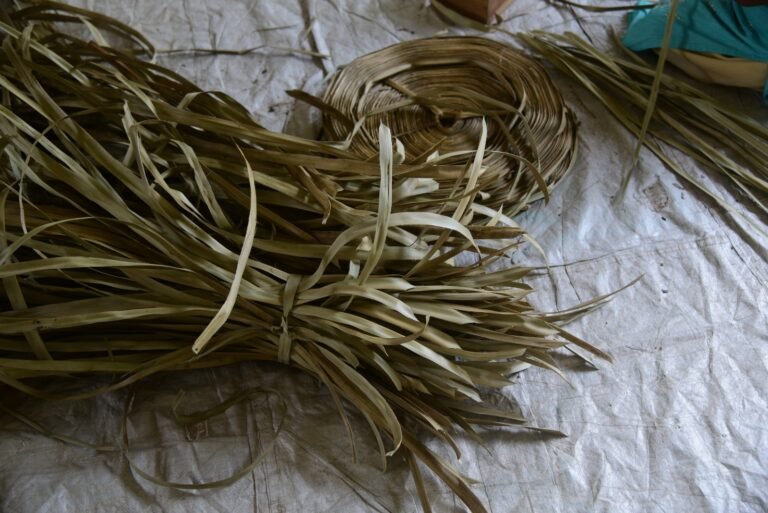
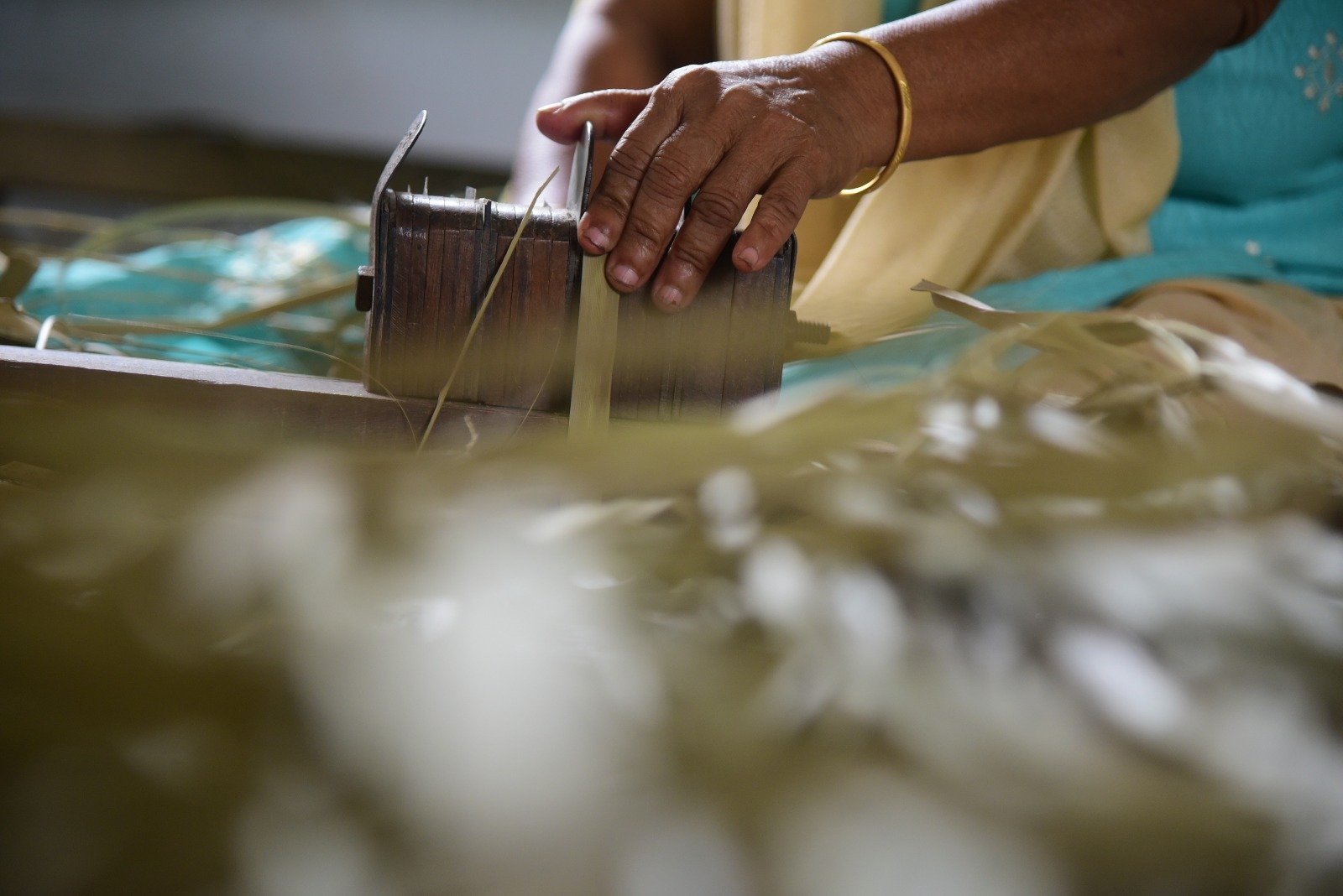
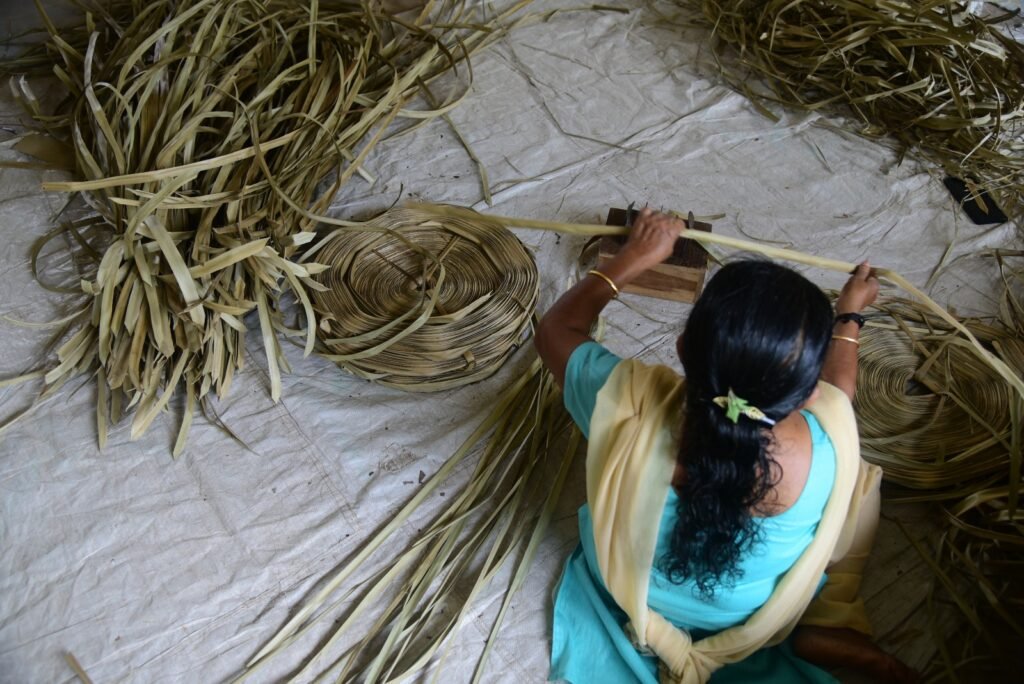
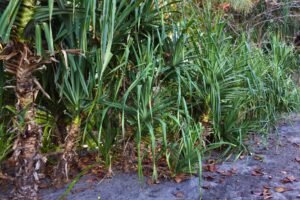
Screwpine leaves are harvested, stripped, dried and prepared before they can be woven. The quality and preparation of the material influence what can be made from it. Through working with artisans, I learned to distinguish between varieties of kaitha with different properties.

The harder material used around Thalayolaparambu holds its shape well and can be suitable for self-supporting woven forms. Softer material, including that sourced from Thazhava in Kollam, is more suitable for finer strips and stitched constructions. These differences informed the design of the bags. Instead of selecting a material after deciding on a form, the properties of the leaf became part of deciding what the object could be.

03 / Colour, Pattern & Surface

Revealing the geometry of the weave.

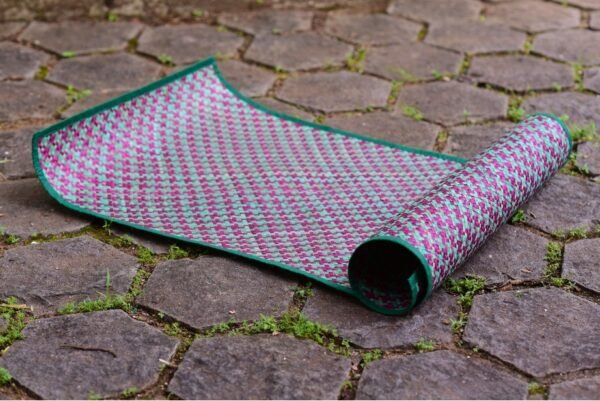
The experiments began with colour and pattern.

Before working directly with the material, I explored arrangements on paper to understand how different colours could change the appearance of a woven structure.

Introducing colour did more than decorate the surface. It made the underlying geometry of the weave more visible and created opportunities for new visual arrangements.

The patterns were developed in conversation with the artisans, whose understanding of the material and weaving process helped determine which designs could be realised.

04 / The Bags

Different materials. Different constructions.

The collection explores several ways of bringing screwpine into a functional bag, combining it with handloom textiles, naturally dyed fabrics, wood, and braided yarn.


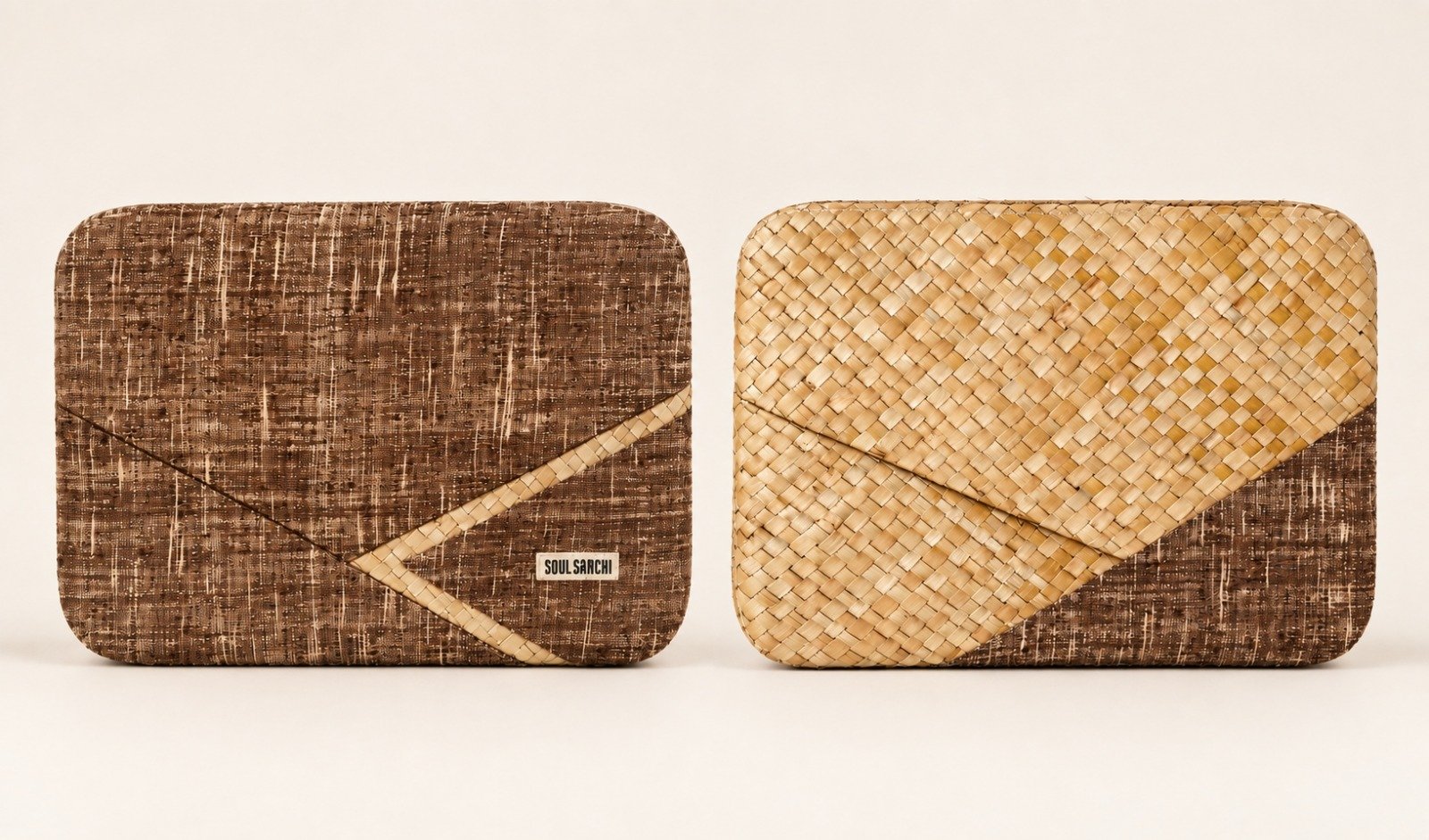
[PHOTOS — Both iPad Bag variations]

<escape>03 — MacBook Bag</escape>

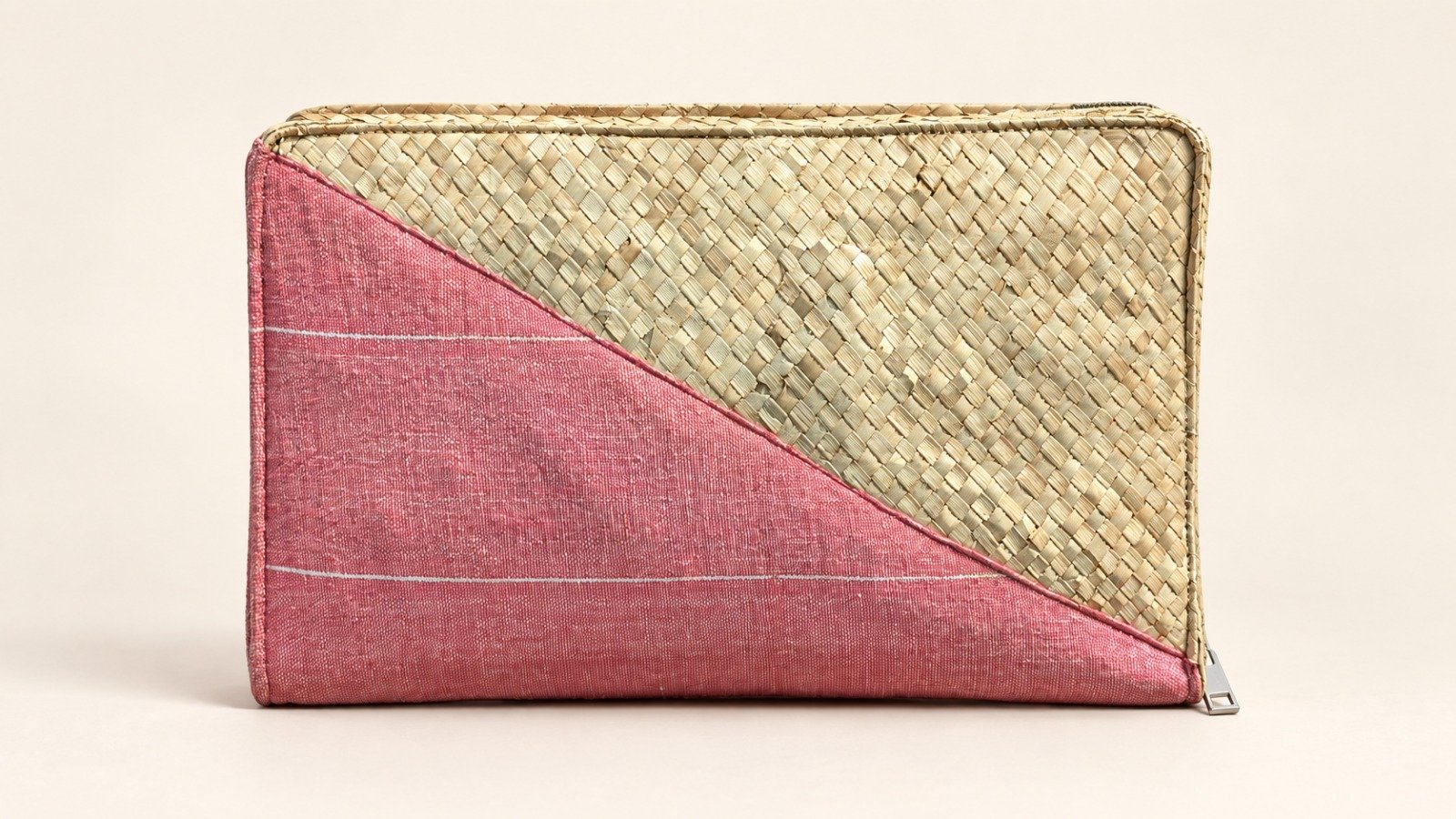
Softer screwpine + naturally dyed khadi silk

An exploration of contrasting materials, combining the woven texture of screwpine with a softer textile surface.

[PHOTO — MacBook Bag]

<escape>04 — Toiletry Bag</escape>

Softer screwpine + handloom thorthu

A smaller accessory exploring stitched construction and the relationship between woven leaf and textile.

[PHOTO — Toiletry Bag]

<escape>05 — Mighty Bag</escape>

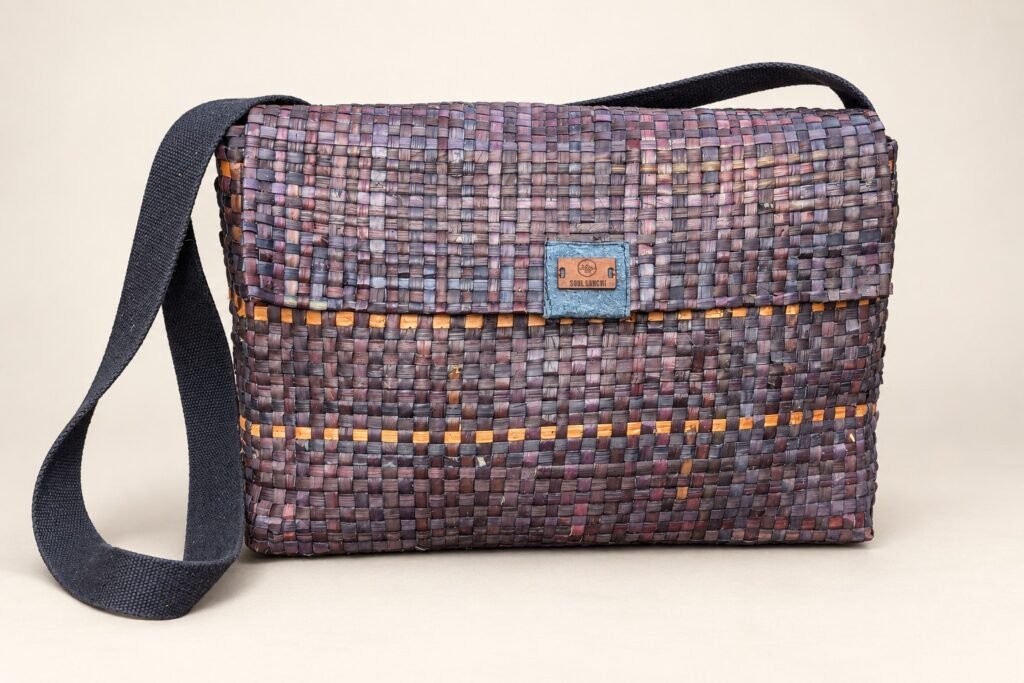
Harder screwpine / Woven three-dimensional form

A bag in which the screwpine is woven directly into its three-dimensional shape without stitching.

Here, the material is not simply a surface applied to another structure. The weave itself creates the form.

[PHOTO — Mighty Bag]

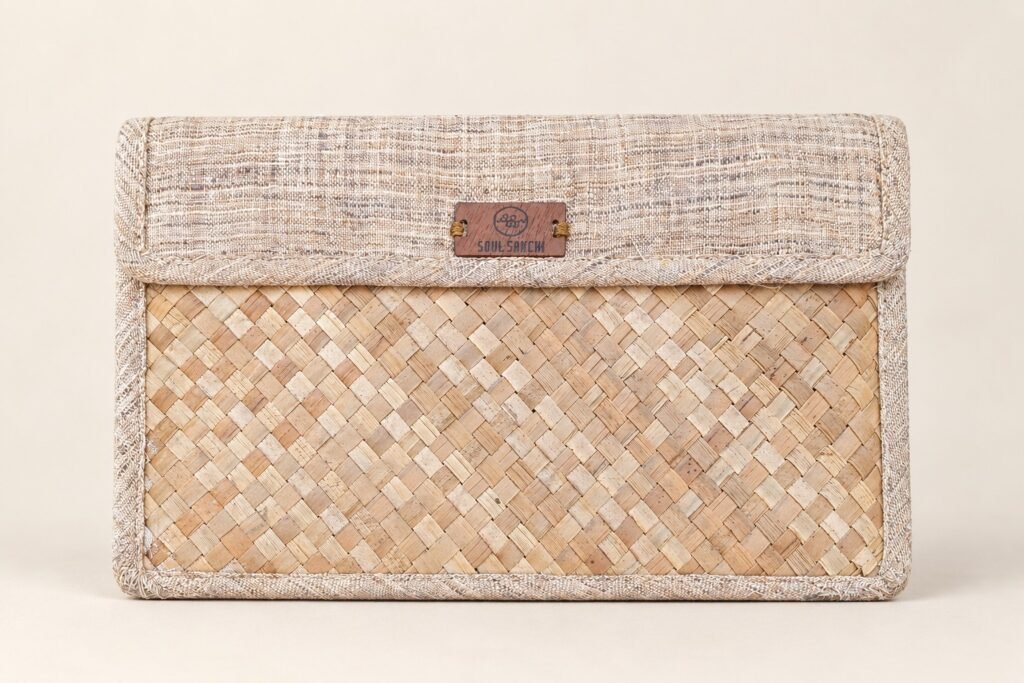
<escape>06 — Box Bag</escape>

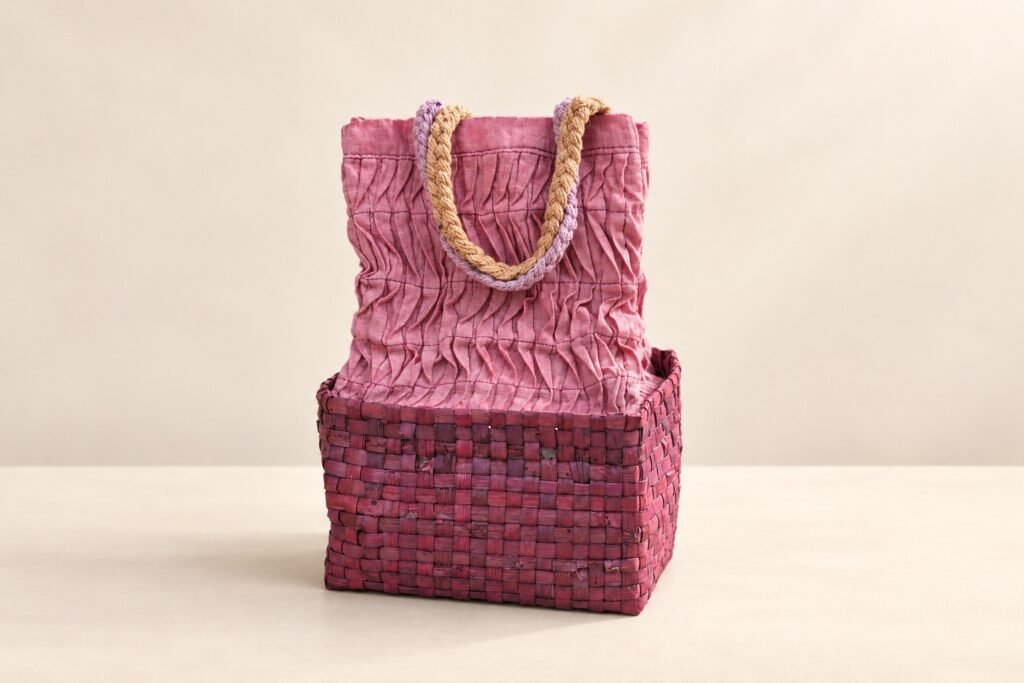
Harder screwpine + handloom cotton + hand-braided yarn

A structured bag combining a woven screwpine form with hand-stitched cotton and braided yarn details.

[PHOTO — Box Bag]

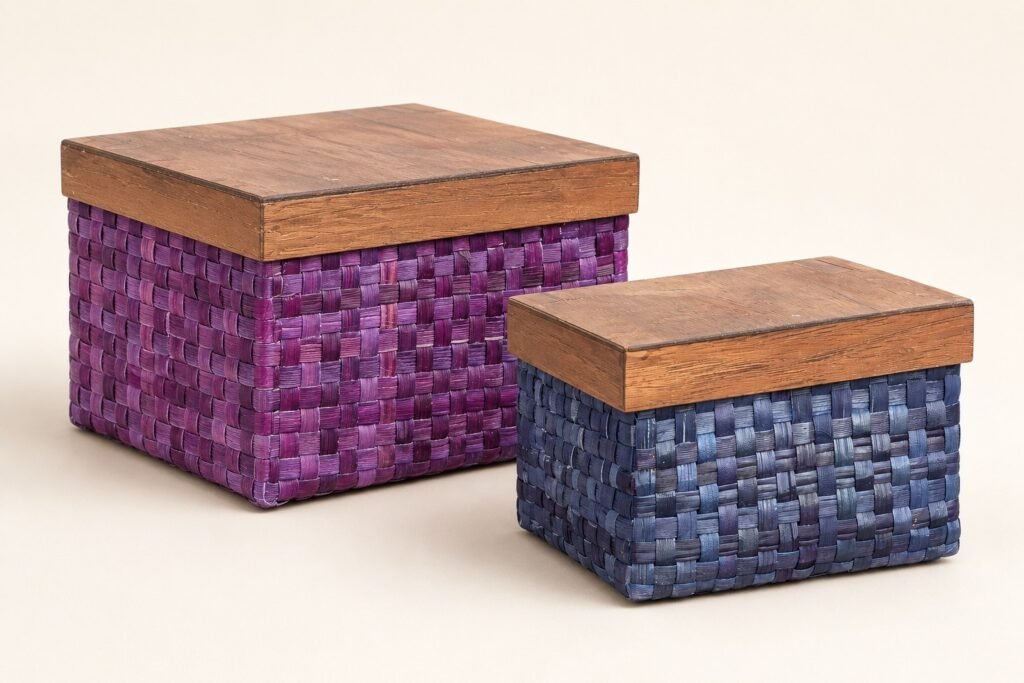
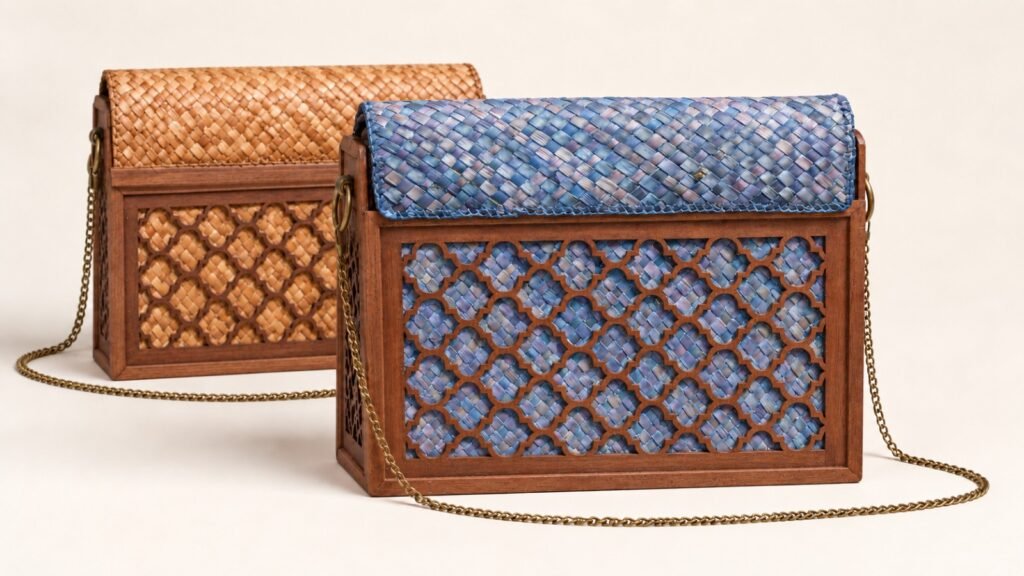
<escape>07 — Screwpine & Teak Bags</escape>

Screwpine mats + teak wood / teak veneer

An exploration of how woven leaf surfaces can be combined with rigid wooden components.

The contrasting materials offer different structural and surface properties within the same object.

[PHOTO — Screwpine and teak bag variations]
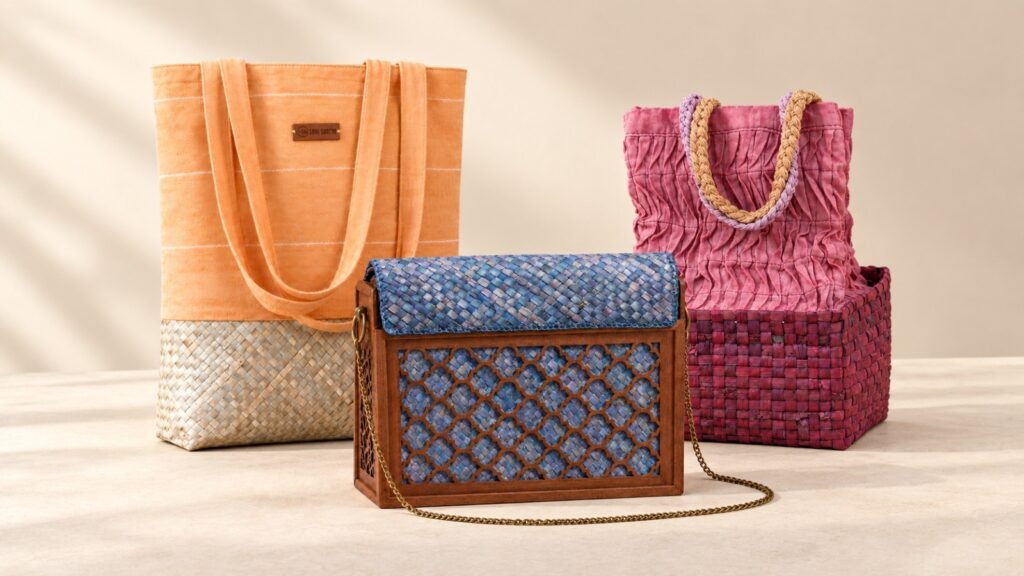
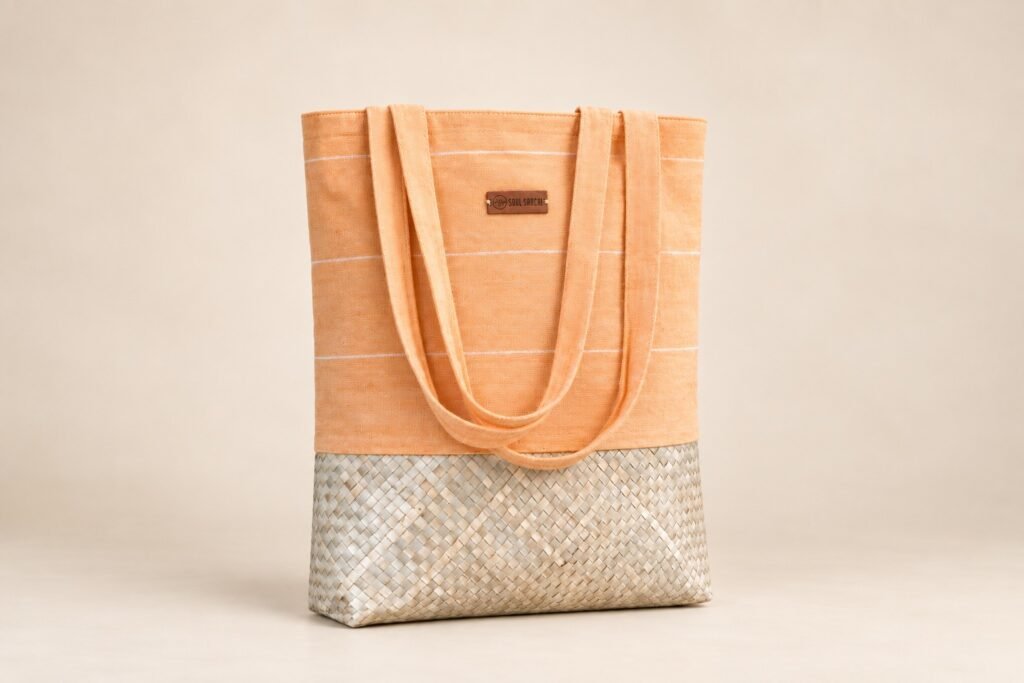
Tote Bag: ofter screwpine + Kerala handloom thorthu A combination of woven screwpine and handloom cotton, bringing together the texture of the leaf and the flexibility of cloth.
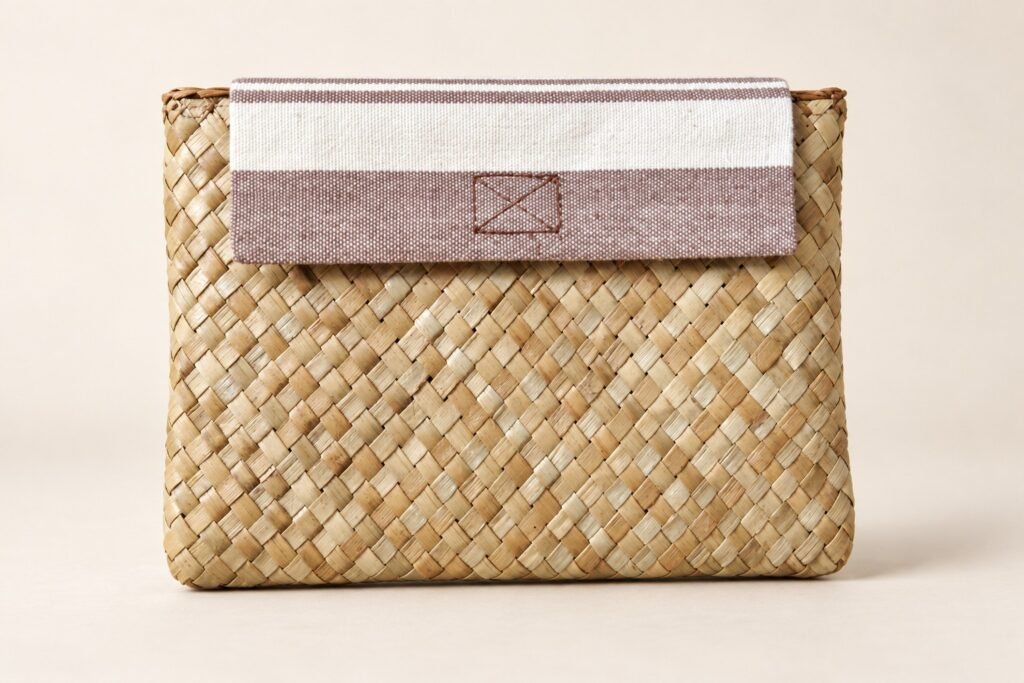
iPad Bags: Harder screwpine + khadi Two material combinations exploring how a structured woven surface can be incorporated into a protective everyday accessory.
Tote Bag: ofter screwpine + Kerala handloom thorthu A combination of woven screwpine and handloom cotton, bringing together the texture of the leaf and the flexibility of cloth.
Tote Bag: ofter screwpine + Kerala handloom thorthu A combination of woven screwpine and handloom cotton, bringing together the texture of the leaf and the flexibility of cloth. The veneer sheet's were digitally fabricated.
05 / The Design in Use

Designing Through Collaboration

The development of these products depended on the knowledge of the artisans working with screwpine.

At Jawahar Centre in Thalayolaparambu, my work was shaped by conversations and collaboration with T.P. Anandavally, P.G. Thankamma and the women associated with the centre.

Their understanding of leaf preparation, weaving, material behaviour and the time required for different constructions was fundamental to the design process.

The work was therefore not about replacing existing craft techniques with an external design language.

It was about exploring new combinations and applications through the skills and material knowledge already present within the craft.

06 / Outcome & Continuing Practice

Designing around what a material does well.

The collection explored different relationships between material and form.

Some bags used screwpine as a structured woven surface alongside flexible textiles. Others relied on the weave itself to create the three-dimensional shape. Experiments with wood and veneer introduced further possibilities for combining materials with different properties.

Together, these explorations demonstrated that traditional screwpine weaving need not be confined to one familiar category of products.

The project also reinforced an important principle in my practice: material knowledge and making knowledge are not separate from design. They determine which ideas can be realised, how objects perform and what possibilities are worth pursuing.

Project documentation

Design and development: Nanditha Nair / Soul Sanchi
Craft collaboration: Jawaharlal Memorial Social Welfare & Public Cooperation Centre, Thalayolaparambu
Material sourcing: Thalayolaparambu and Thazhava, Kerala
Photography: Aji Lal
Year:

Related Research
Traditional Knowledge as Technology

Understanding craft knowledge as a system of material, tools, processes and decisions.

Related Field Notes
What the Leaf Remembers

Following screwpine from plant to prepared fibre, woven surface and contemporary product.

Back To Top

Create a lasting visual impact with sustainable products and better use of technology.

Where to find us

Prayaana Infomedia, Infopark TBI, 1ST Floor, Jawaharlal Nehru Stadium, Kaloor, Ernakulam, Kerala
Phone: 9809080888
soulsanchi@gmail.com

Social