At the Loom: Notes from Kerala’s Weaving Communities
Observations, conversations and details from the places, people and tools that continue to shape my thinking about handloom.
01 / THE LOOM
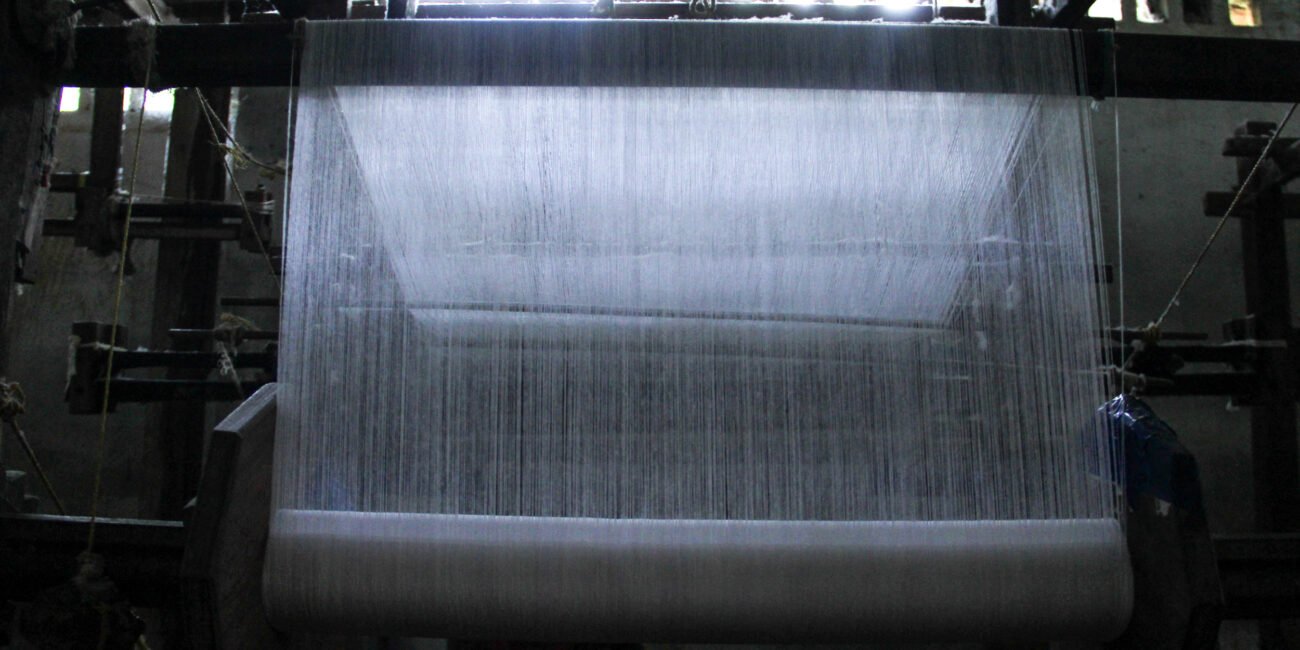
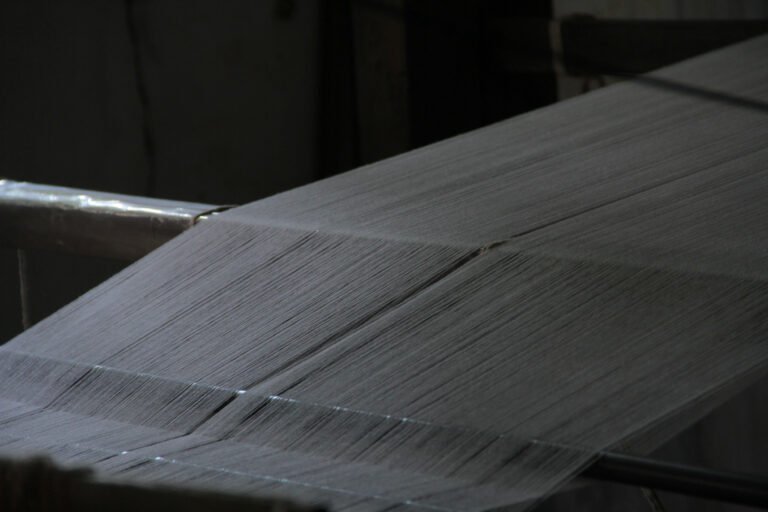
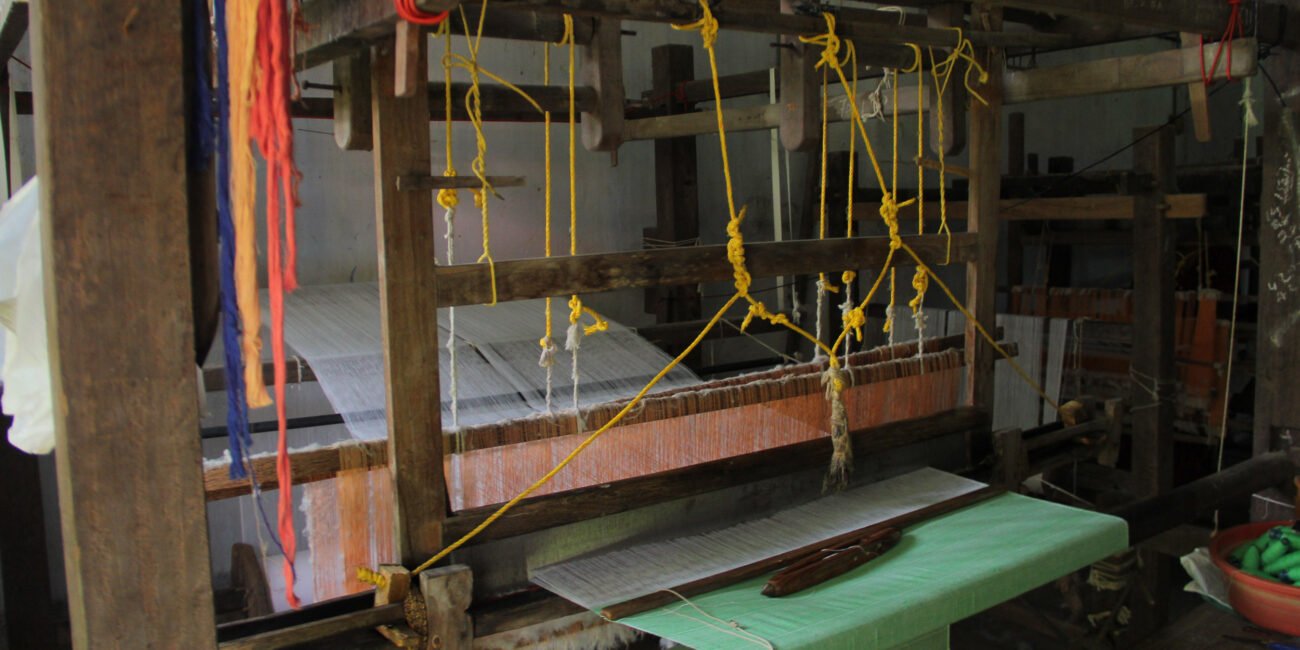
Frame loom, Kanjiramattom — 2015
These are notes from my visits to weaving communities across Kerala — moments, conversations and details that stayed with me. They are not a complete picture, but fragments of a larger learning process that informed the design of Indira Loom.
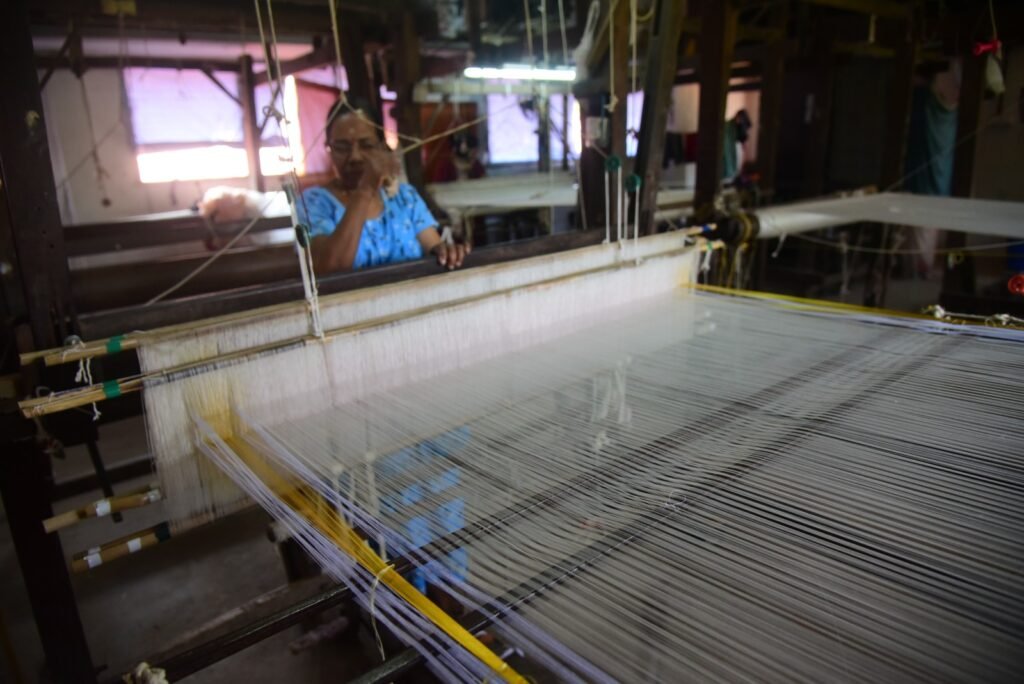
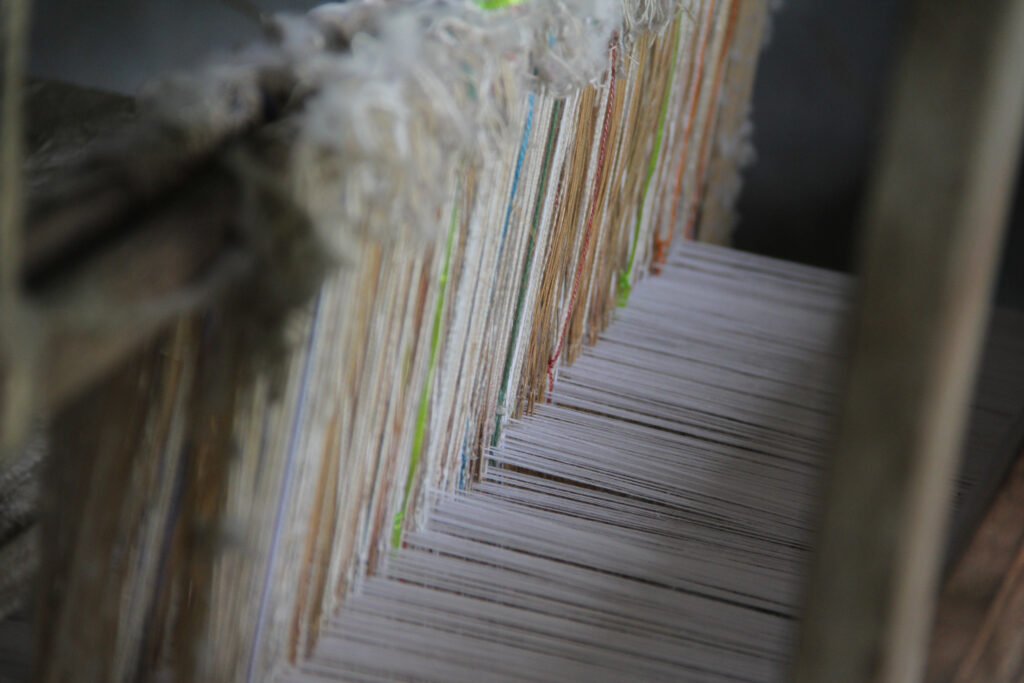
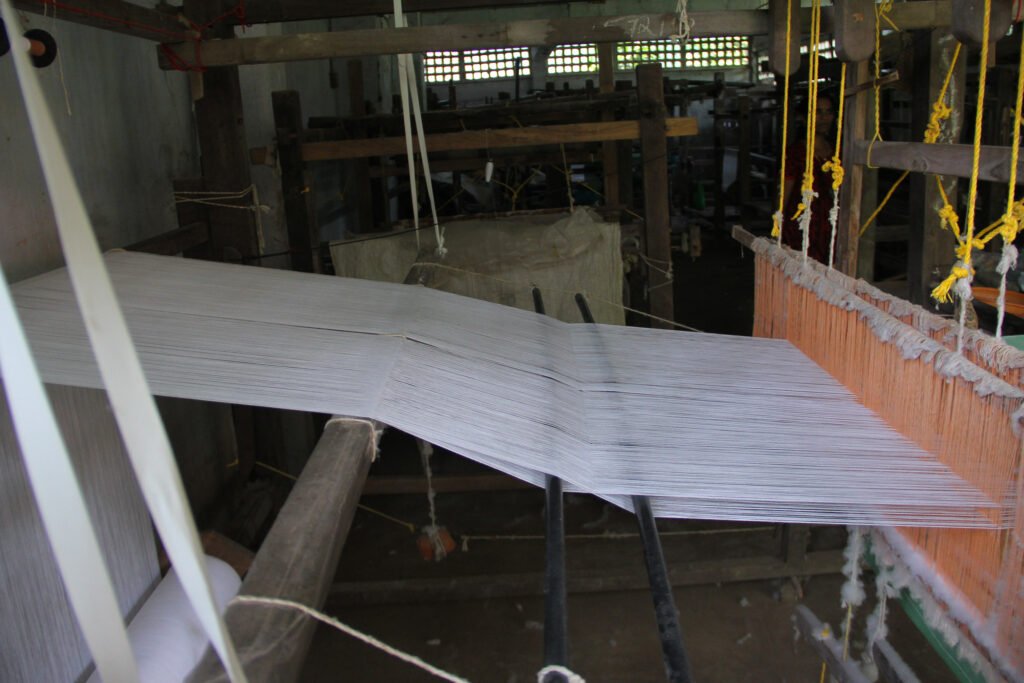
Across homes and small units, I saw different types of looms – pit looms, frame looms and variations adapted over time. Many parts are wooden, some are metal, and almost all have been modified, repaired, or improvised in some way.
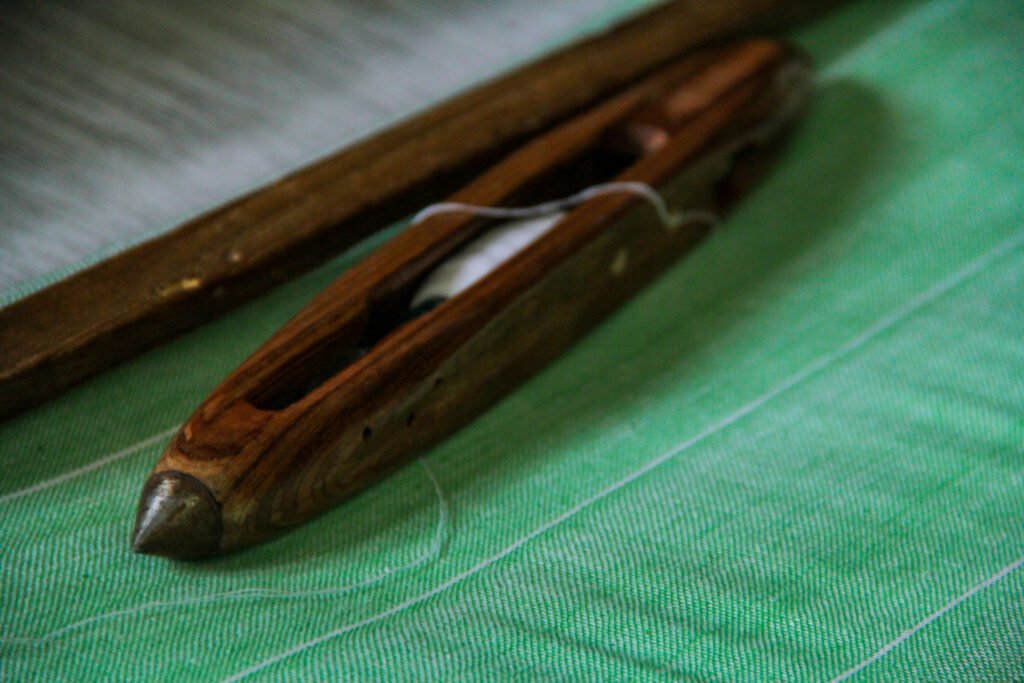
The shuttle with white yarn inside
02 / THE BODY AT WORK
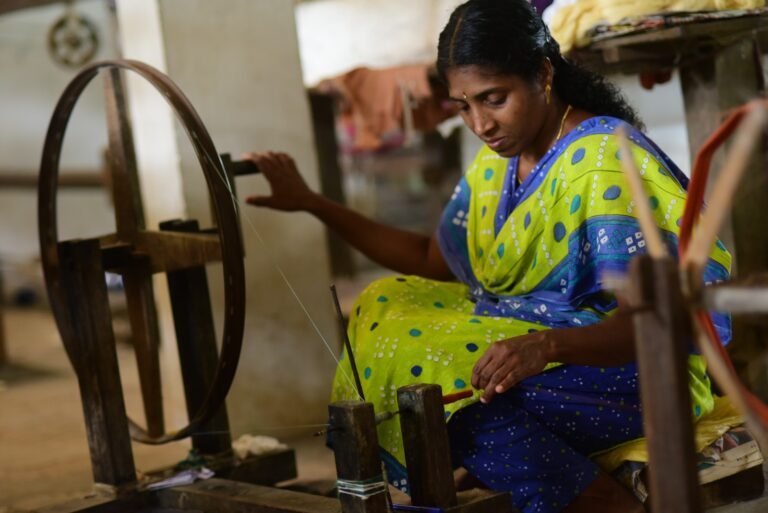
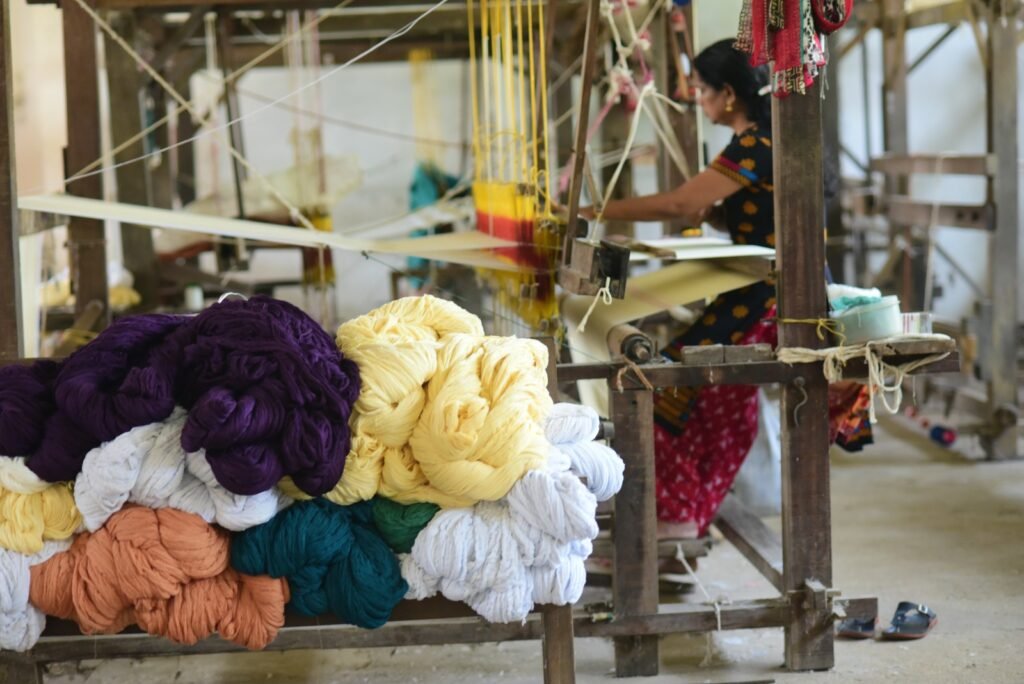
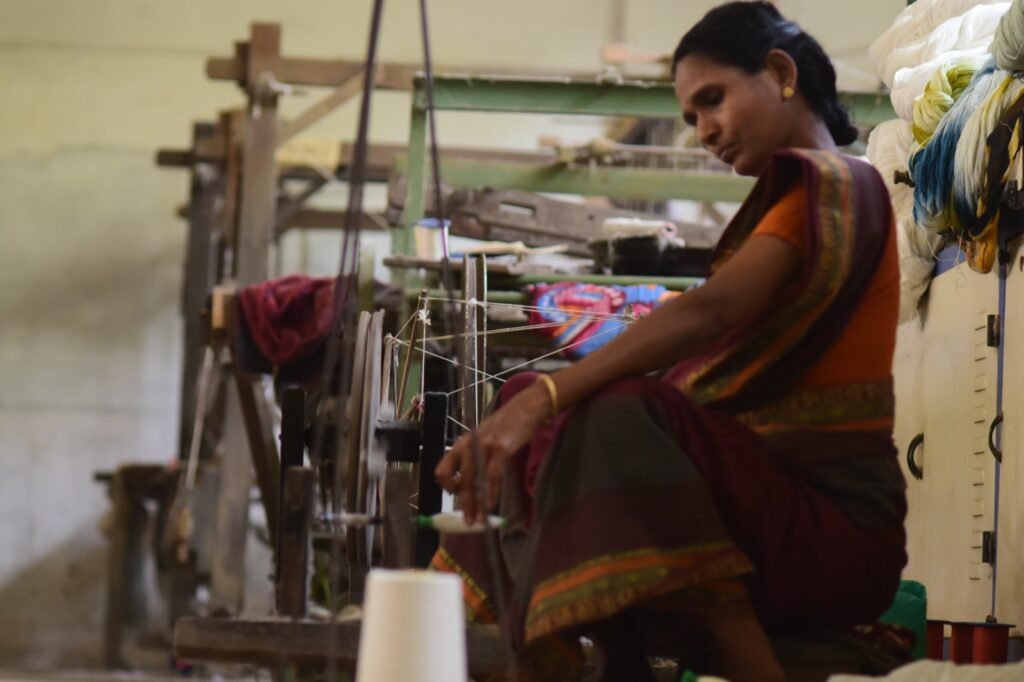
Weaving is a full-body process. Hands, feet, eyes and back work in rhythm for hours. Watching weavers through the day made me more aware of the physical demands of the craft — and the small adjustments people make to work more comfortably.
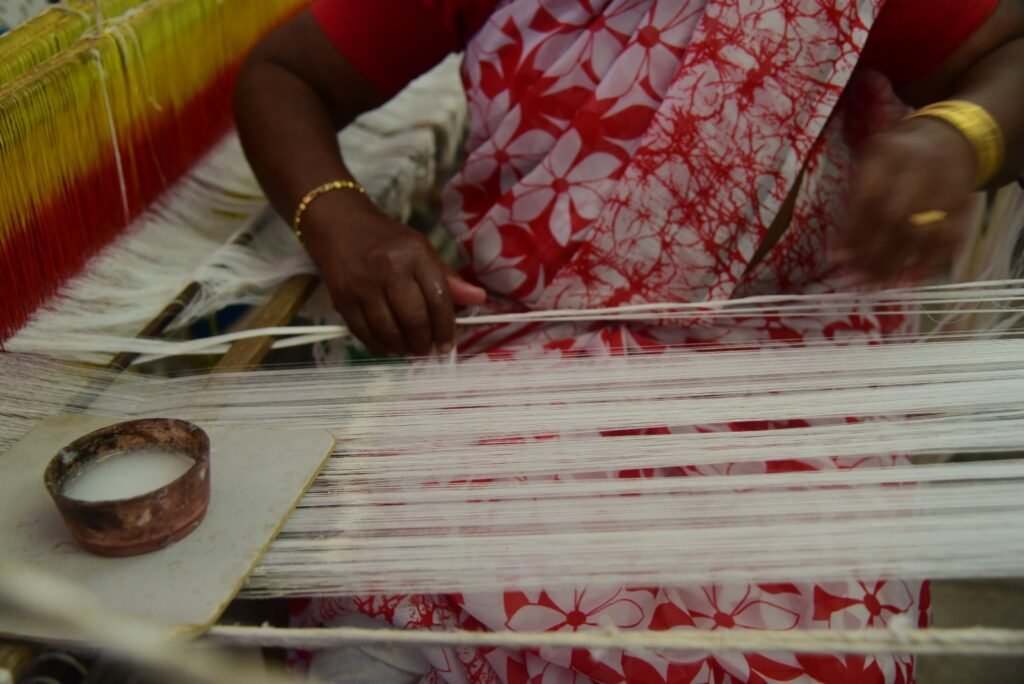
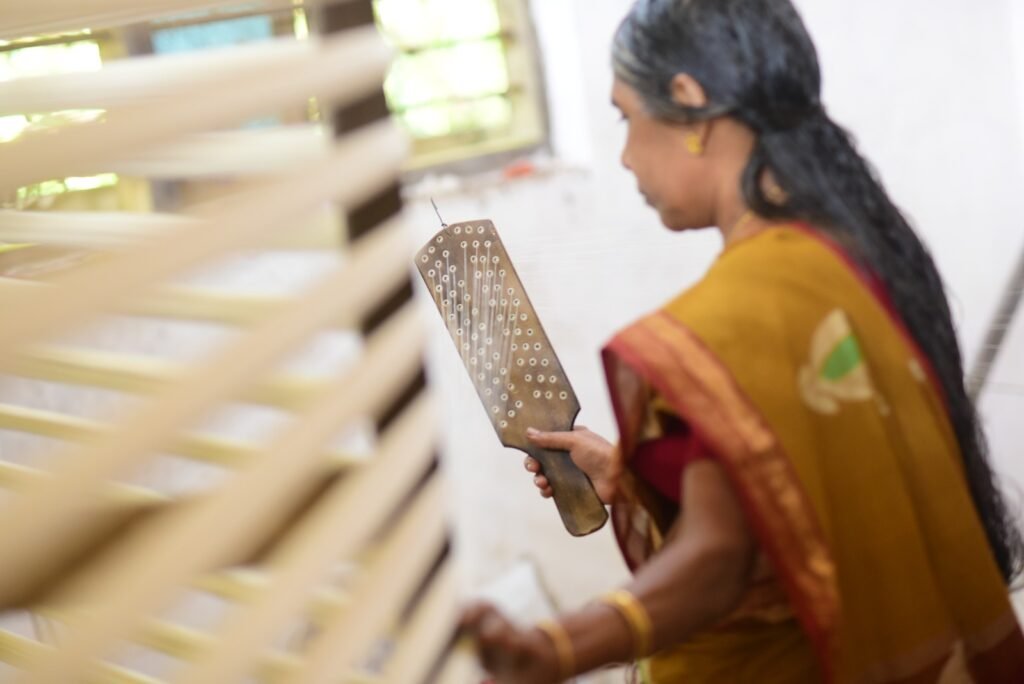
Adding starch and joining threads on the warp, Chendamangalam — 2022
Repetitive movement, bending and reaching, combined with long periods of sitting, make weaving physically strenuous.
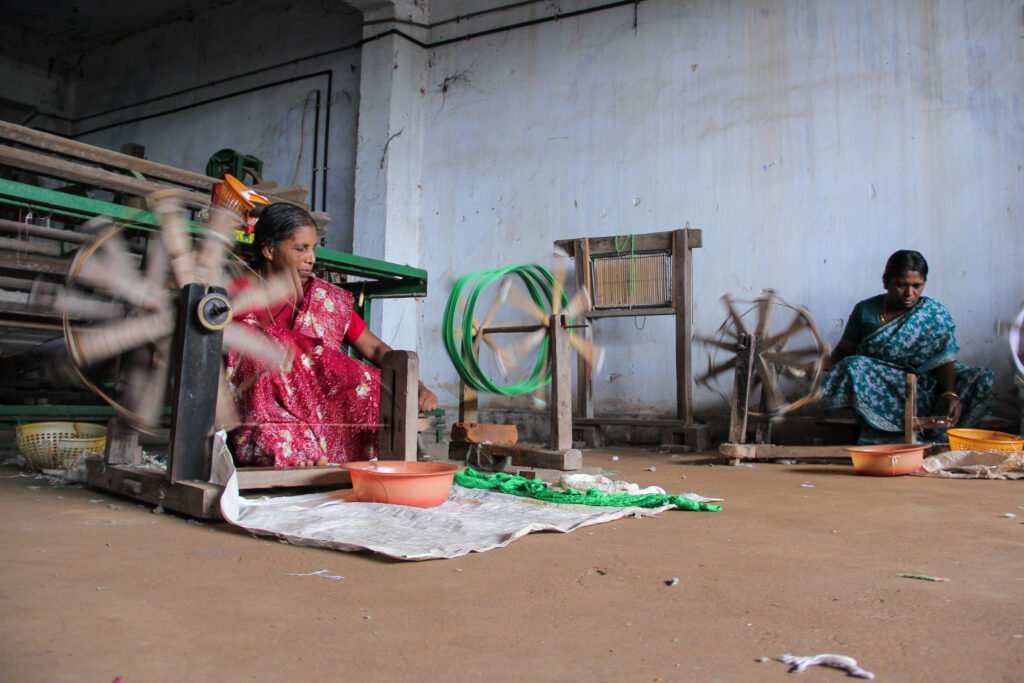
Spinning on Charkha, Kanjiramattom — 2015
03 / TOOLS + IMPROVISATIONS
“These are not static tools, they are constantly adjusted, repaired, and adapted by the people who use them.”
Everywhere I went, I saw small modifications — tied cords, replaced parts, improvised tension systems. These are evidence that craft technology has never been static. It continues to evolve through the hands of the weavers.
04 / PLACES + PEOPLE
I spent time in Chendamangalam, Kanjiramattom, Mulanthuruthy, Balaramapuram… working with weavers, understanding production, repair and recovery.
What stood out most was the resilience of the community and the deep relationship between place, material and livelihood.
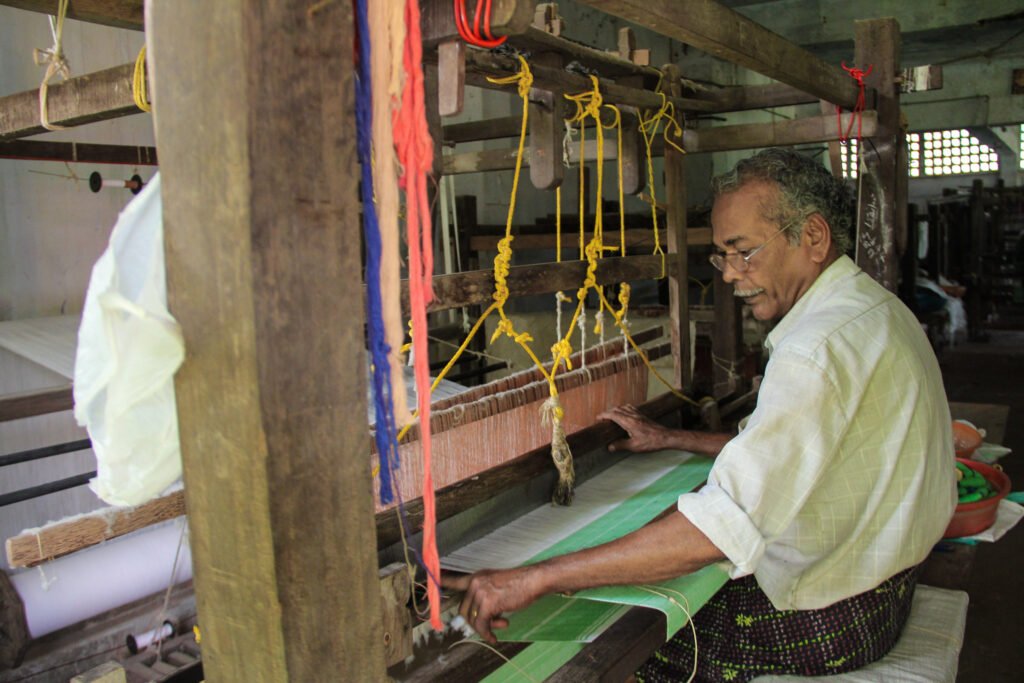
When I met Manichettan, then 75, his patience and determination had helped keep the Kanjiramattom Handloom Weavers’ Cooperative Society alive at a time when the shortage of new weavers threatened its future.
On a daily basis Saralachechi ensures that the quality of every single piece of textile woven at Chendamangalam meets her keen eye.
Manichettan / Kanjiramattom
The loom is not just a tool. It is part of the landscape, the house and the everyday life of the community..
05 / QUESTIONS I CARRIED BACK
01 Which movements could be made easier without changing the character of hand weaving?
02 Which parts of a loom should remain mechanical?
03 What happens when replacement parts can be fabricated locally?
04 Can a portable loom allow experimentation away from the production loom??