Notes on enrichment, assistive technology, materials and the everyday work of animal care
Living with cats, including elderly and disabled animals, and caring for hundreds of rescues has changed how I think about design. Their needs are often remarkably ordinary: somewhere to climb, a place to hide, a clean litter box, the ability to move comfortably, and an environment that allows them to behave naturally.
Over time, I began looking at these needs as design questions. Not everything required a sophisticated invention. Sometimes a shelf in the right place made more difference than an elaborate product.
01 / A House Is Also Their Habitat
Catifying my home began with observing how the cats used the space. They wanted height, different resting places, opportunities to climb and routes that allowed them to move without constantly encountering one another.
I started adding shelves, platforms and other structures to make the house more usable for them. Each modification was an experiment in understanding their behaviour. Some spaces became favourites; others were ignored.
The lesson was simple: enrichment is not about filling a house with cat furniture. It is about giving animals more choices within their environment.
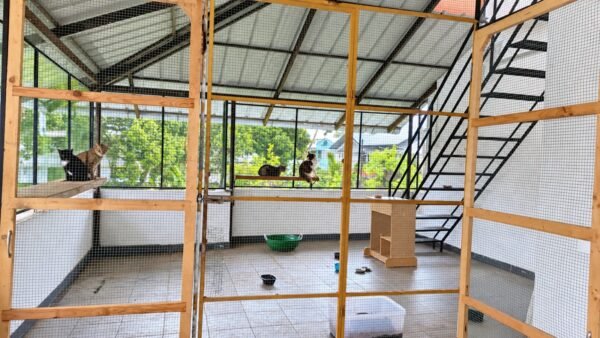
First and foremost, the cats must be kept safe indoors. Since indoor cats may struggle to survive outside, all windows and balconies should be securely enclosed with metal chicken-wire mesh.
They also need litter boxes and water bowls placed throughout the house, with the water kept well away from the litter areas.
Neela, Ittikora, Pumba and Christmas Momo are enjoying their enclosed balcony space with elevated sitting spaces. Litter boxes and water bowls are placed on the ground.
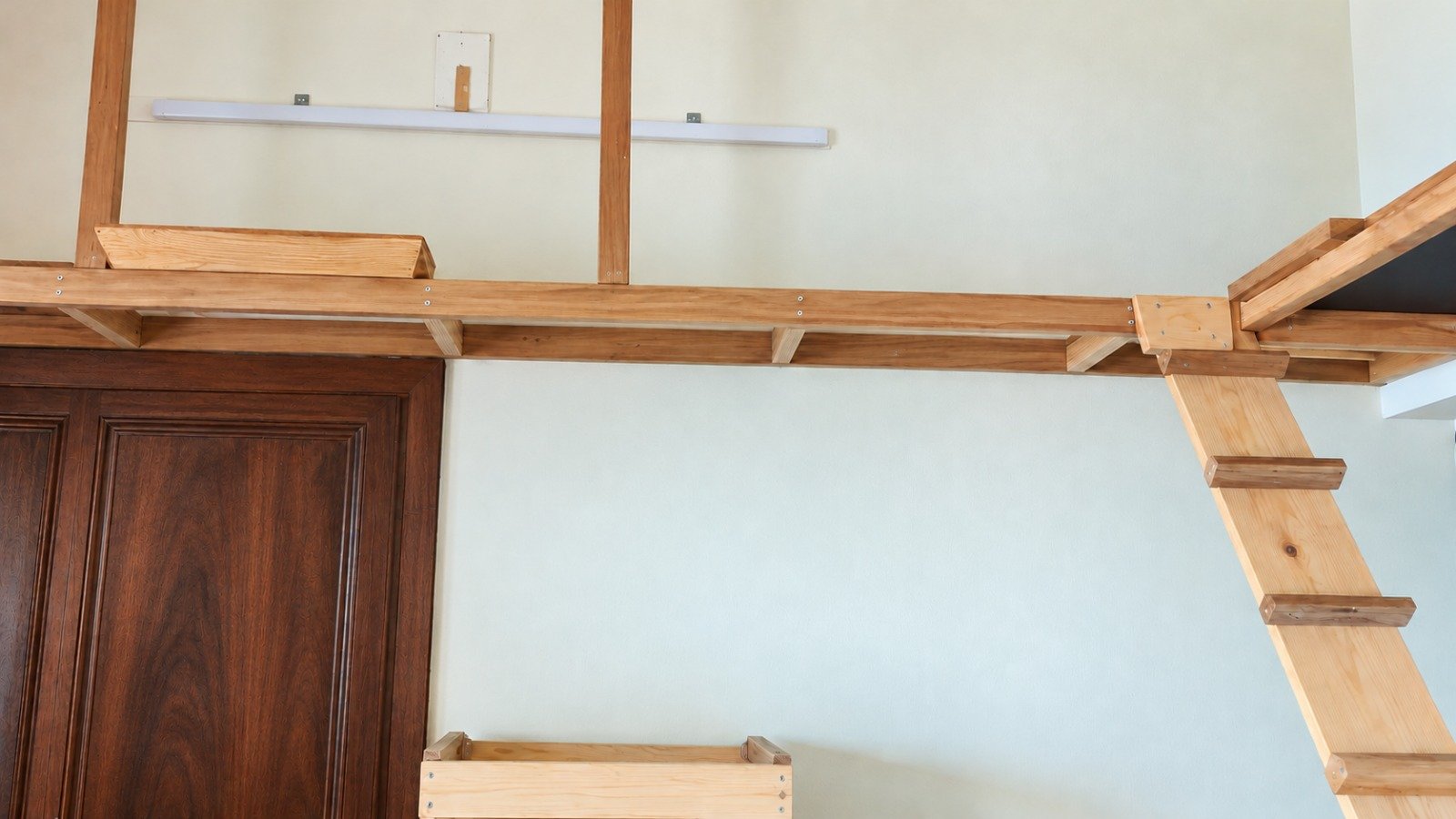
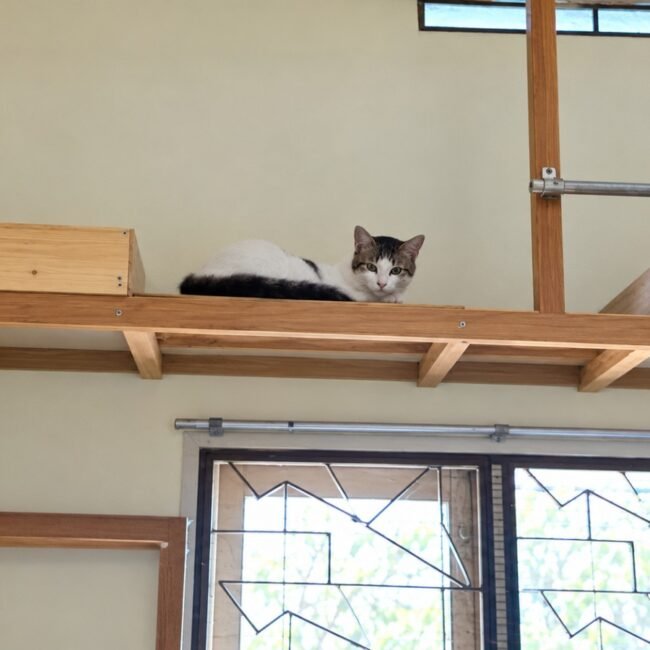
Reclaimed-wood ladders and catwalks help cats climb safely and move comfortably between levels.
Design considerations
The space was designed around the everyday realities of living with cats: they may scratch, pee, shed or vomit furballs, so surfaces needed to be durable, removable and easy to wash.
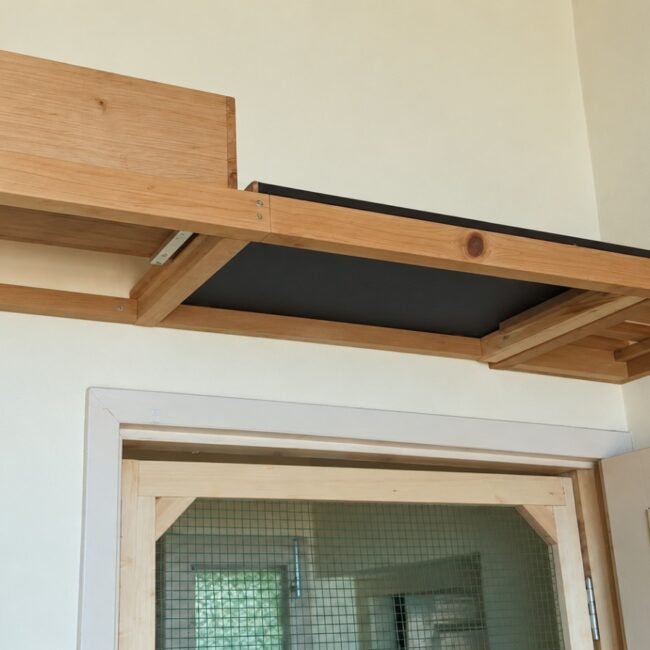
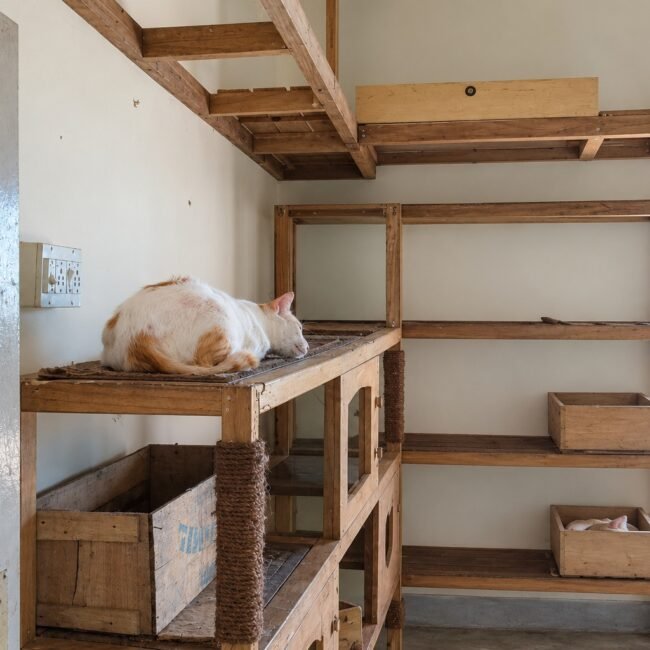
The boxes and resting areas can be rearranged, while thoughtful joinery keeps them steady when cats run or jump, yet allows humans to move them easily from the floor. Ladders support comfortable movement between levels, and hanging elements encourage play.
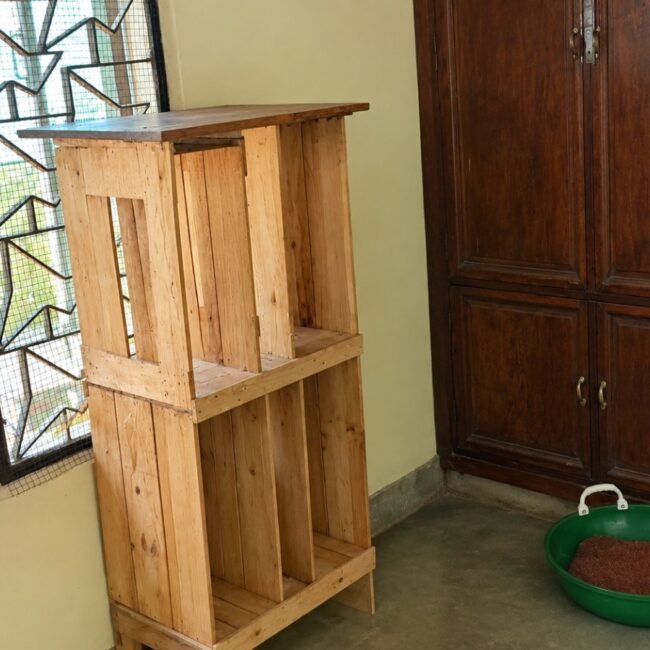
Almost everything—old drawers, discarded wood, and tomato crates from our neighbour, Spring Organic Store in Panampilly Nagar—was reclaimed; only the screws and nails were new. The scratching posts were made by winding chakkara kayar (Twisted two-strand coir rope) around reused supports, costing just ₹30 per post.
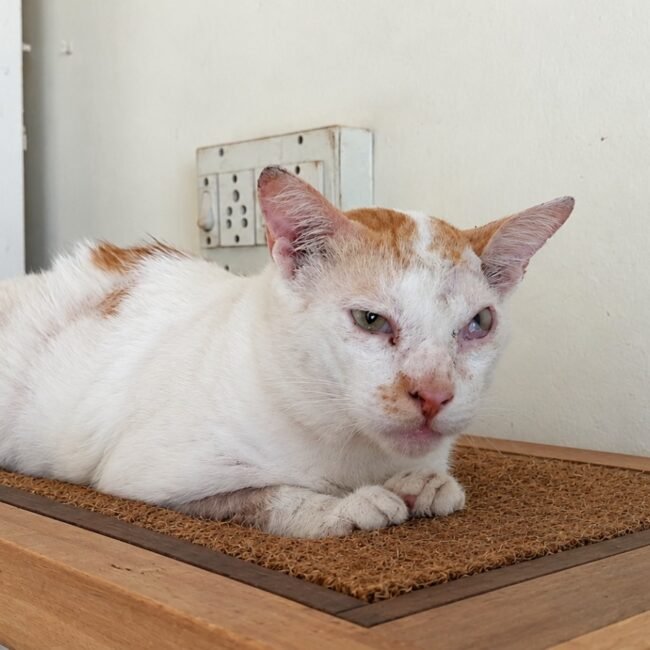
The removable, washable resting surfaces made from refurbished jute rice sack.
Alfredo poochino rests comfortably on the shelf with removable, washable resting surfaces made from refurbished jute chaaku.
A stable yet easily repositioned corner bridge transforms unused vertical space into a route for climbing, resting and play.
Harvey Two face rests on the modular elevated catwalk.
Movable cat boxes and resting spaces created from reclaimed wood and tomato crate (peenja peettis).
Resting Alfredo on the reclaimed wood shelf, Chinnu kutti in the box.
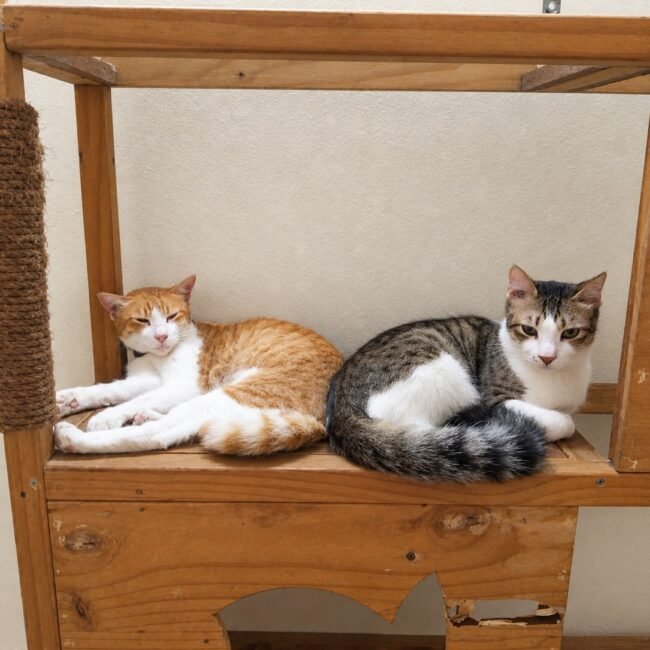
Lily and Daisy are resting on the cat shelf next to the wounded rope scratch post
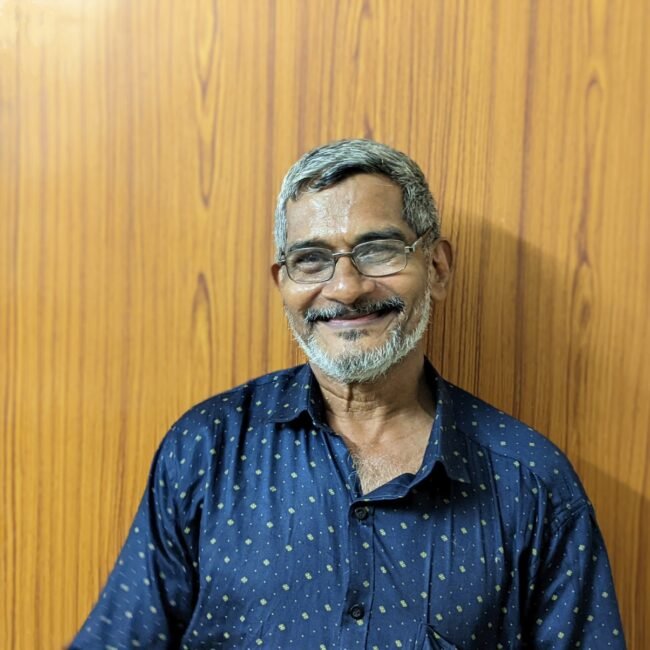
Jacob chettan and Ravi
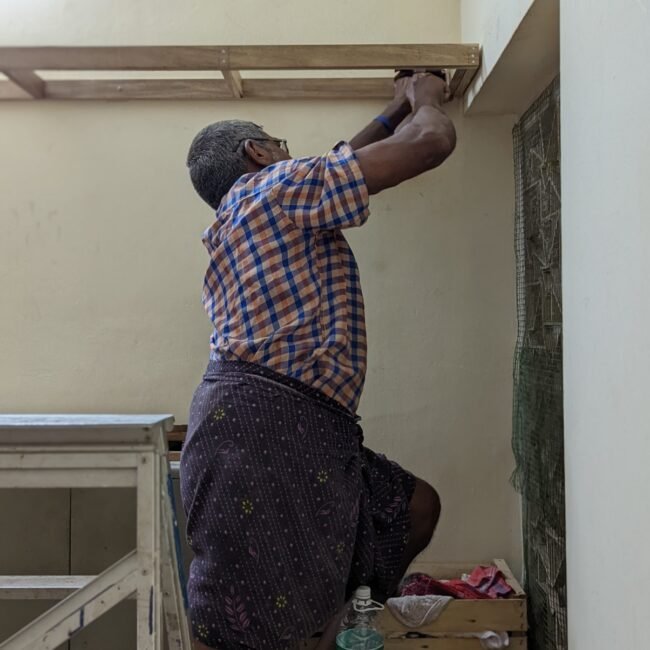
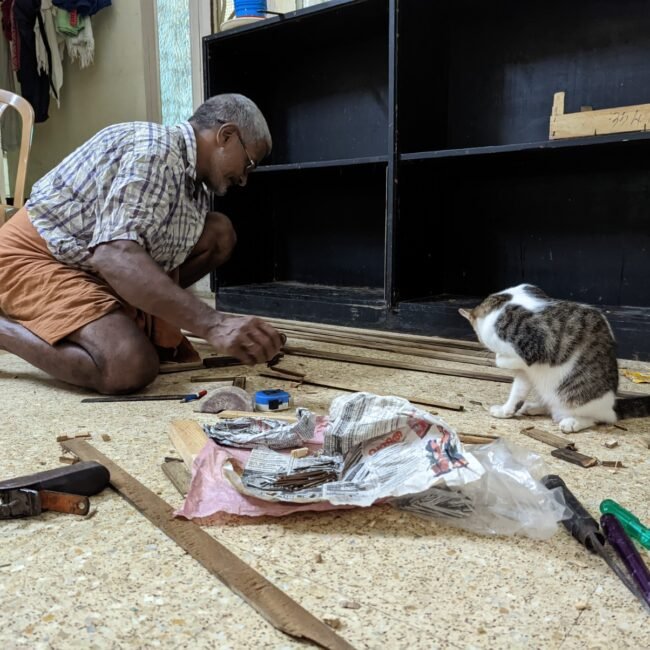
This space was made possible by Jacob chettan, popularly known as Jacobji—a master carpenter and a true gem. He elevated my design ideas, using whatever scrap or leftover material we had to create the forms I imagined. It became a joint act of imagination, design and skilled making. This was all possible because of the first version that was built collaboratively by my friend and designer Ravi (Ravinder Singh) and Jacob chettan. Because both of them live with cats and dogs, they intuitively understood the animals’ needs and helped turn the ideas into a practical, adaptable and cat-friendly environment.
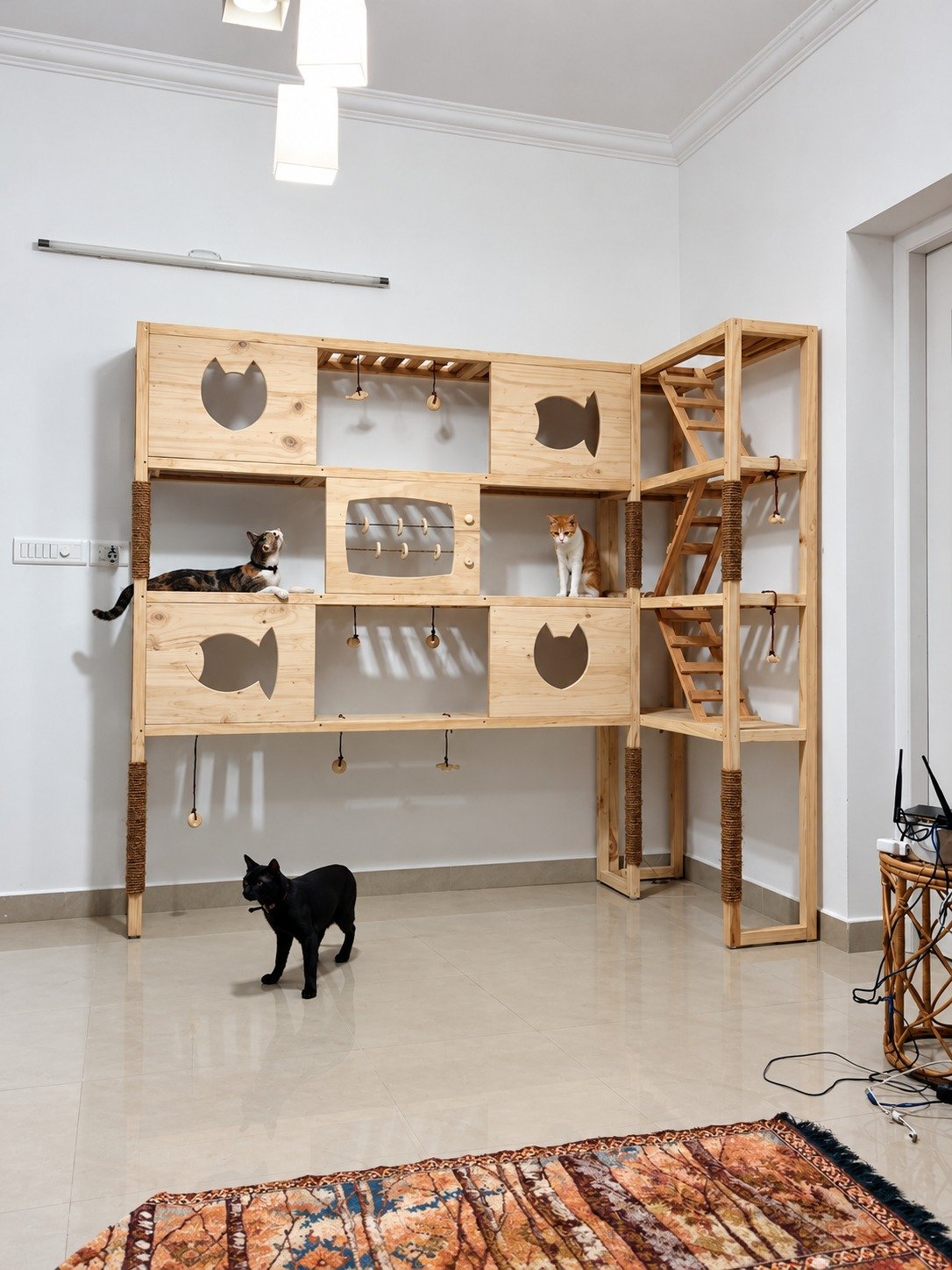
The first version was a standalone cat furniture structure designed for an apartment where we lived briefly. It needed to be lightweight, portable and easy to dismantle. Ravi sourced reclaimed pine wood from which the oil had been extracted, keeping the structure relatively light.
Over time, we discovered several shortcomings. The ladder was too small, the cats rarely used the slotted seating spaces, and the decorative fish and cat-shaped cutouts proved impractical. More importantly, we realised that the cats preferred continuous pathways at greater heights, allowing them to move through the house rather than climb a single structure.
Stability was another concern. A lightweight, freestanding structure could topple under the force of cats jumping between platforms, so greater weight or secure anchoring was necessary. The oil-extracted pine also proved unsuitable for Kerala’s humid climate, as it was vulnerable to insect damage.
This first experiment taught us to prioritise the cats’ actual behaviour, structural stability and material durability over portability and decorative features.
Gogol(Googie), Pumba and Daisy enjyoing the standalone version
Jacob Chettan in action
Gek is supervising the master artisan
Jacob Chettan is always smiling.
02 / Even Cat Litter Is a Material Problem
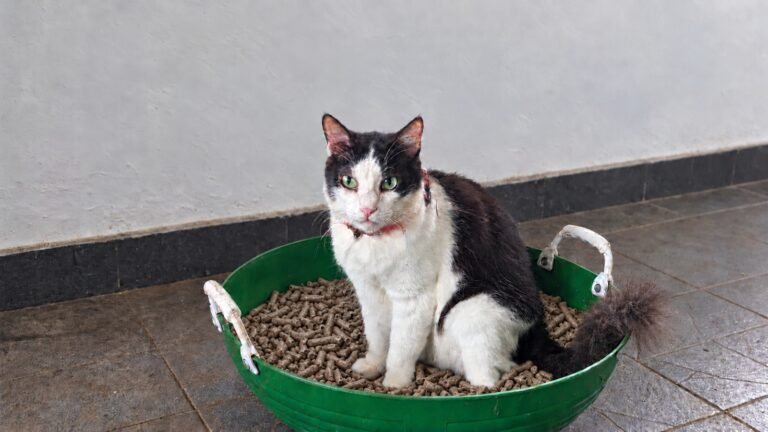
My research with water hyacinth through Pola eventually led to the development of biodegradable cat litter.
Litter is an everyday consumable, but its design involves several competing requirements: absorbency, odour management, texture, dust, handling and disposal.
Living with cats gave me a direct understanding of the problems a litter material needs to address. Material experimentation offered another way to approach them.
It made me think about animal products not merely as consumer goods, but as materials that affect animals, caregivers and the environment.
03 / Can a Machine Make Care Easier?
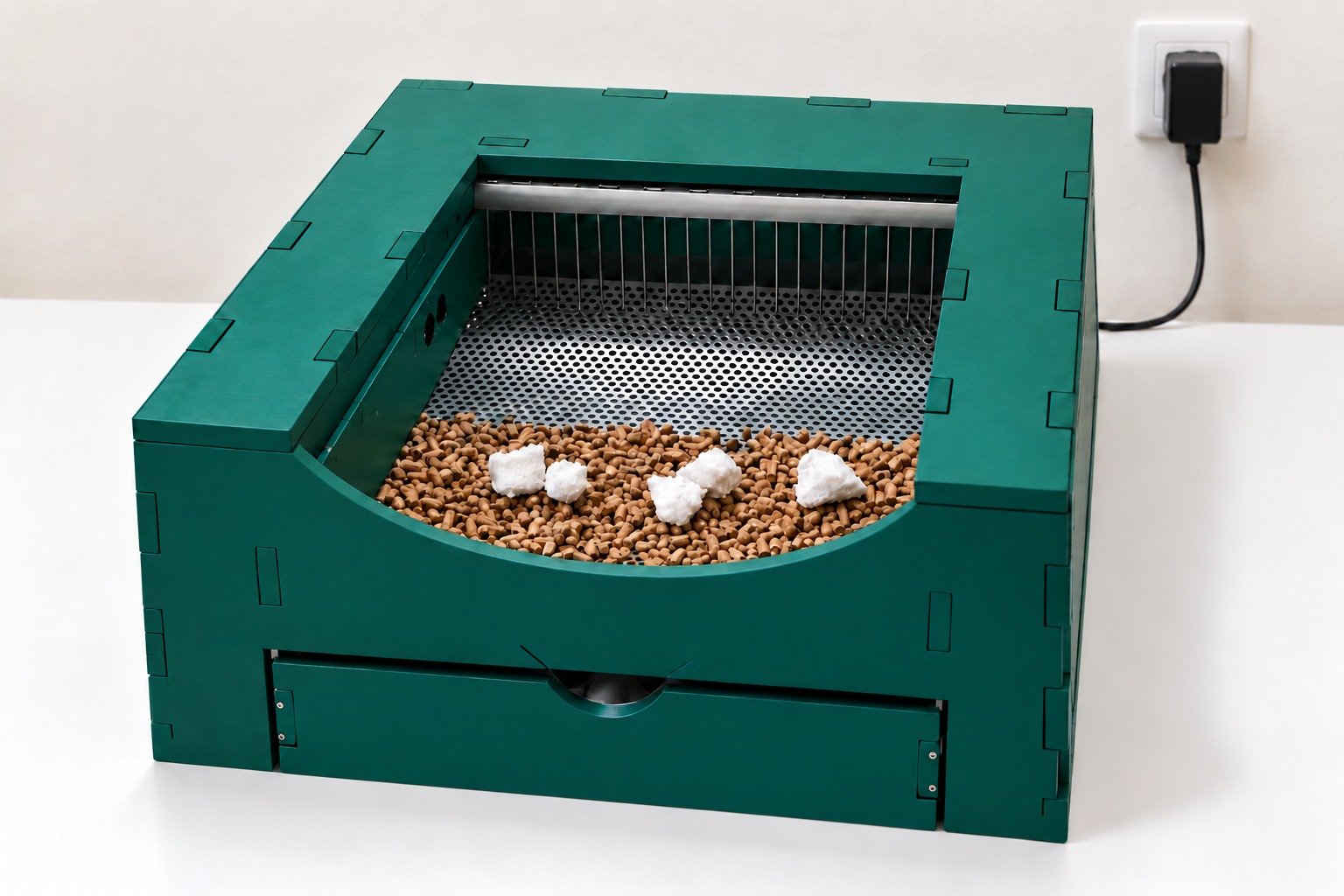
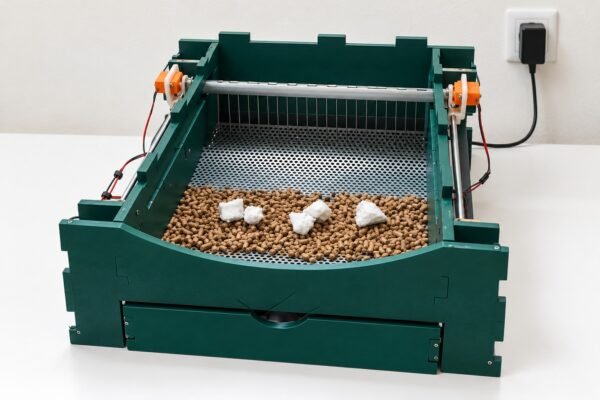
Cleaning litter boxes is repetitive, necessary work, especially in a multi-cat household. During Fab Academy, I explored automating this task through ShooBot, an automated cat litter cleaning prototype for non-clumping cat litter.
The project brought together sensing, motors, electronics and mechanical design. It also exposed the difficulties of designing a machine around a living animal.
A sensor must distinguish between a cat using the litter box and a situation where cleaning can safely begin. A mechanism must work with an unpredictable material while remaining safe and accessible.
ShooBot taught me that automation in animal care is not simply about reducing human labour. It must also respect the animal’s behaviour and safety. for
04 / Designing for a Body That Moves Differently
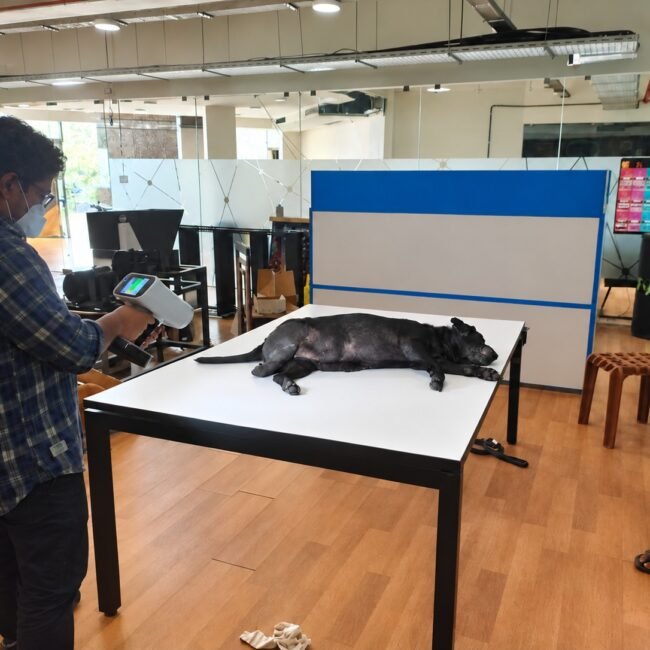
Through Make for Animals, I explored how distributed digital fabrication could help animals with disabilities.
One of our early projects involved Ruby, a paraplegic rescue dog at PAWS Thrissur. I 3D-scanned her body using Artec Leo and collaborated with Rico Kanthantham in Japan on a prosthetic design that could be fabricated locally.
Ruby passed away from chronic kidney disease before the work could develop further. But the experience stayed with me.
It showed me how design expertise, digital files and local fabrication facilities could be connected across countries to address an individual animal’s needs.
Assistive design begins with understanding the particular body, rather than assuming one solution will work for every animal.
05 / Care Is a Design System
These projects operate at very different scales: a shelf in a house, a motorised cleaning mechanism, a digitally fabricated assistive device and a material made from an invasive plant.
But they emerged from the same habit of observation.
What does the animal need? What makes everyday care difficult? Can a change in space, material or technology improve the situation?
Technology is not always the answer. Neither is automation. A well-designed environment, a reliable routine or a simple modification may be more useful than an elaborate machine.
What interests me is how these approaches can work together to make animal care more thoughtful, accessible and sustainable.
Good animal-centred design begins not with what we can make, but with how animals actually live.
06 / WHAT I CARRIED BACK
01
What if we designed spaces around how animals actually move, rest and play, rather than how we expect them to behave?
02
Can reclaimed materials, simple joinery and thoughtful design create better enrichment than expensive, purpose-built products?
03
How do we make structures stable enough for animals, yet adaptable and easy for humans to clean and maintain?
04
When does automation genuinely improve care, and when does it introduce unnecessary complexity?
05
Can digital fabrication and material research make assistive technologies and everyday animal products more accessible?
06
And what changes when we treat animals not simply as recipients of care, but as users whose behaviour continually informs the design?
FIELD NOTES → ONGOING PRACTICE
These observations continue to shape my work across animal-centred spaces, assistive technologies, automation and biomaterials. From refining cat enrichment structures to developing ShooBot, Make for Animals and Pola cat litter, the aim remains the same: to make everyday care safer, more adaptable and more responsive to the animals themselves.