Notes from Jawahar Centre on screwpine, weaving, colour and finding new forms for an old material.
01 / IT BEGINS WITH A LEAF
Before it becomes a mat, basket or bag, screwpine is a difficult leaf.
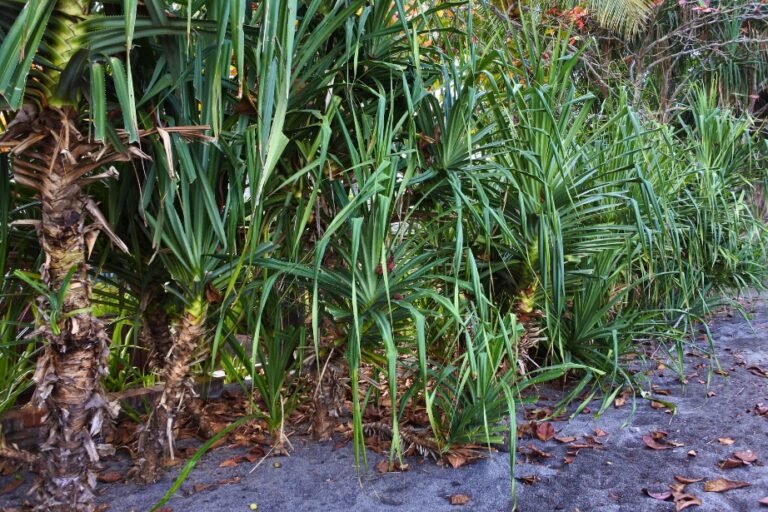
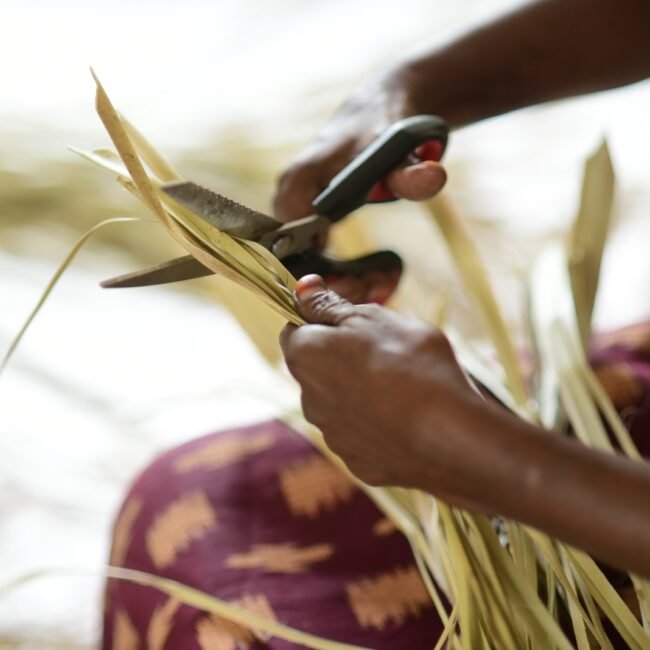
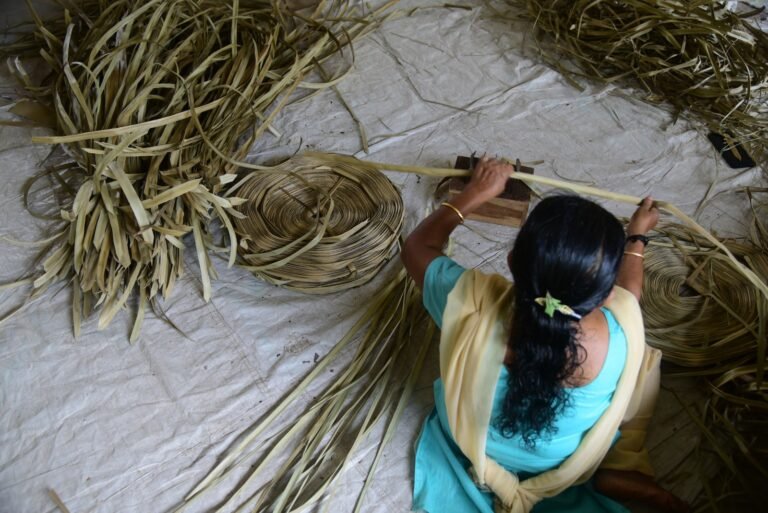
Screwpine(Pandanus, locally known as Thazha or Kaitha) grows along the edges of canals, wetlands and homesteads in Kerala. Its long leaves carry sharp thorns along their edges. They have to be harvested, stripped, dried and prepared before they become pliable enough to weave.
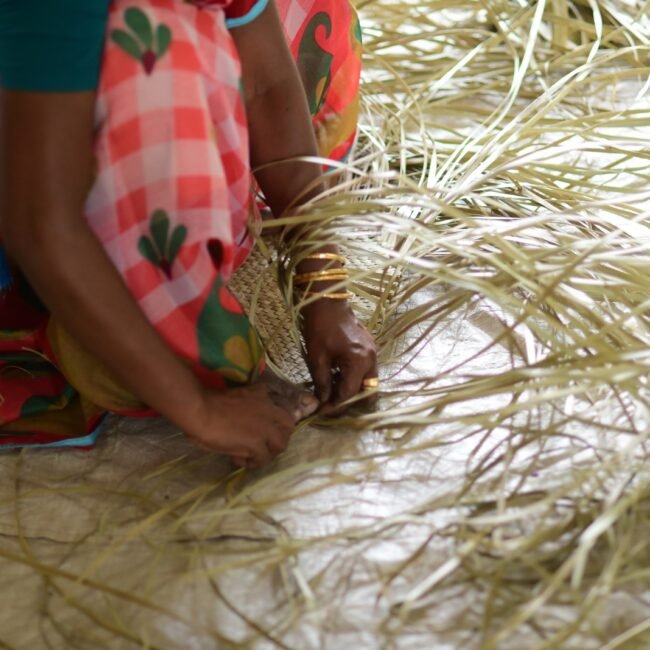
At Jawahar Centre in Thalayolaparambu, I began following that transformation—from a plant growing outside to a material passing repeatedly through women’s hands.
The more time I spent with it, the less I saw “screwpine” as a single material.
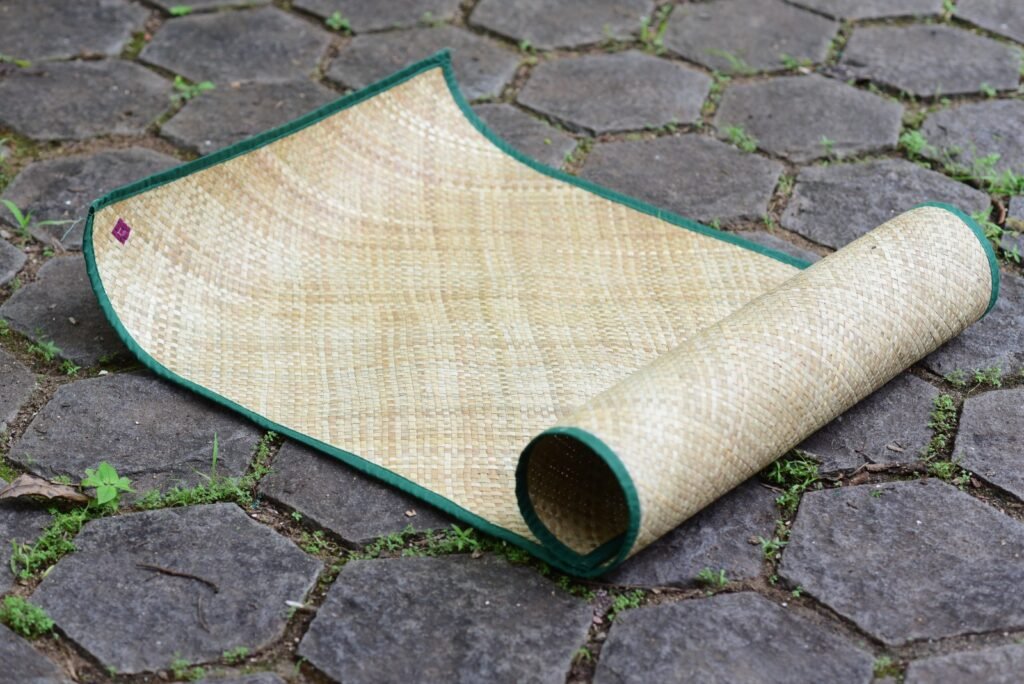
The plant, the prepared strip and the woven surface behaved like three different things.
The weaving begins long before the weaving.
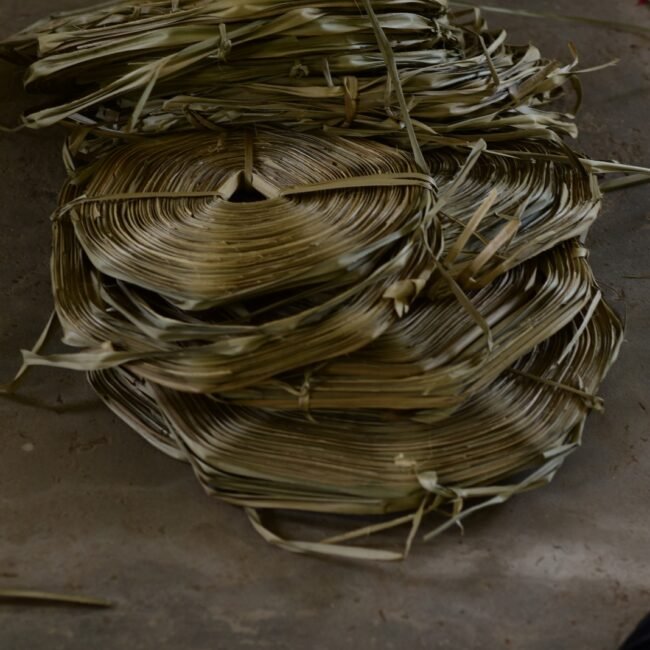
Wheel or bundle in the opposite direction of the leaf's natural spine curve.
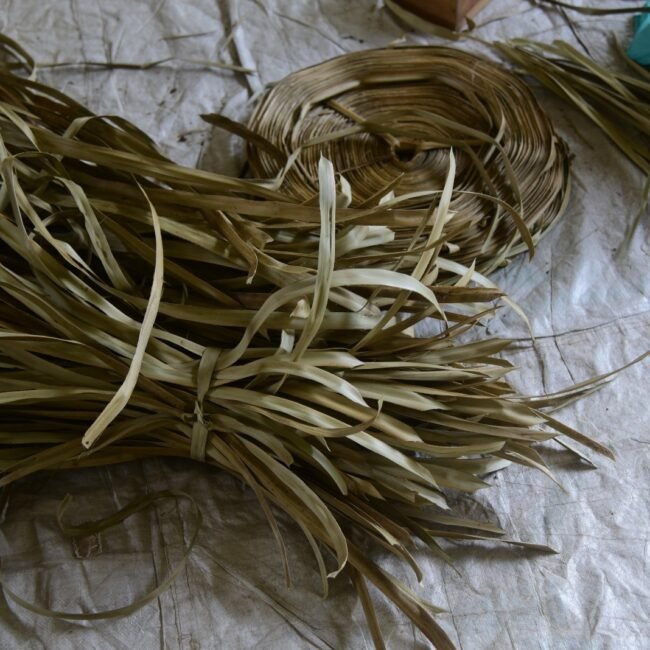
Unbundled to satrt weaving
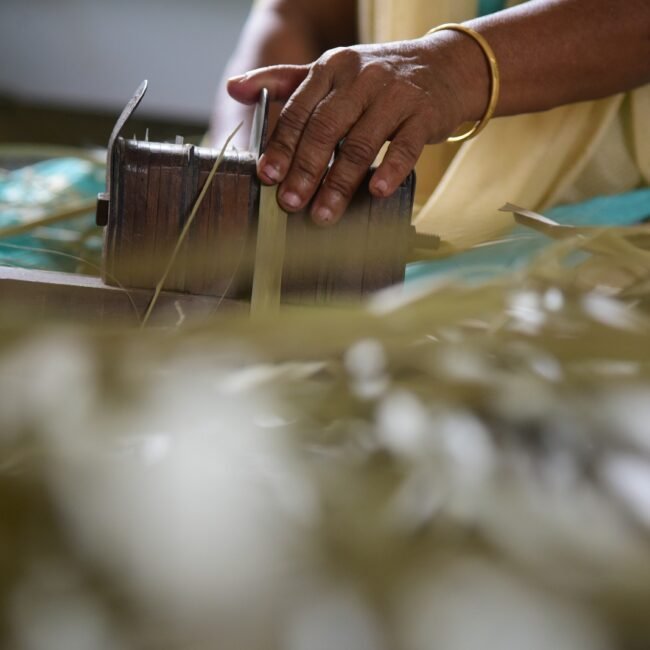
Splicing and Cutting into Strips (Poli)
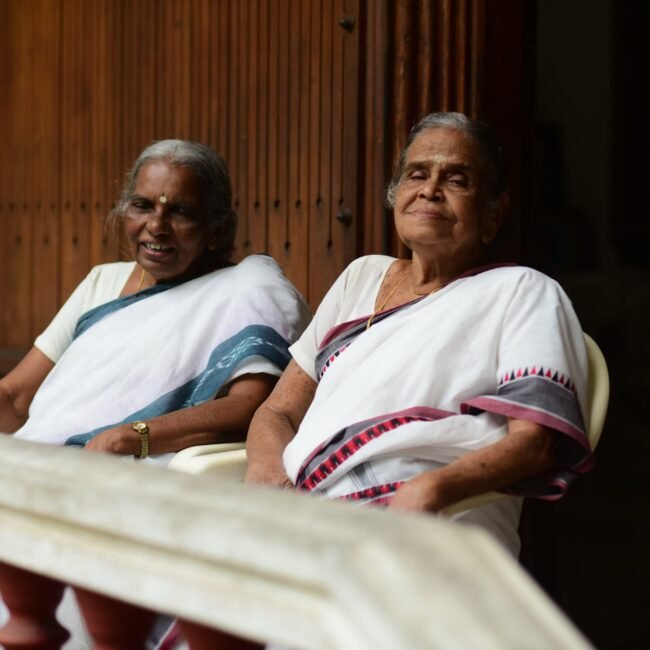
02 / THANKAMMA CHECHI + ANANDAVALLY CHECHI
The women who built the centre
My relationship with screwpine is inseparable from T.P. Anandavally and P.G. Thankamma, who shaped the Jawaharlal Memorial Social Welfare & Public Cooperation Centre over decades of community work in Thalayolaparambu. The Jawahar centre in’t simply a place where objects are made. It holds generations of knowledge about the plant, preparation, weaving, the women who practised the craft and the realities of making a livelihood from it.
Much of what I learned began in conversations with Thankamma chechi and Anandavally chechi rather than design exercises. Through them, I came to understand the craft not simply as a material tradition, but as knowledge tied to women’s work, livelihood and independence. Anandavally Chechi carried an extraordinary institutional memory of the Centre and the women around it; Thankamma Chechi continues that work with an equally determined, practical understanding of what it takes for a craft to remain economically relevant. Over more than a decade of working with them and the artisans—on screwpine, and later water hyacinth—they became collaborators and teachers. They taught me that sustaining a craft is as much about sustaining the people who hold its knowledge as preserving the technique itself.
03 / THE KNOWLEDGE IS IN THE HANDS
The questions became surprisingly ordinary.
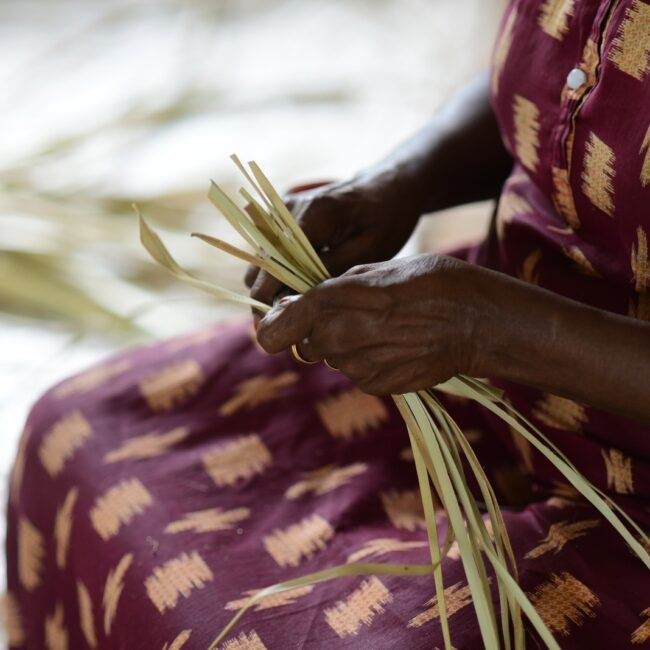
Once the strips were prepared, another kind of knowledge became visible.
Width. Tension. Direction. Sequence.
A pattern that looks simple when finished is a repeated series of decisions made almost without stopping to name them.
Watching the women weave made me realise how much craft knowledge is difficult to separate from the movement that produces it.
The pattern isn’t only remembered by the mind. It is remembered by the hands.
They taught me
Which leaves were good.
Which strips were too brittle.
Which weave worked for which object.
What took too long.
And what the women already knew would never work.
04 / WHAT HAPPENS WHEN THE PATTERN CHANGES?
The traditional vocabulary gave me something to work from rather than something to replace.
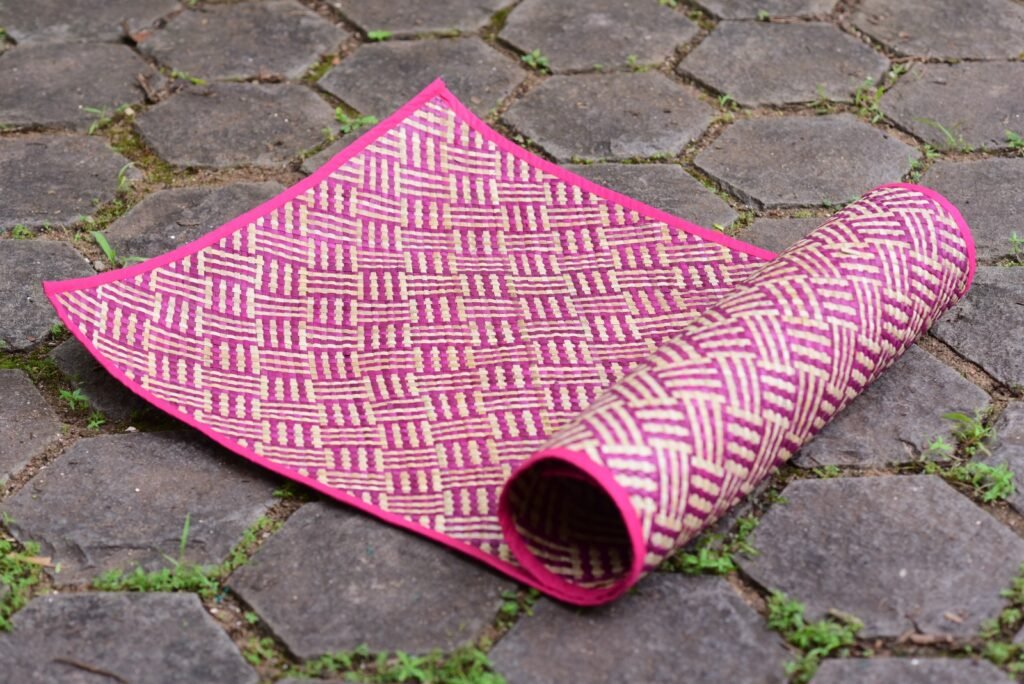
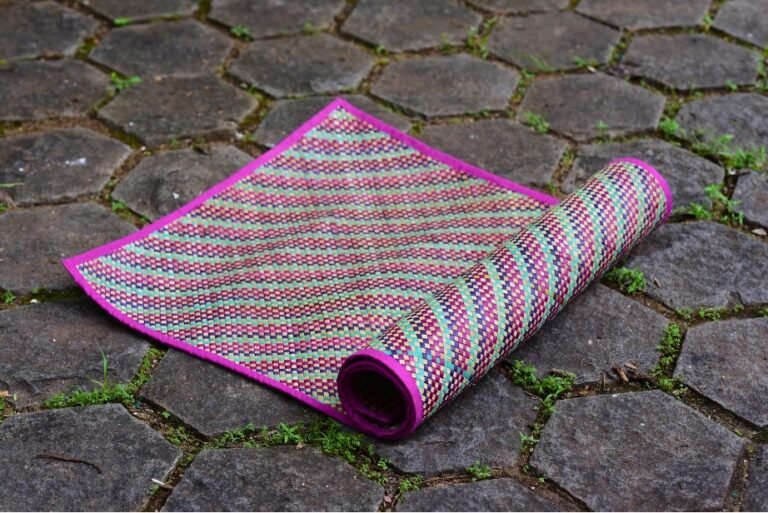
I began experimenting with colour and pattern—first on paper, then through the material itself.
Changing colour sounds superficial. In a woven structure it isn’t.
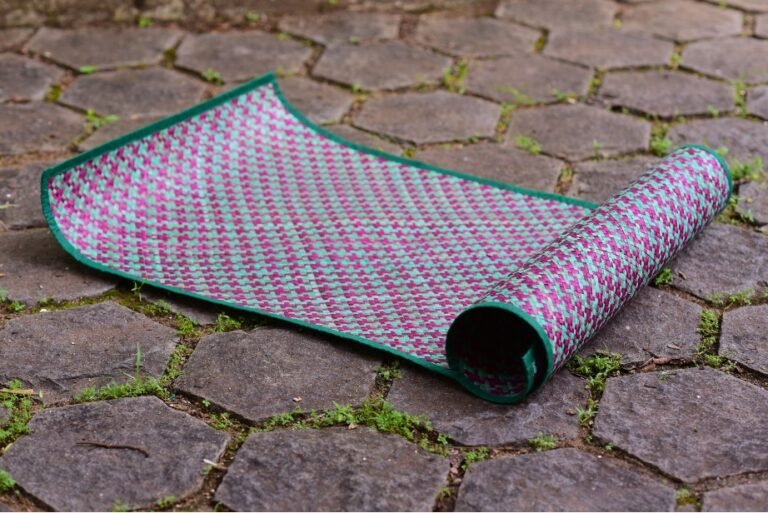
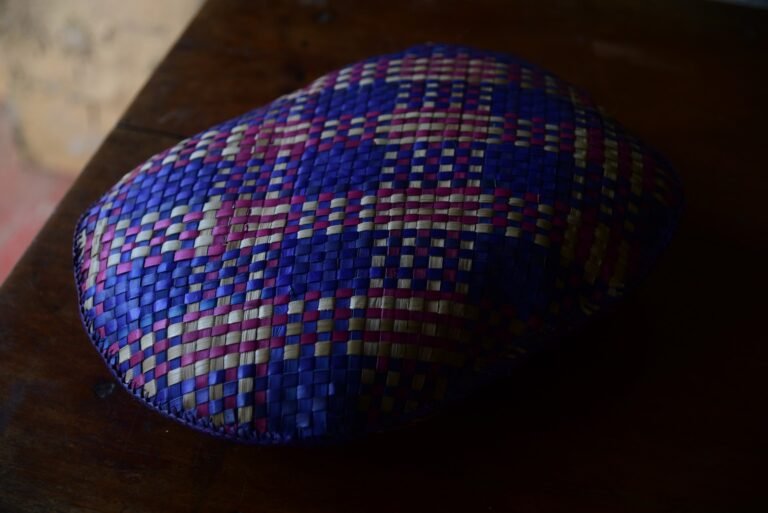
Colour changes how the weave is read. A simple alternating structure can suddenly reveal a geometry that was almost invisible in natural fibre.
Some combinations worked.
Others didn’t.
The paper experiments allowed us to test the rhythm before committing it to hours of weaving.
Colour didn't cover the craft. It revealed the structure inside it.
05 / FROM MAT TO FORM
What happens when a material known as a surface has to become a form?
Eventually I became less interested in making an entire object from screwpine.
The more useful question was often:
Where does screwpine need to be?
A woven panel could provide texture and structure while textile handled folding. A rigid frame could support a softer woven surface. Another fibre could become the handle. A different material could protect an edge.
Screwpine didn’t have to imitate leather, cloth or plastic.
It could do the part of the object that it did well—and another material could take over where it didn’t.
It’s then that I was taught a big knowledge: There are different kinds of screwpine.
CUSHION
Not all Kaitha behaves the same
The artisans taught me to distinguish between what they call male and female kaitha (thazha). The male type available around Thalayolaparambu is harder and holds form well, making it useful when a woven surface needs to become a three-dimensional object. The female type is softer and easier to stitch, and can be split into exceptionally fine poli. Much of the female kaitha I worked with came from Thazhava in Kollam, through Mohan Sir, a retired Kerala Industries Department official who runs a women’s screwpine initiative from his home there. Sometimes the dried material travelled from Thazhava to the highly skilled weavers at Thalayolaparambu. These differences began influencing my designs directly: softer material for stitched constructions; harder material where the weave itself created the form. Material selection became part of designing the object rather than a decision made afterwards.
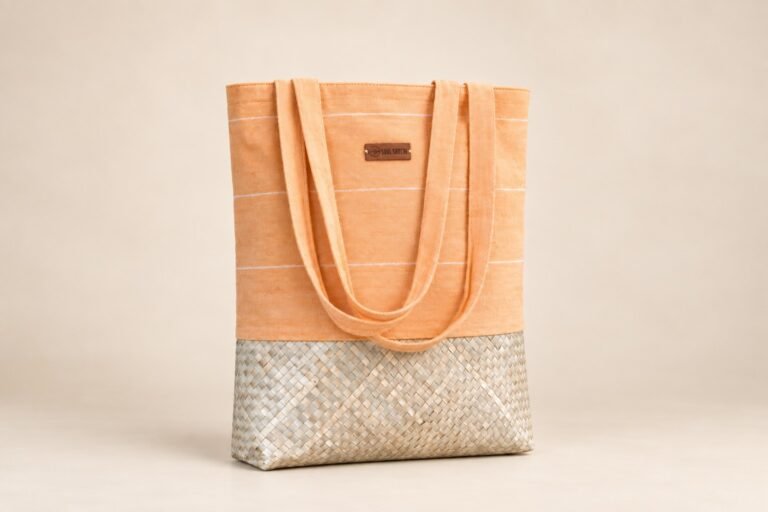
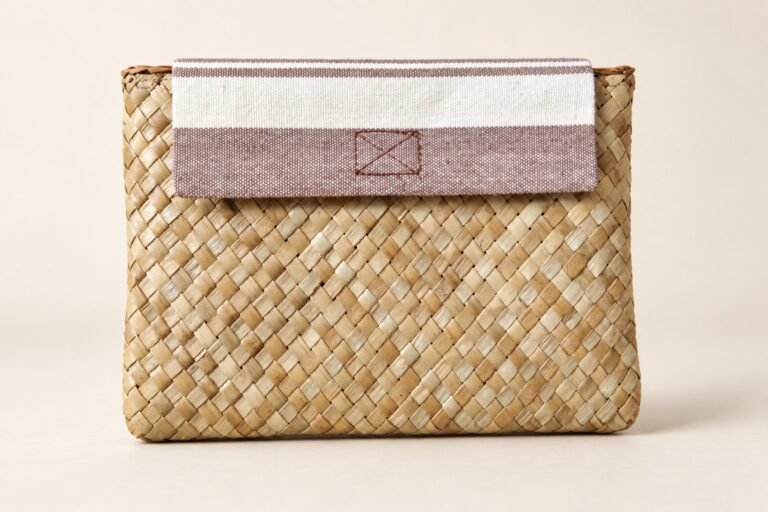
TOTE female screwpine with thorthu
IPAD BAG male screwpine with khadi
IPAD BAG male screwpine with handloom thorthu
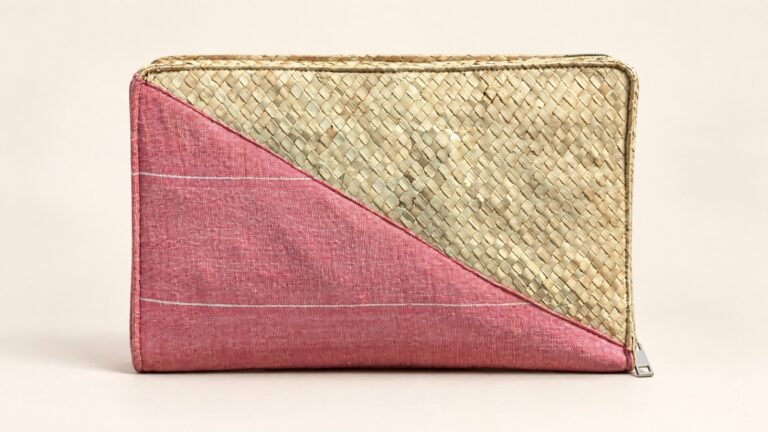
MACBOOK BAG female screwpine with natural dyed khadi silk
TOILETRY BAG female screwpine with handloom thorthu
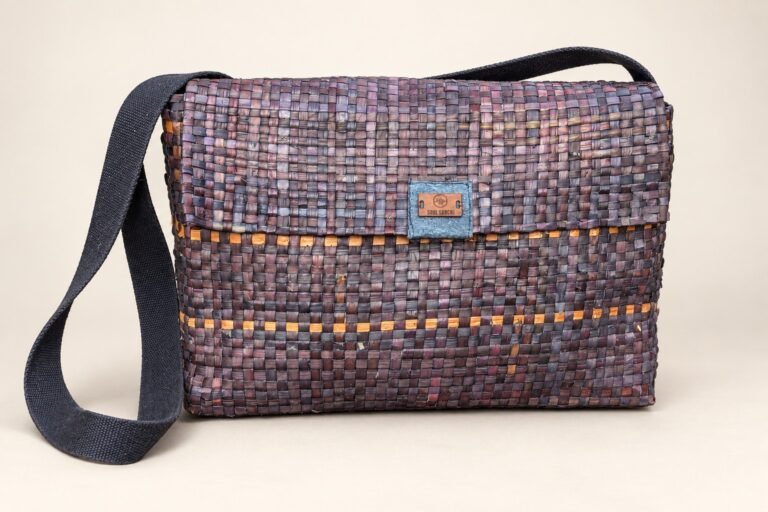
MIGHTY BAG male screwpine woven into the shape without any stitching
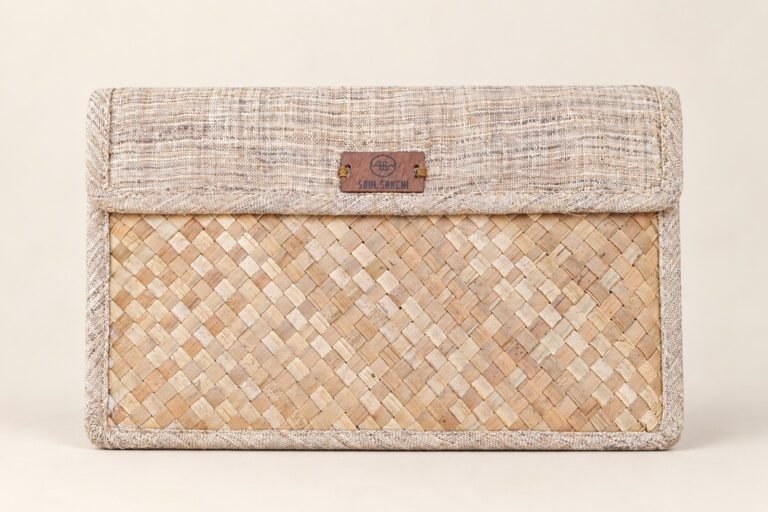
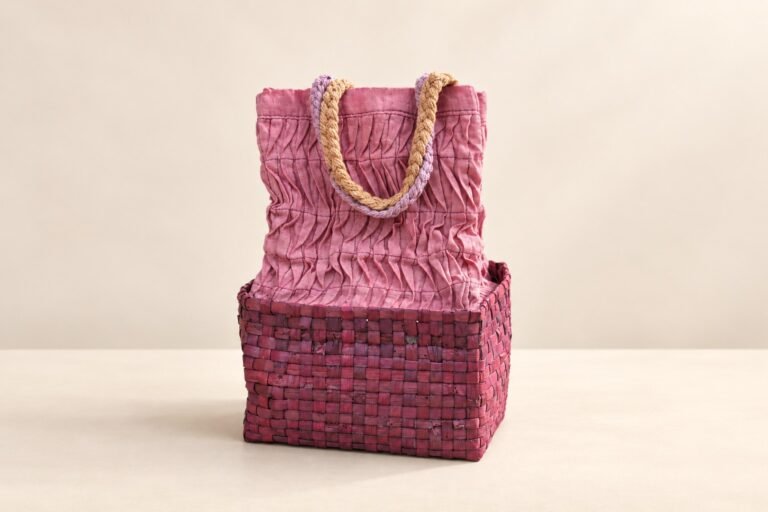
BOX BAG woven male screwpine with handstitched handloom cotton cloth and handbraided yarn
06 / WHEN KAITHA MEETS ANOTHER MATERIAL
Eventually I became less interested in making an entire object from screwpine.
The more useful question was often:
Where does screwpine need to be?
A woven panel could provide texture and structure while textile handled folding. A rigid frame could support a softer woven surface. Another fibre could become the handle. A different material could protect an edge.
Screwpine didn’t have to imitate leather, cloth or plastic.
It could do the part of the object that it did well—and another material could take over where it didn’t.
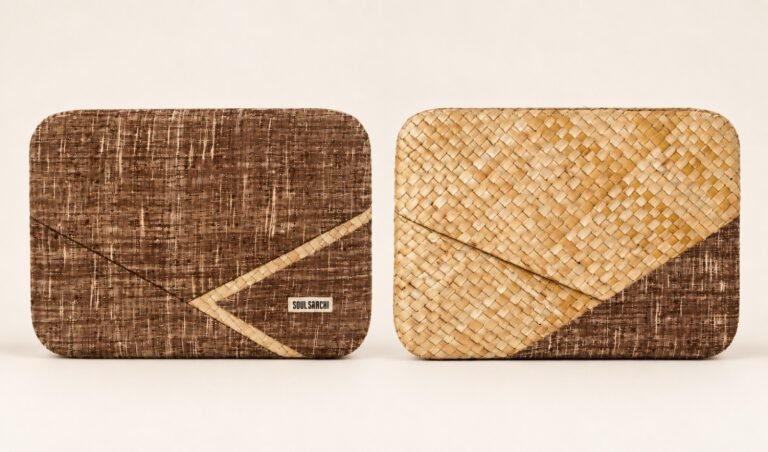
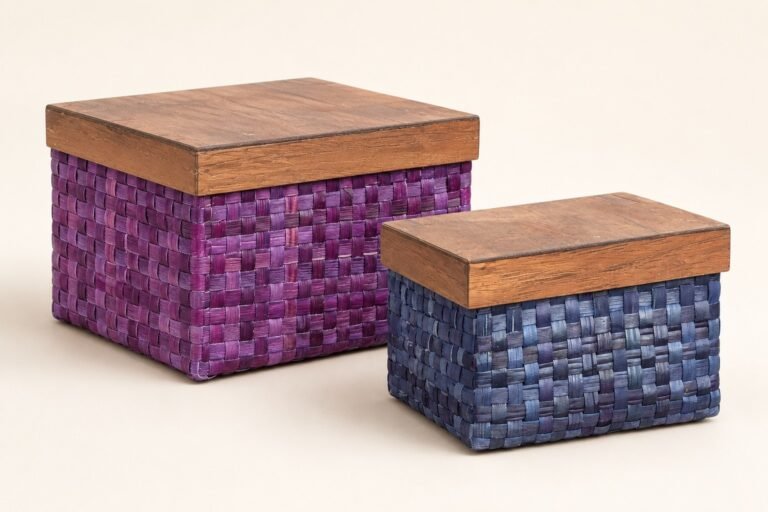
BOXES male screwpine woven into the shape with teak wood veneer covers
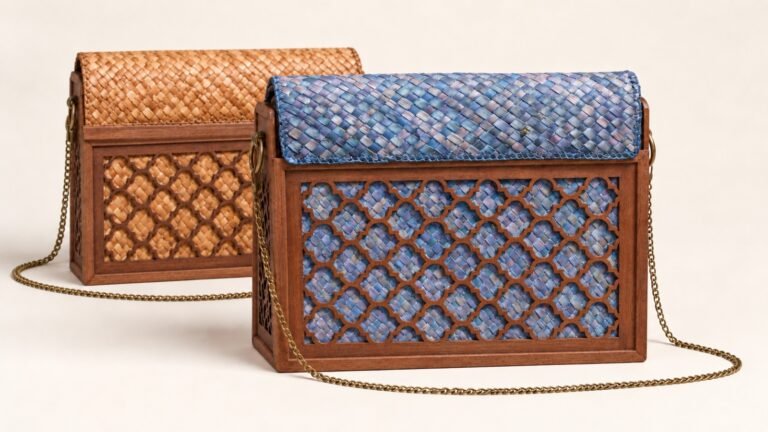
Bags male screwpine mats combined with teak wood veneer and teak wood
07 / WHAT I CARRIED BACK
01
How much of a craft lives in the material, and how much lives in the hands that prepare it?
02
When does introducing something new extend a craft—and when does it simply impose another design language on it?
03
Can a traditional material enter contemporary life without pretending to be another material?
04
What happens when we design around what a material does well instead of forcing it to do everything?
FIELD NOTES → ONGOING PRACTICE
I arrived wanting to design new products. I left thinking much more about the material.
Screwpine had already been designed many times before I encountered it.
By the plant.
By the way the leaf was harvested and prepared.
By generations of hands learning how tightly it could bend, where it would split and how one strip could hold another.
My contribution was another layer in that continuing process: new colours, patterns, forms and combinations that tested where the material might travel next.
The most useful question wasn’t how to modernise the craft.
It was how to create more possibilities from the knowledge already inside it