
Why Must an Innovator Become an Entrepreneur?
On the disappearing space for independent inventors, the economics of making things, and who gets to innovate.
I want to invent things.
Some of those inventions might become products. Some might become businesses. Others might fail, lead to another discovery, or solve a problem that is too small to interest investors but important enough to deserve a solution.
Yet whenever I discuss an invention, the conversation inevitably turns to commercialisation.
Who is your customer? What is your business model? How will you scale? When will you generate revenue?
These are legitimate questions for an entrepreneur.
But why must I answer them before I am allowed to be an inventor?
01 / Four Different Jobs, One Expected Outcome
An inventor creates something that did not previously exist. A researcher investigates questions and generates knowledge. A designer translates possibilities into useful forms and experiences. An entrepreneur builds an organisation capable of delivering value sustainably.
These roles overlap, but they are not interchangeable.
I have occupied all four, often within the same project.
During Fab Academy, I developed ShooBot, an automated cat litter cleaning concept that brought together electronics, sensing, actuation and mechanical design. With the Indira Loom project, I explored how digital fabrication and engineering could support traditional weaving.
Neither began with a pitch deck. They began with a problem I wanted to solve.
My Pola project began similarly. I wanted to understand whether invasive water hyacinth could become a useful material.
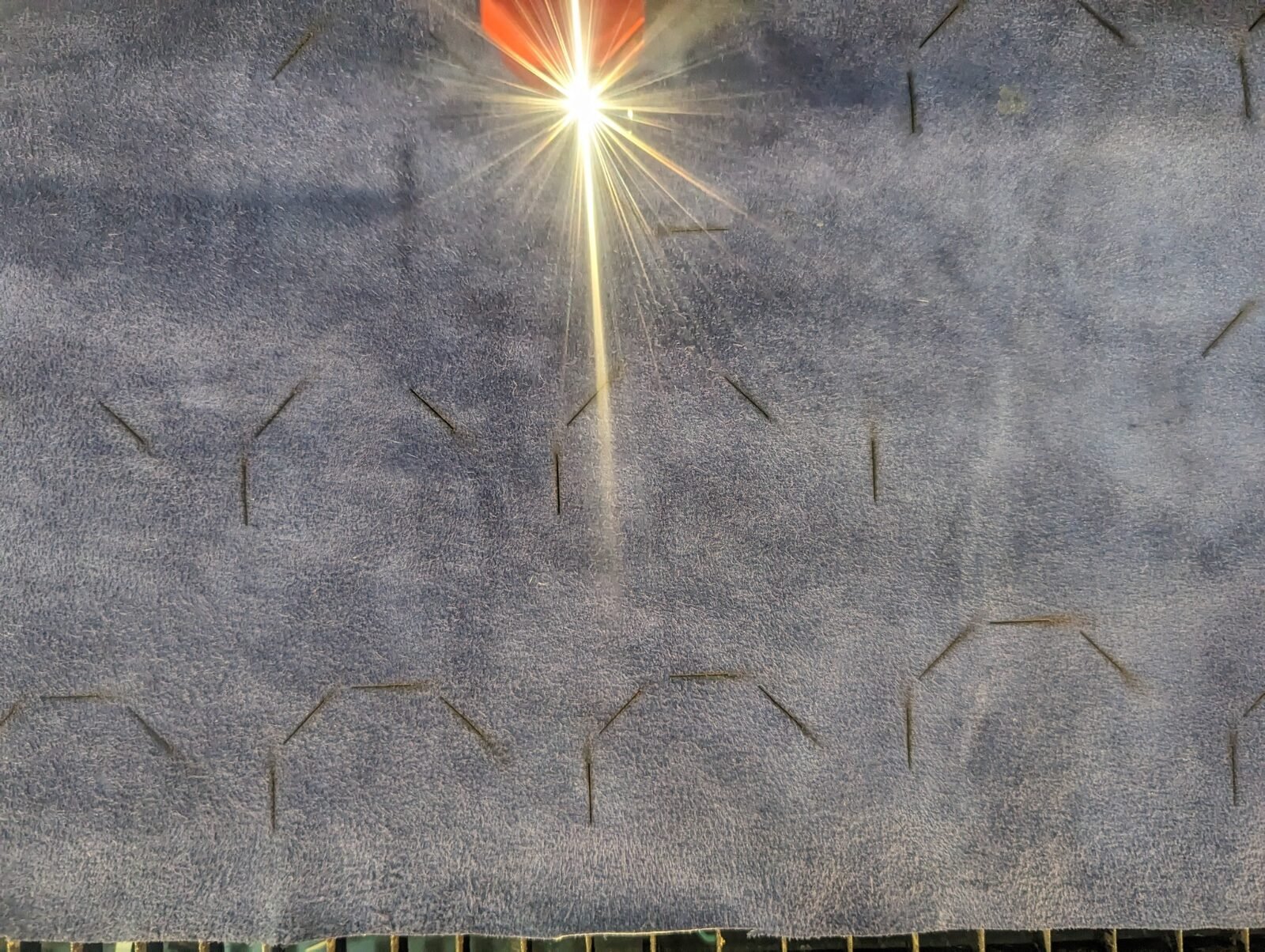
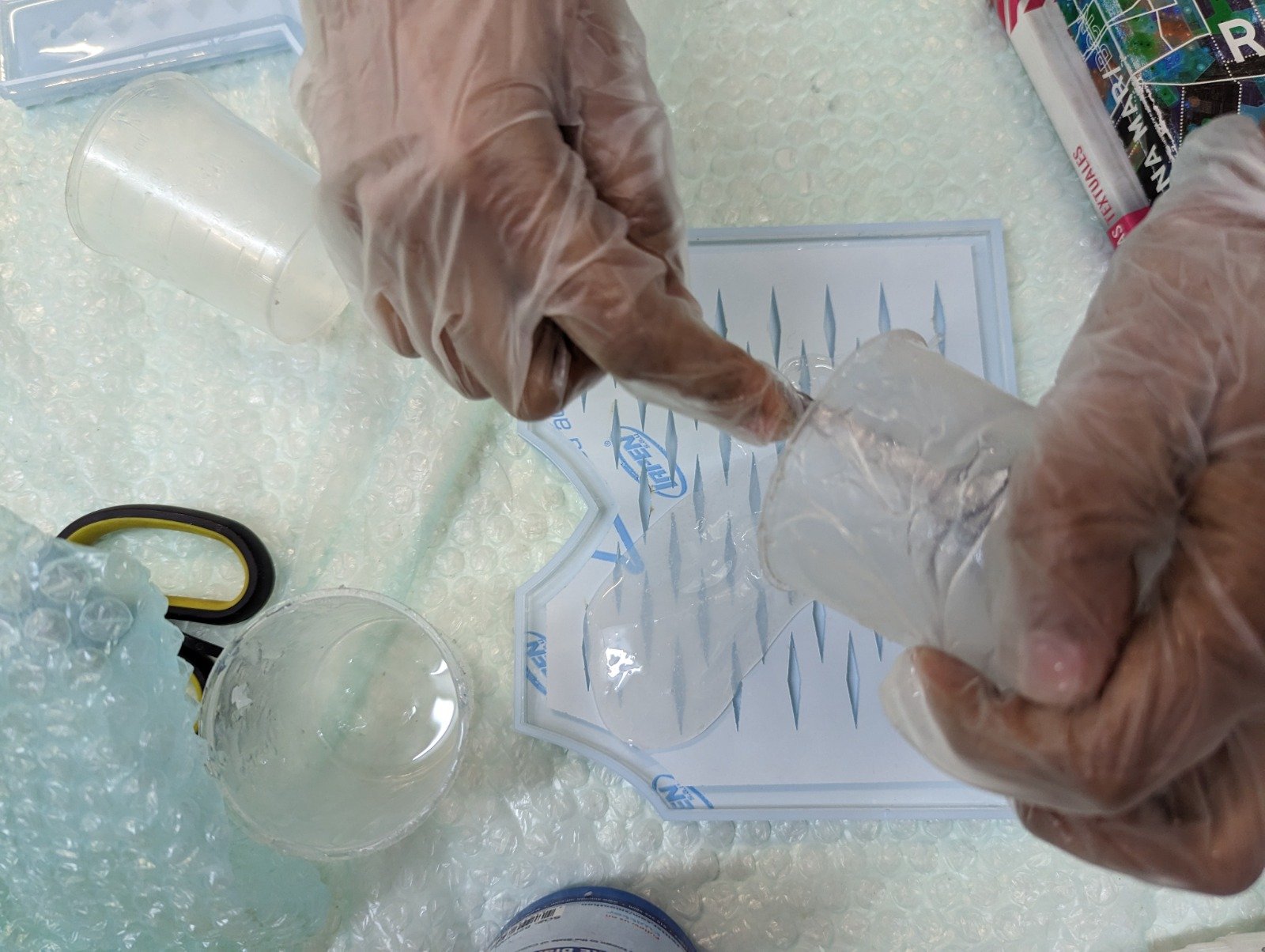
I experimented with fibres, binders, compression and different material formulations. The work eventually produced prototypes of boards, alternative leather and other materials, alongside biodegradable cat litter.
But making the material was only one part of the challenge.
Now the materials need machines too.
Machines to separate, process, mix, compress and manufacture these materials consistently and economically.
That is another substantial research and engineering undertaking.
Yet the expectation is that I should simultaneously become a manufacturer, salesperson, fundraiser and CEO.
I am willing to build a business where it makes sense. But I question why entrepreneurship has become the default justification for invention.
02 / Research Without a Laboratory
One of the greatest difficulties I have faced is accessing machinery.
I am an independent researcher. I do not have a PhD, a university laboratory or an institution that provides me with equipment and technical staff.
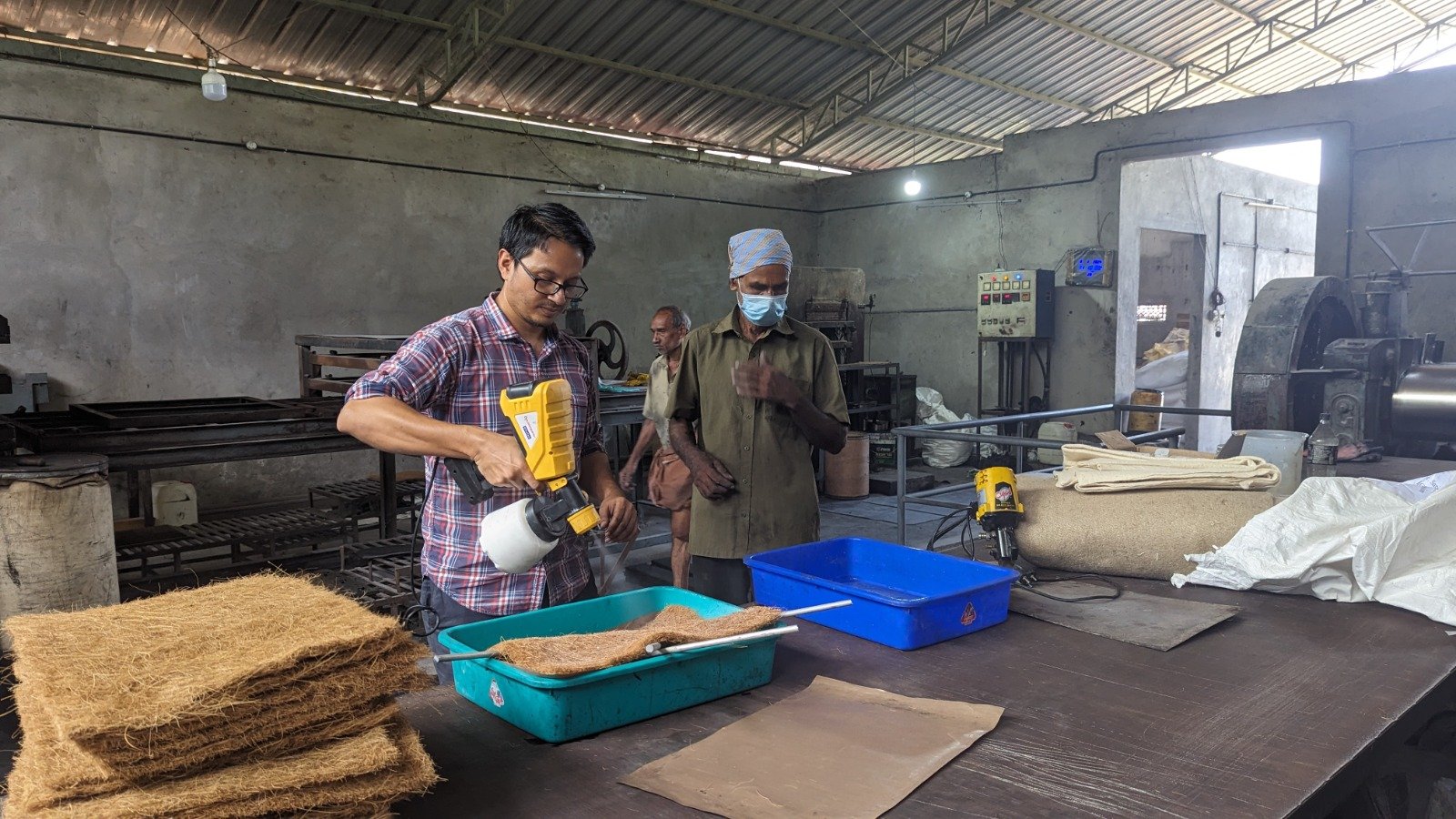
For Pola, I have depended on small industrial estates and individual manufacturers willing to let me use their facilities.
One process might require travelling to a company in one district. Another might require a machine in an entirely different district.
I rent access for a day, carry my material samples, conduct whatever experiments I can, collect the results and return home.
If something goes wrong, I cannot simply repeat the experiment the next morning.
I have to arrange another visit, pay again and work around someone else’s production schedule.
Sometimes I need a machine that exists but is not available for experimentation. Sometimes the equipment needs modification. Sometimes I have to design an entirely new process because conventional industrial machinery was never intended for the material I am developing.
This fragmented approach consumes time, money and energy that could otherwise go into research.
It also makes systematic experimentation difficult. Material development requires repeated trials, controlled variables, documentation and testing.
Innovation cannot always happen in one-day rental slots between someone else’s manufacturing orders.
University affiliation is not a guarantee of easy research funding, and academic researchers face serious constraints of their own. But institutional access can provide continuity that independent inventors often lack.
The assumption that meaningful research must emerge from a university or an established company excludes a considerable amount of practical knowledge and inventive potential.
03 / You Cannot Update a Machine Overnight
Startup culture has been heavily shaped by software.
Build a minimum viable product. Launch quickly. Collect feedback. Iterate. Scale.
That model has advantages, but physical innovation operates differently.
A software application can sometimes be modified and redeployed within hours.
A new biomaterial may require weeks of drying, repeated mechanical testing, changes to its formulation and entirely different manufacturing equipment.
A machine might need a new motor, redesigned tooling, fabricated parts and another round of testing.
An unsuccessful prototype is not necessarily evidence of a bad business idea. It may be an essential step towards understanding the underlying technology.
Research into hardware, materials and manufacturing carries uncertainties that cannot be eliminated by customer interviews or market validation.
You can establish that customers want a biodegradable alternative to plywood.
That does not tell you how to manufacture one reliably.
You can identify a market for sustainable textiles.
That does not solve the mechanical problems involved in processing unfamiliar fibres.
And even after the technology works, developing a repeatable manufacturing process may require substantial additional investment.
A material that works in my hands is not yet a material that can be manufactured at scale.
Funding programmes need to recognise the difference.
04 / The Geography of Sustainable Innovation
My frustration becomes particularly acute when I attend international textile and sustainability conferences.
In Europe, conversations frequently revolve around sustainable materials, responsible manufacturing, circularity and the need to secure alternative raw materials.
Yet many of the environmental and manufacturing challenges being discussed are concentrated in countries like India.
The raw materials are here. The factories are here. The craftspeople and industrial workers are here. So are polluted rivers, invasive plants, agricultural residues and the environmental consequences of production.
The relationship is unequal.
European companies can develop brands around responsible sourcing and sustainable materials while relying on manufacturing and labour in countries where independent innovators often struggle to access research funding.
I have seen European entrepreneurs establish production relationships in India, build companies serving European markets and access opportunities that are difficult for locally based researchers to obtain.
They may also face genuine challenges navigating unfamiliar manufacturing systems. Cross-border entrepreneurship is not easy.
But there is an important difference between entering a difficult system with access to international funding, networks and markets, and trying to invent within that system without those advantages.
What frustrates me is when the former experience is presented as equivalent to the latter.
The issue is not that European founders should be prevented from working in India. International collaboration can be valuable, and many partnerships are equitable.
The issue is who controls the capital, technology, intellectual property and eventual profits—and who remains responsible for the environmental damage.
If European industries depend on materials and manufacturing from countries in the Global South, why is substantially more research funding not directed towards innovators working on the environmental problems within those manufacturing regions?
Why fund the development of a sustainable product without adequately funding the technologies required to clean the water, process the waste or improve the machinery at its source?
We speak about sustainable supply chains. I want us to speak about sustainable innovation ecosystems.
An equitable partnership should build technical capacity where the work happens, not merely extract materials, labour and compelling sustainability stories.
05 / What Should Innovation Fellowships Actually Fund?
I have benefited enormously from international fellowships, including the Royal Academy of Engineering’s Leaders in Innovation Fellowship and the Rajeev Circle Fellowship.
They gave me mentorship, connections, exposure and opportunities that would otherwise have been difficult to access.
I value entrepreneurship training. Understanding markets, customers and commercial strategy has made me a better innovator.
But I also see a gap.
Many programmes support researchers within academic institutions or founders developing commercial ventures.
Where does that leave someone whose primary work is invention?
Someone who has developed a promising material but needs another year of experimentation?
Someone designing a machine without knowing whether it will eventually become a standalone product?
Someone who wants to create open-source technology rather than establish a company?
Innovation fellowships could support these people without requiring immediate commercialisation.
That support should include a living stipend, a separate research budget, laboratory access, technical mentorship and time to experiment.
Progress could be evaluated through reproducible results, functional prototypes, new knowledge, technical documentation or demonstrated social and environmental value.
Commercialisation could remain an option rather than an obligation.
Not every invention will become a successful business.
That does not mean the research was wasted.
A failed experiment can eliminate an ineffective process. An open-source machine can support dozens of manufacturers. A new material formulation can create opportunities for an entire industry.
These outcomes deserve recognition even when no startup emerges.
06 / Let Inventors Invent
I am not opposed to entrepreneurship.
I have worked with startups, helped build organisations, developed products and raised funds. I understand the importance of financial sustainability.
I also know that a business can be an effective vehicle for bringing an invention into everyday use.
But entrepreneurship is one possible destination for innovation, not its definition.
I want to continue developing Pola. I want to create the machinery needed to manufacture new materials. I want to explore tools for traditional industries, design technologies for animals and investigate ideas whose commercial potential may not yet be obvious.
Some of these projects may become businesses.
Others may become research collaborations, open-source tools or technologies adopted by existing manufacturers.
I would like the freedom to discover which.
We need ecosystems that support inventors before they become founders, researchers outside universities and technologies that require patient experimentation.
We need funding that recognises the actual cost of physical innovation, and international partnerships that invest in technical capacity where environmental and manufacturing problems exist.
Above all, we need to stop confusing the ability to raise investment with the ability to invent.
I do not want to spend more time proving that I can become an entrepreneur than I spend developing the things I want to create.
Let inventors invent. Let researchers research. And let entrepreneurship follow when it genuinely serves the invention.
